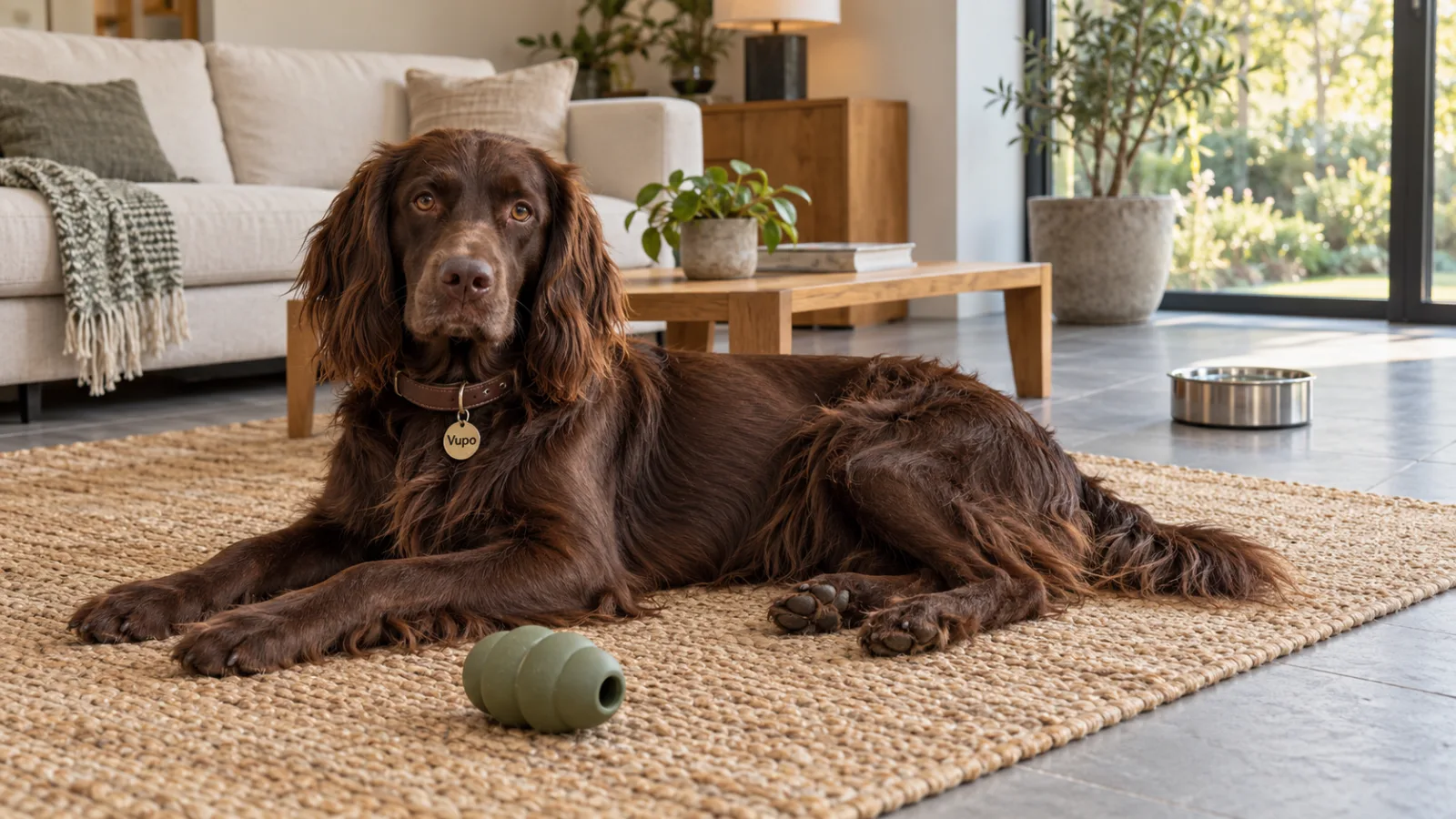
The question how long can you leave a dog home alone sounds simple, but there is no single number that works for every dog.
You need to separate three different issues: how long a dog can physically hold its bladder, how long the dog has been trained to stay alone, and how long the dog can comfortably go without exercise, social contact, and a bathroom break.
A healthy adult dog may be physically able to hold its bladder for many hours. That does not mean it is a good idea to leave the dog alone for an entire workday. Breed alone does not determine the limit either. Age, size, health, activity level, previous training, and sensitivity to being alone matter more.
Physical Limits: How Long Can a Dog Hold Its Bladder?
Puppies have small bladders and limited bladder control. Their ability to wait between potty breaks develops gradually.
A common house-training guideline is the "months of age plus one" rule. For example, a 3-month-old puppy may be able to hold its bladder for about four hours under good conditions.
This is an estimate, not a daily goal and not permission to leave a puppy alone for that entire period.
Estimated Potty Break Schedule by Age
| Dog's age | Approximate daytime interval between potty breaks | Important note |
|---|---|---|
| 2 months | About 2-3 hours | Some puppies need to go out even more often |
| 3 months | About 3-4 hours | Take the puppy out sooner after naps, meals, drinking, or play |
| 4 months | About 4-5 hours | Still not appropriate for a full workday alone |
| 5 months | About 5-6 hours | Individual differences can be significant |
| 6 months | About 5-6 hours | Most puppies are improving but still need a consistent routine |
| 7-9 months | Around 6 hours, sometimes longer | Depends on size, routine, activity, and the individual dog |
| Healthy adult dog | Regular bathroom breaks during the day are still important | Physical capacity is not the same as a welfare recommendation |
| Senior dog or dog with a medical condition | Often much shorter intervals | The schedule may need to be adjusted with a veterinarian |
The American Kennel Club notes that young puppies need frequent bathroom breaks and that the month-plus-one rule is only a general guideline. Puppies often need to go out soon after waking, eating, drinking, playing, or leaving a crate.
Toy breeds and very small dogs may need more frequent potty breaks because of their smaller bladders. Medical conditions can also change a dog's needs. Diabetes, kidney disease, urinary tract problems, some medications, and increased water intake can all increase urination.
Can Holding Urine Too Long Harm a Dog?
This subject needs careful wording.
There is not strong evidence that a healthy dog who occasionally waits several hours to urinate will automatically develop kidney damage, bladder stones, or a urinary tract infection.
However, repeatedly forcing a dog to wait too long is uncomfortable, increases the chance of house-soiling accidents, and can make it harder for an owner to notice changes in normal urination.
If your dog repeatedly tries to urinate but produces little or no urine, strains, cries, or appears painful, this is not simply a dog "holding it." A urinary obstruction can be a veterinary emergency and may lead to serious complications.
The Emotional and Behavioral Side of Being Home Alone
Dogs are social animals, but individual responses to alone time vary widely.
Some dogs sleep calmly when the house is empty. Others become distressed within minutes after their owner leaves.
That is why the real question is not only how long can a dog hold its bladder, but also what the dog is doing while alone.
Calm Rest vs. Separation Distress or Boredom
A dog who is comfortable being alone will usually spend much of that time resting.
Warning signs can include persistent barking or howling, pacing, panting, drooling, attempts to escape, house-soiling, or destruction around doors and windows. The ASPCA lists these behaviors among common signs of separation anxiety.
Destruction does not always mean separation anxiety. A young dog may chew because of boredom, teething, frustration, or a normal need to chew.
A home camera is one of the most useful tools for finding out what actually happens after you leave.
Is It Okay to Leave a Dog Alone for 8-9 Hours?
Eight hours should not automatically be treated as a safe standard.
The RSPCA recommends, as a general welfare guideline, that dogs not be routinely left alone for more than about four hours at a time, with puppies needing much shorter periods.
That does not mean four hours is a hard biological limit. It means dogs need regular opportunities to use the bathroom, move around, exercise, and have social contact.
So, leaving a dog home alone for an 8-9 hour workday without a break is not an ideal routine, even if the dog does not have accidents.
If your workday is long, plan for a midday break.
How to Prepare Your Home for Longer Alone Time
Start With a Good Morning Walk
Before leaving for work, give your dog more than a five-minute bathroom trip.
Include walking, sniffing, time to eliminate, and a few minutes of simple reward-based training.
The goal is not to exhaust the dog. The goal is to meet physical and mental needs before a period of rest.
Use Food-Enrichment Toys
A frozen stuffed Kong, food puzzle, lick mat, or safe treat-dispensing toy can give your dog something useful to do when you leave.
Introduce these items while you are home first. Make sure your dog uses them safely and does not break off or swallow pieces.
Food toys are not a treatment for severe separation anxiety. Some highly anxious dogs will not eat after their owner leaves.
Create a Safe Environment
Always provide access to fresh water.
Remove trash, medications, toxic foods, electrical cords, and objects your dog may chew or swallow.
If noises from neighbors, hallways, traffic, or delivery drivers trigger barking, low-volume background sound or white noise may help reduce sudden sound changes.
Music or television may help some dogs settle, but they should not be treated as a solution for separation anxiety.
Solutions for Long Workdays
Hire a Dog Walker for a Midday Break
If you are away from home for 8-10 hours, a midday visit can make a major difference.
A dog walker gives your dog a chance to urinate and defecate, walk, sniff, move, and interact with a person.
For a young puppy, one midday visit may still not be enough. Puppies often require several potty breaks during a normal workday.
With Vupo, you can log your dog's last walk and keep track of your walking history. You can also share your dog with one other person in your household, so both of you can record walks and see when the dog last went out, which helps prevent missed walks and confusion over who took the dog out.
Consider Doggy Daycare - But Choose Carefully
Doggy daycare can work well for social dogs that enjoy interacting with other dogs and people.
It is not right for every dog.
Shy, easily overstimulated, senior, or dog-selective dogs may find group daycare stressful. Look for a facility that evaluates dogs before admission, manages play groups carefully, provides rest periods, and does not rely on nonstop group play.
Frequently Asked Questions
How long can a 4-month-old puppy be left alone?
The common bladder-control rule suggests a maximum of roughly four to five hours under ideal conditions. That does not mean a 4-month-old puppy should routinely be left alone for five hours. At this age, frequent potty breaks and a consistent house-training schedule are still important.
Does my dog sleep the entire time I am at work?
Not necessarily. Dogs sleep and rest for many hours each day, but a camera is the best way to see whether your dog is actually resting or spending the time pacing, barking, waiting at the door, or showing signs of stress.
What are signs my dog is being left alone too long?
Warning signs may include new house-soiling, persistent barking, destructive chewing, pacing, drooling, escape attempts, or intense distress around departures. Sudden behavior changes should also be discussed with a veterinarian to rule out a medical problem.
Should I leave the TV or radio on for my dog?
You can try low-volume background sound if outside noises trigger your dog. It may help some dogs settle, but there is no evidence that television or radio alone fixes loneliness or separation anxiety.
Does a pet camera actually help?
Yes, as a monitoring and training tool. A camera can show how quickly your dog settles, whether the dog sleeps or eats, and whether signs of distress begin immediately after you leave. Veterinary behavior resources, including VCA, recommend video monitoring when evaluating separation-related problems.
Bottom Line
When people ask how long can you leave a dog home alone, there is no universal answer.
For puppies, age and physical development strongly limit how long they can wait between potty breaks. For adult dogs, the ability to physically hold urine is not the same as being comfortable alone for an entire workday.
If you regularly work long hours, combine a good morning walk with safe enrichment and a midday visit from a dog walker, family member, neighbor, or pet sitter.
Most important, watch the individual dog. A home camera, consistent walk records, and a predictable daily routine will tell you more than any rigid rule.
Professional Sources
- American Kennel Club - Puppy Potty Training Timeline and Tips
- American Kennel Club - How to Potty Train Your Puppy and Prevent Accidents Indoors
- ASPCA - Separation Anxiety
- VCA Animal Hospitals - Separation Anxiety in Dogs
- VCA Animal Hospitals - Separation Anxiety in Dogs
- RSPCA - Separation Anxiety in Dogs
- RSPCA - How to Train Your Dog to Stay Home Alone