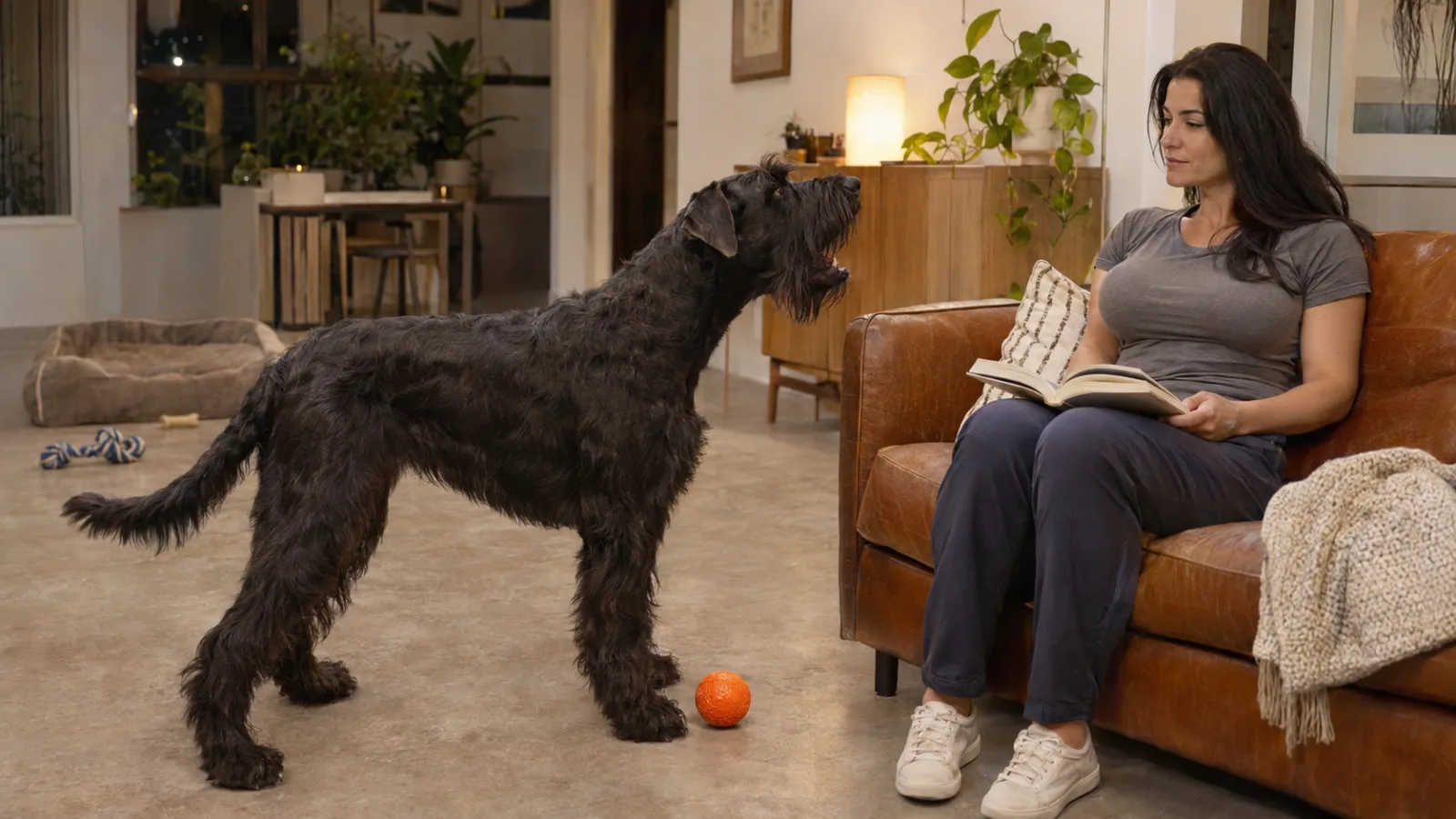
You sit on the couch, and your dog stands in front of you, barking. You toss a ball, and the barking stops. The next day, it happens again. Sometimes your dog wants food, a walk, or playtime. This is demand barking: your dog has learned that barking gets you to do something they want.
Reducing it takes three steps: stop rewarding the barking, meet your dog's needs proactively, and teach a quiet way to ask. The goal is to make calm communication work.
Why Does My Dog Bark at Me?
Barking works, so your dog repeats it
If your dog barks for play and you start playing, play reinforces the barking. If barking gets dinner served, your dog may try it again tomorrow. This is learning through consequences, not proof that your dog wants to control you.
Even an unwanted response can be rewarding. For a dog seeking attention, talking, eye contact, or scolding may provide it. What matters is what your dog actually gains from barking. [1]
Check for an urgent need first
A dog barking by the door may need a potty break. Barking can also reflect fear, pain, or frustration. The sound alone cannot tell you why it is happening.
Check when your dog last went out, ate, drank, and rested. Address genuine needs. Never delay an urgent potty break to teach quiet behavior. A sudden change in barking, especially with other physical or behavioral changes, calls for a veterinary check. Barking at noises or when left alone needs a different approach.
How to Reduce Demand Barking
1. Identify what rewards the barking
For a few days, jot down what happened before the barking, how you responded, and what your dog received. For example: “I started working. My dog barked. I grabbed a toy and played.”
Look for patterns. Does it happen before dinner, during phone calls, or when you hold a ball? Use that information to prepare for the next situation.
2. Stop providing the payoff during barking
When you have identified demand barking and your dog's needs are met, avoid starting the requested activity in response. For attention-seeking barking, briefly withhold talking, eye contact, and touch. You can turn slightly away and stay calm.
If your dog wants fetch, looking away while throwing the ball will not help. You need to withhold the specific reward that keeps the barking going.
Barking sometimes increases when a familiar reward stops. This is called an extinction burst, but it does not always happen. Giving in after louder or longer barking can reinforce persistence. [3]
Do not turn this into a prolonged standoff. If your dog becomes distressed, jumps dangerously, or tries to bite, stop the exercise and seek professional help.
3. Teach a quiet way to ask
Choose a simple behavior: sitting quietly nearby, standing calmly beside you, or bringing a toy without barking. Practice when your dog is relaxed, before they start demanding something.
Before play, ask for a sit your dog already knows. When they sit quietly, say “yes” and start playing. Later, give them a chance to offer the behavior without a cue. Sitting while barking does not meet the goal.
If barking has started, wait for a brief pause your dog can manage, then reward quiet behavior. Gradually build a little more calm time. Make sure most rewards happen before any barking starts. Otherwise, your dog may learn a new sequence: bark, pause, collect a reward. [2]
Meet Your Dog's Needs Before Barking Starts
Plan walks, meals, and playtime
Do not wait for your dog to request every activity. Build a predictable routine for meals, potty breaks, walks, play, and time together. It need not run to the minute, but avoid long gaps your dog struggles with.
If barking starts when you work in the evening, plan a suitable walk, some play, and time to settle beforehand. Include sniffing and exploring on walks. Match activity to your dog's age, health, and temperament.
Make room for rest and quiet behavior
More exercise is not always the answer. An overtired or overstimulated dog may struggle to settle. Provide a comfortable resting spot and an appropriate independent activity, such as a safe food puzzle.
Notice your dog when they are not asking for anything. If they are resting beside you, quietly offer a treat or gentle attention, provided it does not get them wound up.
Vupo's walk reminders can help you maintain a routine. Tracking walks alongside a brief barking log can help you see what happened each day.
Keep Making Progress
Stay consistent and track small improvements
Agree on a household response: barking does not start play, while quiet requests get a response when practical. If one person ignores barking but another eventually throws the ball, your dog may keep trying.
Look for fewer episodes, shorter barking bouts, and more quiet requests. There is no fixed timeline. If progress stalls or the cause is unclear, work with a qualified dog trainer who uses reward-based methods and has experience with behavior concerns.
On your next walk, open Vupo and start tracking. Check your walk time, track your distance in miles, and maintain your walking streak. Let the streak encourage consistency without pushing your dog beyond their needs.
Frequently Asked Questions
Is ignoring demand barking enough?
No. Withholding attention may help when attention is the reward, but you also need to meet your dog's needs and teach an alternative.
What if my dog barks to go potty?
Take them out when needed, especially puppies. Then plan earlier breaks and reward a quiet signal at the door.
Can I give a treat when barking stops?
Yes, to reinforce quiet behavior. However, reward calm behavior before barking whenever possible, so barking does not become a routine step toward a treat.
Why is my dog barking more since I stopped responding?
It could be a temporary extinction burst, but distress or an unmet need could also explain it. Check the situation instead of assuming every increase is part of training.
Does yelling “Stop!” help?
It may interrupt barking briefly, but it can also provide attention or increase arousal. Teach and reward a different way to ask instead.
Must I respond to every quiet request?
No. Respond often during early learning when practical, then gradually teach waiting. Continue providing enough activity and social contact throughout the day.