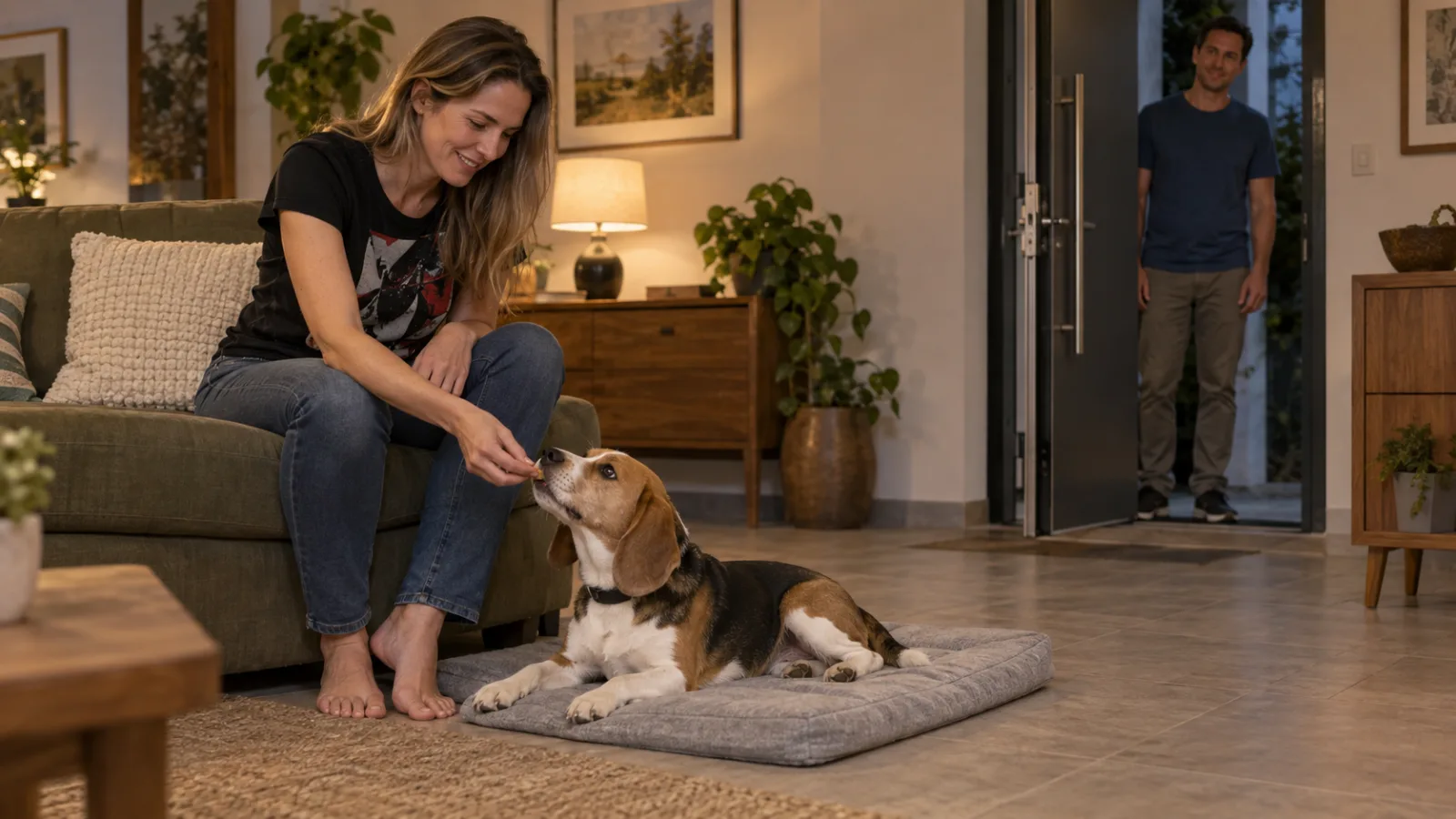
You leave for work, and an hour later, a neighbor texts about the barking. That evening, every footstep in the hallway sends your dog racing to the door. Whether your dog barks when left alone or reacts to every noise, the stress can affect everyone around.
Start by identifying the cause and choosing training that addresses it. The goal is less barking and a calmer dog, not complete silence. If barking starts suddenly or increases, ask your veterinarian to check for possible medical causes. RSPCA: Excessive barking.
Why Do Dogs Bark? Understanding the Cause
Alert and territorial barking: Hallway and door noises
The elevator opens, a neighbor walks past, and your dog starts barking. Your dog may be sounding an alarm, feeling afraid, or trying to make someone leave. Record the trigger and how quickly your dog settles. The sound of the bark alone cannot tell you the cause. ASPCA: Types of barking.
Boredom and unmet activity needs
Long days without exercise, exploration, or social contact can contribute to barking. Make room for walks, sniffing, play, and rest. Still, barking does not automatically mean your dog needs more running. RSPCA: Activity and routine.
Distress when left alone and separation anxiety
“Why does my dog bark when I leave?” Sometimes outside noises are responsible. Other dogs struggle with being alone. Panting without exercise, pacing, howling, and escape attempts can signal distress. Video helps reveal patterns but does not replace a professional assessment. Related reading: Separation Anxiety in Dogs. ASPCA: Separation anxiety.
Common Mistakes That Can Make Barking Worse
Yelling “Quiet!”
“Joining the barking” is a figure of speech, not a proven explanation of what dogs think. Yelling can startle your dog and add stress. It also fails to teach an alternative. Focus on teaching and rewarding the behavior you want. AVSAB: Humane dog training.
Petting and reassurance: An important distinction
Comforting a frightened dog is not automatically a mistake. Speak softly and offer petting if your dog seeks contact and finds it soothing. However, consistently responding to attention-seeking barking may reinforce it. Give attention during quiet moments and teach another way to ask for it. ASPCA: Attention-seeking barking.
A Training Plan for Door and Hallway Barking
Manage the environment
Move your dog’s bed farther from the front door. Block window views that trigger barking at passersby. An indoor gate may help if your dog stays relaxed behind it. Reduce opportunities to rush the door. ASPCA: Managing alert barking.
Desensitization: Gradual exposure to quiet sounds
Desensitization means introducing a sound gently enough that your dog can cope. Play a very quiet recording of footsteps, then immediately offer a treat. Your dog should stay relaxed. If your dog becomes tense, barks, or stops eating, stop and make the next session easier. Increase volume slightly only after several calm sessions. Pairing the sound with something pleasant is called counterconditioning. VCA: Desensitization and counterconditioning.
Low-volume white noise may partly mask hallway sounds. It is not desensitization or a treatment by itself. Try it while home and observe your dog. Do not turn it up to drown out building noise.
Teach “Place” when the doorbell rings
Start in a quiet home:
- Make the mat rewarding. Place a treat on it. When your dog steps onto it, say “Yes” and offer another treat there.
- Add a cue. Once your dog readily steps onto the mat, say “Place” before your hand signal. Gradually fade the hand signal.
- Build duration. Reward one second of calm staying, then gradually several seconds. End with a consistent release word, such as “Free.”
- Add a quiet sound. Play a soft doorbell recording, say “Place,” and reward on the mat. Keep sessions short and finish with an easy success.
- Practice at the real door. Have a helper knock softly. Later, practice opening the door slightly. Change one element at a time.
If your dog struggles, return to an easier step. A dog can still bark on a mat, so reward calm behavior too. ASPCA: Go-to-your-spot training.
For barking in shared hallways or stairwells, practice during quiet periods. Keep your distance from people and reward your dog for turning toward you. Avoid close encounters intended to make your dog “get used to” neighbors.
Reducing Barking When Your Dog Is Home Alone
Provide mental stimulation before leaving
Offer an appropriate walk with sniffing time, then allow rest before leaving. A short food-search game can help provide enrichment. Related reading: Indoor Scent Games and Mental Enrichment and How Often Should You Walk Your Dog? Meeting activity needs may help with boredom-related barking. RSPCA: Meeting your dog’s needs.
For separation-related distress, practice absences short enough for your dog to remain comfortable. Return before stress begins and increase time gradually. If distress occurs, shorten the next attempt. Do not leave your dog to “cry it out.” When possible, arrange care with someone familiar to prevent overwhelming absences during treatment. ASPCA: Gradual absences.
Offer quiet food toys
Try an appropriately sized, stuffable rubber toy with part of your dog’s daily food allowance. Supervise first to check for tearing or swallowing hazards. Toys cannot replace treatment for distress. A highly anxious dog may ignore them. ASPCA: Food toys during absences.
Frequently Asked Questions
Are bark collars recommended?
No. Shock, vibration, or citronella used to deter barking does not address its cause and may increase fear. AVSAB recommends reward-based training without aversive methods. AVSAB position statements.
How can I tell whether my dog barks while I’m at work?
Use an indoor camera with audio. Review several periods, including shortly after departure. Note barking, possible triggers, and whether your dog rests.
How long does training take?
There is no fixed timeline. Progress may take weeks or months. Look for fewer barking episodes and faster recovery. VCA: Training timelines.
Does white noise help?
Masking outside sounds may help some dogs. Watch your dog’s response and stop if it causes discomfort.
How does alert barking differ from separation anxiety?
Alert barking usually follows a trigger, such as footsteps. Separation-related distress occurs during absences and may include other stress signs. Both can occur together. ASPCA: Distinguishing the causes.
Work With Neighbors and Track Progress
Tell neighbors you are addressing the barking and ask for specific times. Log walks in Vupo and keep a separate barking diary to compare days. Tracking helps reveal patterns but does not guarantee less barking.
For escape attempts, injury, threatening behavior toward visitors, or ongoing distress, contact your veterinarian and a qualified, reward-based behavior professional. Seek help before the situation escalates.