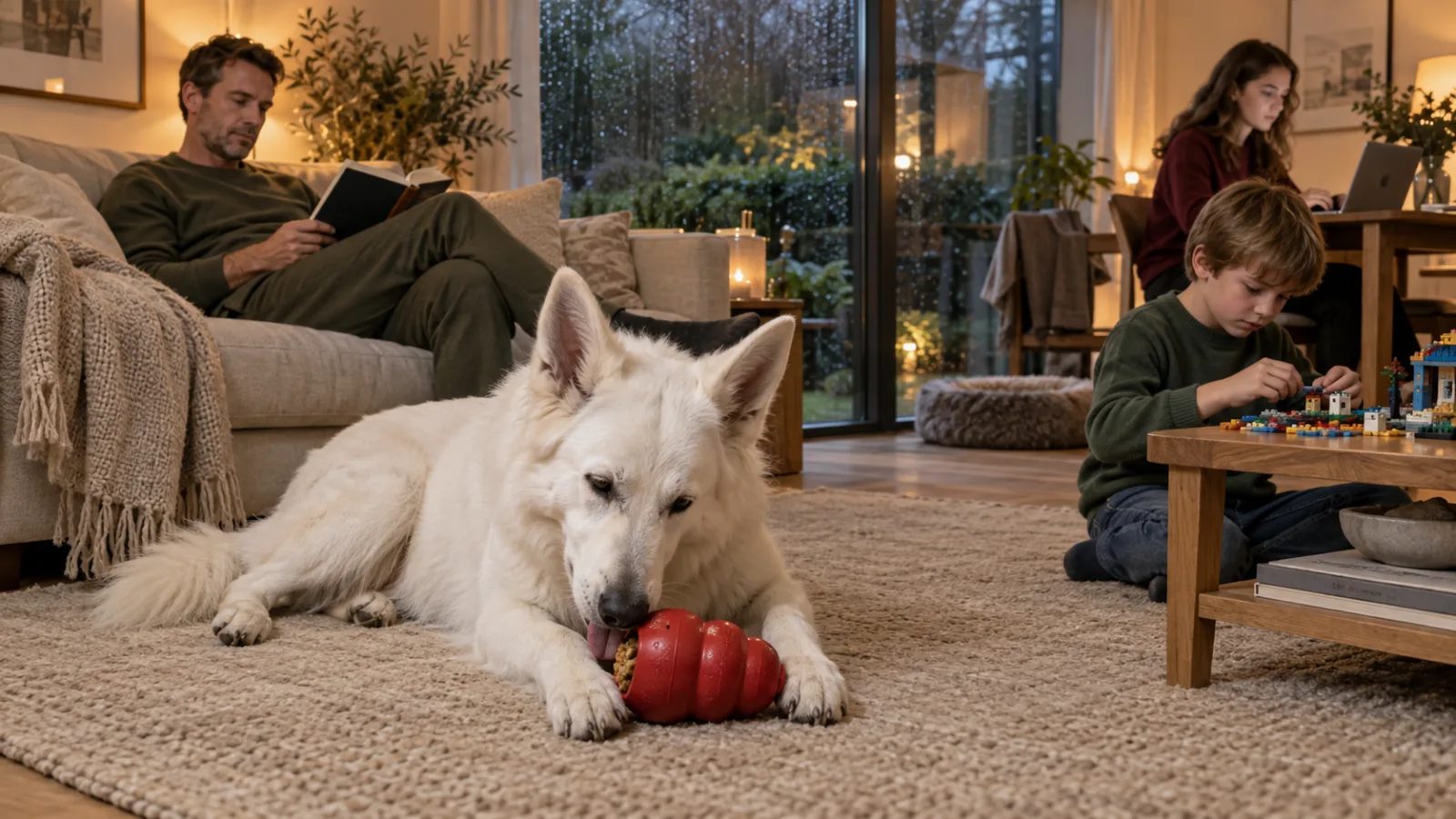
It's pouring rain or dangerously hot outside, your walk was cut short, and your dog is looking for something to do. Sometimes that means bringing you a toy. Other times, your shoe becomes the next project. If you're wondering how to burn off your dog's energy indoors, start with an activity that lets them search, make choices, and solve a simple problem.
For a quick start: Set aside some of your dog's daily food, scatter a few pieces of kibble on an unfolded towel, and invite them to search. After a few successful tries, add a loose fold. Start with two to five minutes and finish while your dog is still enjoying the game. The goal is a satisfying activity followed by an opportunity to rest.
The Myth of Burning Off Energy: Why Running Isn't Enough
Physical Fatigue, Arousal, and Calm Are Different Things
Exercise matters, but a dog can be physically tired and still struggle to settle. Fast chase games may leave them excited, and continually increasing exercise distances isn't necessarily the answer to boredom.
At the same time, appropriate running doesn't automatically make a dog "too fit," and a puzzle doesn't guarantee relaxation. Mental enrichment for dogs provides interest and a chance to use their abilities. A balanced routine includes movement, sniffing, interaction with you, and enough sleep.
Your Dog's Sense of Smell: A World of Information
When searching for food, dogs distinguish scents, investigate different directions, and adjust their approach. This offers a richer experience than eating straight from a bowl.
A dog’s highly developed sense of smell helps them explore their surroundings and find food. Scent games give them a chance to use this natural ability at home, too. There isn't sufficient evidence to equate 15 minutes of sniffing with an hour of running. Instead, watch your dog: Are they searching comfortably, succeeding, and able to settle afterward?
DIY Scent Games Using Everyday Household Items
Start every game under supervision on a nonslip surface. In homes with multiple dogs, separate them during food activities to prevent competition. Use part of their daily meals rather than adding unlimited treats.
A Living Room Treasure Hunt
Place three to five pieces of kibble in plain sight on the floor while your dog watches. Say "Find it" once, then let them explore without pointing to every piece.
Later, hide food beside a chair leg or behind a safe toy. Increase only one challenge at a time: the number of hiding spots, the size of the search area, or how well the food is hidden. Avoid couches, shelves, and electrical cords so you don't encourage climbing or searching in troublesome places.
If your dog gets stuck, uncover some food. An easy success is more useful than several frustrating minutes.
Rolled Towels and Egg Cartons
Scatter food on a towel, fold it once, and progress to loosely rolling it. Tight knots aren't necessary. If your dog pulls out and swallows fibers, switch to searching for food on the floor.
For another game, use a clean, dry cardboard egg carton without staples, plastic, or egg residue. Put kibble in the compartments and leave it open. After several successful attempts, try partially closing it. Discard soiled cartons, and stop and switch containers if your dog tries to swallow pieces.
These DIY dog enrichment toys are easy to make, but choosing materials that suit your dog's habits matters more than creating a complicated puzzle.
Snuffle Mat Benefits and Slower Feeding
A snuffle mat lets you scatter food among fabric strips and may slow eating for dogs that search through it gradually. Start with kibble on top of the strips, then tuck it farther down.
The benefits include easy setup, using regular meals, and adjustable difficulty. A dog who flips the mat over hasn't "failed"; they've found another solution. If they chew the fabric, choose a different activity. Wash the mat according to the manufacturer's instructions and dry it thoroughly.
Frozen Food Toys, Licking, and Chewing
Can Licking and Chewing Reduce Stress?
Licking and chewing can be enjoyable and may help some dogs settle into a quiet activity. However, we shouldn't promise that every lick releases enough endorphins to reduce stress or that any food toy will treat anxiety.
Choose an appropriately sized food toy according to the manufacturer's guidance, and check that it isn't coming apart. Introduce it with soft, easily accessible food first. Freezing the filling can make the task too difficult for beginners.
Simple KONG Filling Ideas
An easy base is your dog's regular complete and balanced food: suitable wet food or moistened kibble. For variety, add a small amount of a familiar ingredient:
- Plain oatmeal cooked in water.
- Cooked chicken without bones, skin, or seasoning.
- A little plain yogurt without sweeteners, only if your dog tolerates dairy.
- Cooked, mashed carrots or zucchini without seasoning.
- Natural peanut butter (sugar-free).
You don't need to mix everything together. Avoid onions, garlic, and products containing xylitol. Extras don't replace a balanced diet. For dogs on a therapeutic diet, use only ingredients approved for them. Wash the toy after use.
Short Training Sessions as Brain Games
Spin, Wave, and Nose Targeting
Indoor brain games for dogs can include learning together. To teach a nose target, hold your palm near your dog. When they voluntarily touch it with their nose, mark the moment with "Yes" and reward them. Later, change your hand's position slightly.
You can also teach a wave or a wide, gentle spin if the movement is comfortable for your dog. Don't force a position or repeatedly give a cue they don't understand. Five to ten minutes a day can be divided into one- or two-minute sessions, with breaks and easy successes.
Building an Enrichment Routine for Hot or Rainy Days
If you're wondering how to tire out your dog indoors on rainy or hot days, start with a simple combination: a walk when conditions are suitable, a short indoor search, and then rest in a quiet spot. Add a second activity depending on your dog's response.
Make enrichment part of your routine alongside walk tracking and everyday care in Vupo. Pay attention to how your dog is doing and whether they can rest; an app score cannot replace those observations. Enrichment complements potty breaks, movement, and exploring outdoors. For more guidance, read "How Often Should You Walk Your Dog?"
Frequently Asked Questions
Do Scent Games Tire Dogs Out Like Outdoor Walks?
They provide a challenge and something rewarding to do, but there is no established conversion between minutes of sniffing and minutes of walking. Walks also meet needs that can't be fulfilled in the living room.
What If My Dog Tears Up the Egg Carton?
Tearing doesn't necessarily mean your dog misunderstands the activity. Leave the carton open and make the food easier to reach. If your dog swallows pieces, stop and offer a search game without cardboard.
Is Repeatedly Throwing a Ball Indoors a Good Idea?
Chasing on slippery floors and between furniture can lead to slips and increased excitement. A short, controlled ball roll with breaks may be an option if your dog enjoys it and can stop when the game pauses.
What Treats Work Best for Indoor Scent Games?
Your dog's regular kibble is a good starting point. If they need extra encouragement, use tiny pieces of a familiar, strongly scented treat. Include those treats in their daily food intake.
How Often Should We Play Brain Games?
Start with a few minutes once a day. You can build up to ten to fifteen minutes once or twice daily if your dog is interested. Frustrated barking, forceful attempts to break into the toy, or walking away are reasons to make the task easier or take a break.
Will Enrichment Prevent Destructive Behavior When My Dog Is Alone?
It may help when a dog lacks things to do, but destruction can also reflect distress. If it happens mainly while you're away and includes howling or escape attempts, read "Separation Anxiety in Dogs" and seek a professional assessment. A food toy alone is not a treatment for separation anxiety.