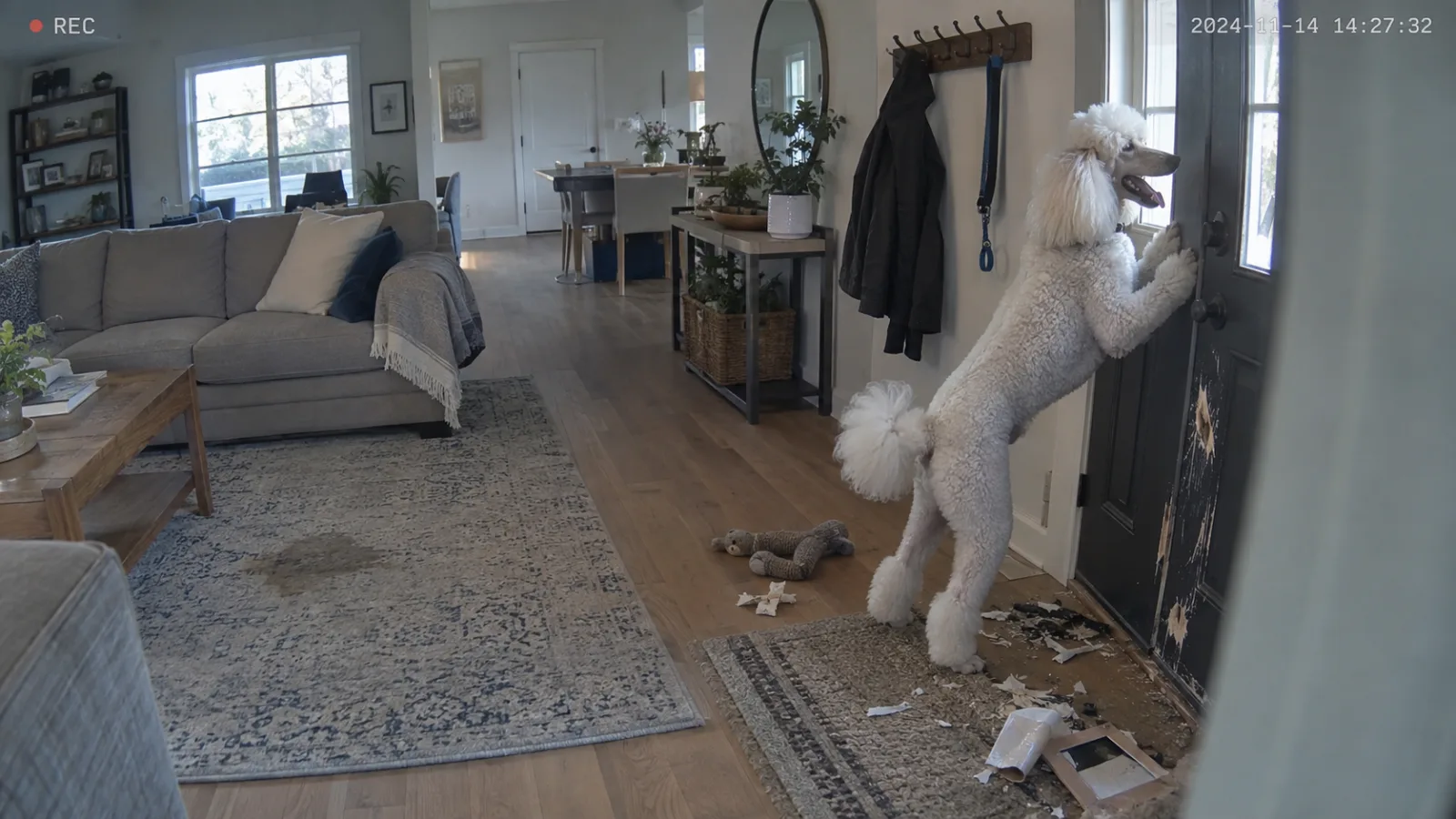
Separation anxiety in dogs is not "spoiling," revenge, or a lack of discipline. It is a distress response that can escalate to panic when a dog is left alone or when the person the dog is strongly attached to leaves the home. That is why, when a dog barks after you leave or destroys the house while alone, it is important not to assume immediately that separation anxiety is the cause - but it is equally important not to ignore significant signs of distress.
The key is to look at the full picture. Symptoms of separation-related anxiety in dogs usually appear as a combination of several signs, especially around the time of departure or shortly afterward.
Accurate Diagnosis: True Separation Anxiety vs. Boredom and Frustration
A bored dog may chew a pillow, raid the trash, or look for something to do around the house. A dog with separation anxiety usually looks different: the behavior is driven by distress and is often focused on trying to reach the owner or escape the home.
Classic Signs: Scratching at Doors, Excessive Drooling, Persistent Howling, and Refusing Treats
Separation anxiety becomes more likely when several of the following signs occur together:
- Persistent crying, whining, howling, or barking that does not stop.
- Heavy panting, excessive drooling, trembling, or constant restlessness.
- Self-biting or self-injury, including damage to the paws, nails, or teeth.
- Attempts to escape through doors, windows, shutters, or other openings.
- Chewing and destructive behavior, especially around exit points.
- Urinating or defecating indoors in a dog that is otherwise fully house-trained, due to stress.
- Being unable to eat a treat or engage with a favorite toy that the dog would normally enjoy.
No single sign proves that a dog has separation anxiety. The combination of signs, their intensity, their timing, and the consistency with which they occur are what make the diagnosis more likely.
Why Recording Your Dog During the First 20 Minutes After You Leave Matters
A simple home camera can reveal what happens from the moment the door closes: does the dog settle down, or immediately begin panting, vocalizing, scratching at the door, or searching for a way out?
The first 20 minutes often provide valuable information because, in many cases, distress begins shortly after departure. If no signs appear during that period, it can still be useful to record longer stretches of time. Video can help distinguish separation anxiety from boredom, reactions to outside noises, or other behavioral problems.
Critical Mistakes That Can Make Separation Anxiety Worse
Why Punishing Destructive Behavior After You Return Only Increases Stress
When you come home to a scratched door, a torn-up couch, or an accident on the floor, it is easy to become frustrated. But punishment after the fact does not teach the dog what to do while you are away.
Yelling, scolding, or bringing the dog over to the damaged area can increase fear and raise the dog's overall stress level. Treatment for separation anxiety in dogs should focus on reducing anxiety and building the dog's ability to stay alone, not on punishment.
Overly Emotional Departures and Reunions
Long, dramatic goodbyes can make departure feel even more emotionally charged. There is no need to deliberately ignore your dog, but it is usually better to keep departures calm and predictable. The same applies when you return home: a friendly greeting is fine, but there is no need for a prolonged, highly emotional reunion that strongly emphasizes the transition between "together" and "alone."
Behavioral Treatment Protocol: Desensitizing Departure Cues
The goal is not to leave the dog alone until the dog "gets used to it." Exposure that is too long can reinforce panic. Gradual departure exercises for an anxious dog should be performed below the dog's distress threshold.
Reducing the Impact of Pre-Departure Triggers: Picking Up Keys, Putting on Shoes, and Wearing a Coat Without Leaving
Dogs quickly learn sequences such as shoes, keys, a bag, and a coat. In an anxious dog, stress may begin before the owner even leaves.
You can practice these actions during the day without going anywhere: pick up the keys and put them back down, put on your shoes and stay home, or put on your coat and sit down. Over time, these departure cues can become less reliable predictors of being left alone and therefore less emotionally charged.
Building Microscopic Absence Durations: From a Few Seconds to Longer Periods
How do you teach a dog to stay home alone? Start with a duration the dog can handle without showing signs of distress - sometimes only one or two seconds. Step out, return before anxiety begins, and then increase the duration gradually.
Progress is not linear. If video shows panting, freezing, vocalizing, pacing, or escape attempts, the exercise has progressed too quickly and the duration should be reduced again. In genuine cases of separation anxiety, it is strongly recommended to work with an excellent professional who specializes specifically in this problem. Not every trainer who handles basic obedience has the experience required to treat separation anxiety effectively.
A Holistic Support Plan
Mental and Physical Activity Before Departure
A high-quality walk, opportunities to sniff, mental enrichment, and a short training session can help a dog reach a calmer state before resting. But fatigue is not a treatment for separation anxiety. A dog can be physically tired and still panic when left alone.
Vupo can be used to track walks and maintain a consistent activity routine. This can help owners understand whether their dog is getting appropriate physical and mental activity throughout the day. For further reading, see Why Daily Walks Are Vital to Your Dog’s Health.
Calming Aids, Enrichment, and Medication When Appropriate
Chew toys, interactive food toys, and calming music may help some dogs, but they are not a solution when a dog is in full panic and cannot even eat.
In moderate to severe cases, it is appropriate to consult a veterinarian about medication for separation anxiety in dogs. Anti-anxiety medication does not replace behavioral treatment. In suitable cases, it can reduce the intensity of the dog's stress enough to make learning possible. The most effective approach is often a combination of veterinary oversight for the medical component and a trainer or behavior professional who specializes in separation anxiety for the behavioral component.
If the issue involves a new puppy struggling with nighttime adjustment, see Puppy Crying at Night.
Frequently Asked Questions About Separation Anxiety in Dogs
How Can You Tell the Difference Between Separation Anxiety and Normal Puppy Mischief?
Separation anxiety is typically characterized by a combination of several signs of distress that begin around the time of departure, such as heavy drooling, panting, trembling, persistent vocalizing, escape attempts, and being unable to eat a high-value treat. Boredom or puppy mischief is more likely to involve seeking entertainment or chewing random objects without clear signs of panic.
Will Getting Another Dog Fix Separation Anxiety?
Usually not. If the dog's anxiety is caused by separation from a specific person or from people in general, the presence of another dog often does not reduce the distress. The same applies to bringing home a cat, and any new animal in the household calls for a gradual, controlled introduction.
Should a Dog With Separation Anxiety Be Confined in a Crate?
If the dog responds to separation with panic and escape attempts, absolutely not. Confinement in a small space can lead to serious injuries to the teeth, nails, and paws. If the crate is already a well-established safe place and the dog remains relaxed in it, its use should still be evaluated on an individual basis with a qualified professional.
How Long Does Treatment for Separation Anxiety Take?
There is no fixed timeline. In many cases, treatment takes several months, and sometimes six months or longer. Progress depends on the severity of the anxiety, the consistency of the training plan, and the individual dog's response to treatment.
When Should You Consult a Veterinarian About Medication?
If the dog's stress is severe, chronic, or so intense that the dog cannot remain below the anxiety threshold even during very short exercises, a veterinarian should be involved. Appropriate medication, combined with a structured behavioral plan, can reduce suffering and make learning more effective.
Summary
Separation anxiety in dogs requires accurate diagnosis and patience. Destructive behavior, barking, or house-soiling alone are not enough to confirm the problem. You need to evaluate the full pattern of behavior, when the signs occur, and how intense the distress is.
Treatment should not be based on punishment or on leaving the dog alone until the dog "gets over it." Effective treatment is built around environmental management, gradual exercises below the dog's distress threshold, video monitoring, an appropriate daily activity routine, and, when needed, medication under veterinary supervision.
When the signs are significant, it is best not to improvise. Working with an excellent professional who understands separation anxiety in depth can prevent common mistakes, reduce the dog's distress, and create a treatment plan that progresses at the dog's actual pace.