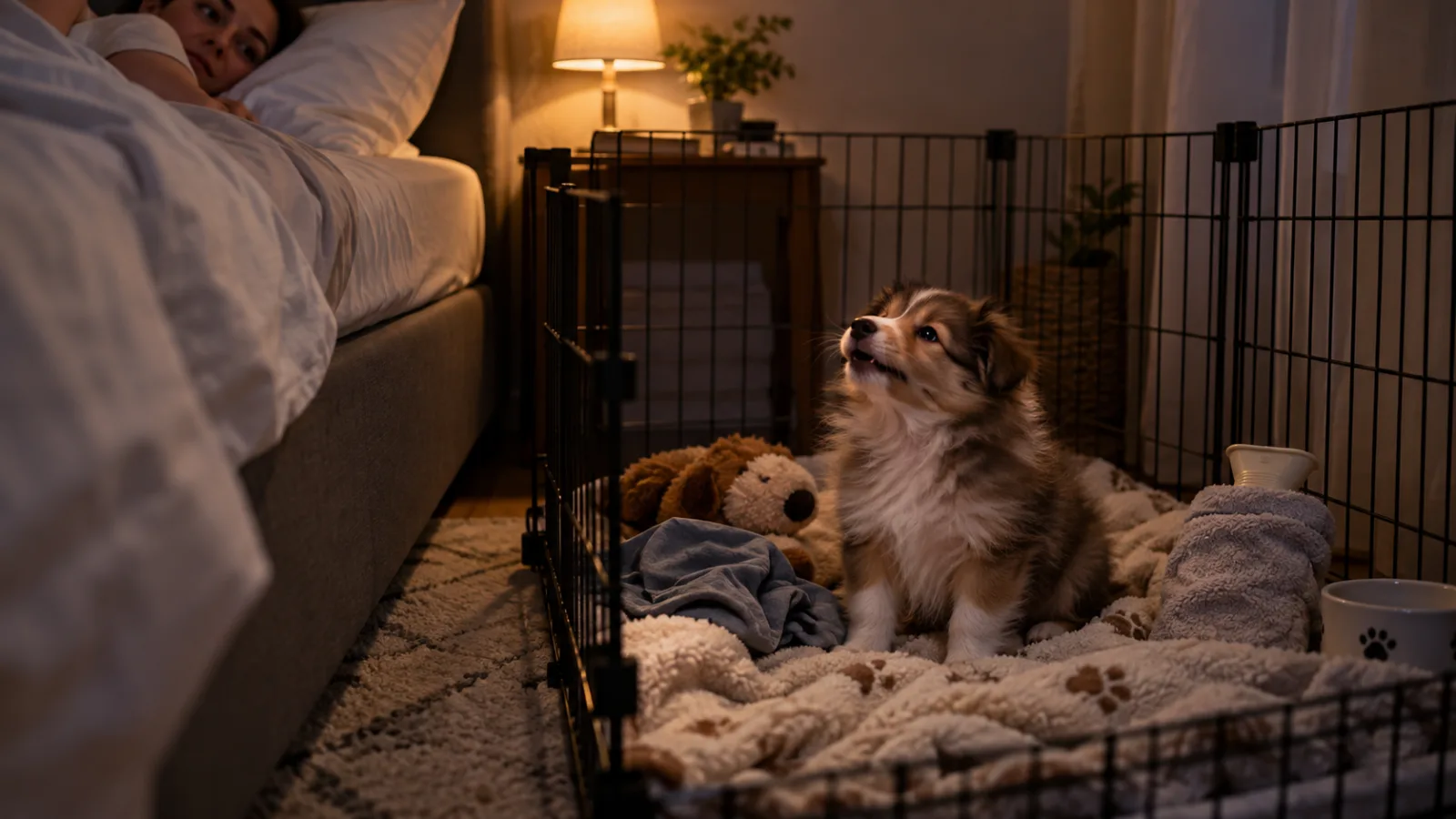
You brought an adorable new puppy home, spent an exciting day full of cuddles and attention, and now everyone is finally in bed. But before long, the silence is interrupted by heartbreaking whining and crying.
What should you do when your puppy cries at night? This is probably one of the most urgent questions new puppy owners ask themselves while lying awake in the middle of the night. Dealing with a new puppy crying at night can be exhausting and stressful, especially during your puppy’s first night at home.
To understand how to calm a puppy at night, it is important to first understand what your puppy is experiencing emotionally. With patience and the right balance of comfort and structure, you can help your puppy feel safe and gradually adjust to the new environment.
Why Do Puppies Cry During Their First Nights at Home?
A puppy does not cry because it is being stubborn. The crying usually comes from genuine distress caused by a dramatic and unfamiliar change in the puppy’s environment.
Separation From the Mother and Littermates: From Constant Warmth to Sleeping Alone
From the moment your puppy was born, it was rarely, if ever, alone. Puppies sleep close to their mother and littermates, surrounded by their body heat, familiar scent, movement, and heartbeats.
When a puppy suddenly arrives at a new home and goes from sleeping in a warm group to being completely alone in a dark room, the experience can feel overwhelming.
Whining and crying are natural survival behaviors. In the wild, a separated puppy’s vocalizations would essentially signal to its mother: "I’m here, I’m alone, and I’m scared. Come find me."
Uncertainty in a New Environment and Fear of Unfamiliar Sounds
A new home is filled with completely unfamiliar smells, surfaces, sounds, and shadows.
Without the reassuring presence of the puppy’s mother and littermates, even small noises - such as the refrigerator turning on, footsteps outside, or a sudden gust of wind - may feel threatening.
Darkness can increase the puppy’s sense of uncertainty and alertness, making it difficult to relax and fall into a deep, restful sleep.
The Big Question: Should You Ignore the Crying or Respond?
Why the "Cry It Out" Approach May Increase Anxiety and Damage Trust
The question of whether you should let a puppy cry at night or go to them has been debated among dog owners and trainers for years.
Traditionally, some people recommended leaving a puppy alone in a closed room and allowing it to "cry it out" until it learned to settle.
However, simply ignoring a very young puppy that is genuinely distressed may increase stress rather than teach healthy independence. A puppy that eventually stops crying may not necessarily have learned to feel safe - it may simply have become exhausted or given up trying to get a response.
Repeated experiences of intense distress without support can make it harder for some puppies to develop confidence and may contribute to future separation-related problems.
The Balanced Approach: Provide Security Without Reinforcing Attention-Seeking Behavior
The goal is to find the right balance - meeting your puppy’s genuine need for security without turning nighttime into an exciting source of attention.
When your puppy cries, provide calm reassurance without creating unnecessary stimulation.
This can mean staying nearby, gently placing a hand near or through the puppy pen, or speaking softly for a moment.
At the same time, avoid picking the puppy up for playtime, speaking in an excited voice, turning on bright lights, or creating an interaction that makes nighttime more rewarding than sleep.
Step by Step: Creating the Right Sleeping Environment
Where Should Your Puppy Sleep? Why the Crate or Puppy Pen Should Be Near Your Bed at First
When owners ask how to teach a puppy to sleep alone, the key is usually gradual separation rather than immediate isolation.
During the first few nights, it is often helpful to place your puppy’s sleeping area - such as a puppy pen or crate - inside your bedroom, close to your bed.
Being physically close allows your puppy to smell you, hear your breathing, and sense your presence. This provides an immediate feeling of security.
Once your puppy begins to adjust and develops more confidence, you can gradually move the sleeping area farther away until it reaches its permanent location in your home.
If you are dealing with a puppy crying in a crate at night, the crate-training process may have progressed too quickly.
A gradual, positive introduction to the crate can help your puppy view it as a safe and comfortable resting place rather than a place of isolation.
A properly introduced crate provides a protected, clearly defined sleeping space. (For more detailed information, read the full guide: Your Dog’s Safe Place: How Crate Training Can Help Them Relax) It can reduce environmental stimulation, prevent frightening nighttime wandering, and help prevent unwanted behaviors such as [puppy biting: how to teach a puppy not to bite].
Calming Aids: Warm Water Bottle, Your Scent, and White Noise
- Warm water bottle: Wrap a warm water bottle in a soft towel to help recreate some of the comforting body warmth your puppy experienced while sleeping with its mother and littermates.
- An item of clothing with your scent: A T-shirt you have worn during the day can provide a familiar and reassuring scent that helps your puppy feel less alone.
- White noise: Soft white noise or a quiet, repetitive ticking sound can create a consistent background sound that masks sudden household noises and may help the puppy settle.
Create an Evening Routine to Reduce Nighttime Wake-Ups
Provide Physical and Mental Activity Earlier in the Evening
A puppy that still has a lot of unused energy may have difficulty settling down. However, intense exercise immediately before bedtime can have the opposite effect and create overstimulation.
During the early evening, include age-appropriate physical activity along with mental enrichment such as scent games, short training sessions, food puzzles, search games, or licking activities.
Using the Vupo app can help you create a consistent daily routine and track walks, activity, feeding, and rest periods. A predictable routine provides an important sense of stability, reduces uncertainty, and can contribute directly to calmer and more consistent sleep.
Many new owners wonder when puppies start sleeping through the night. The answer depends on several factors, including age, bladder control, temperament, and the consistency of the routine you establish from the very first week.
Managing Dinner and Water Before Bedtime
Try to serve your puppy’s evening meal approximately 3 to 4 hours before bedtime, and always give your puppy an opportunity to go potty immediately before going to sleep.
For more detailed guidance, see our full guide: How to Potty Train a Puppy.
Some owners also choose to manage water intake shortly before bedtime to reduce nighttime potty breaks. However, puppies should always have adequate access to water during the day, and water should never be restricted excessively, especially in warm weather, after exercise, or if there is any medical concern.
Because young puppies have small bladders, nighttime potty breaks are completely normal during the early stages of house training.
Frequently Asked Questions - FAQ
Should I Leave My Puppy Crying Alone in a Closed Room Until It Gets Used to It?
Generally, no.
A very young puppy experiencing complete isolation may become increasingly distressed. Staying physically close during the first few nights can help build confidence and make the adjustment to the new home easier.
The goal is not to create permanent dependence, but to introduce independence gradually.
When Do Puppies Usually Stop Crying at Night?
For many puppies, nighttime crying decreases significantly within the first 3 to 7 nights, provided they receive a consistent routine, appropriate reassurance, and gradual adjustment to sleeping alone.
However, every puppy is different. Some may adapt within a few nights, while others need more time.
Should We Let the Puppy Sleep in Our Bed?
If you do not want your dog sleeping in your bed in the future, it is usually better not to establish that habit from the beginning.
Instead, place the puppy’s own bed, crate, or sleeping area next to your bed during the first few nights.
As the puppy becomes more comfortable, you can gradually move the sleeping area toward its permanent location.
What Should I Do If My Puppy Wakes Up Crying in the Middle of the Night?
First, consider whether your puppy needs to go potty.
Take the puppy directly to the designated potty area with as little stimulation as possible. Keep the lights low, avoid playing, and keep talking to a minimum.
Once the puppy has finished, calmly return it to the sleeping area.
The message should be clear and consistent: nighttime potty breaks are for going potty, not for playing or socializing.
How Does Tiredness Affect a Puppy’s Sleep?
A puppy that has not had enough physical activity or mental stimulation may have difficulty settling down.
At the same time, an overtired puppy can become overstimulated, restless, mouthy, and more likely to whine or struggle to fall asleep.
The goal is not simply to exhaust your puppy, but to create a healthy balance of activity, enrichment, calm time, and sleep throughout the day.