Does your puppy wake up, pee on the living room floor, bite your pant legs, and then fall asleep just when you're ready to head outside? During those first few days, it can feel as though you're constantly putting out fires. A daily routine for a new puppy creates a predictable pattern of potty breaks, meals, activity, and rest, helping you recognize what your puppy needs before things get chaotic.
The goal isn't a perfect schedule or a promise of fast results. It's to build habits that fit your puppy's age, health, and personality, and that everyone in your household can follow consistently.
Why Do Puppies Need a Consistent Routine?
How Consistency Can Help Reduce Stress and Biting
A new puppy is learning about both your home and the people in it. A familiar sequence helps them anticipate what comes next: wake up, go potty, eat, play, and rest. Recognizing hunger, the need to eliminate, and tiredness early can reduce situations that contribute to frustration and biting. Consistency matters more than getting every minute right, and a routine alone is not a treatment for anxiety.
How Many Hours a Day Should a Puppy Sleep?
A commonly cited estimate for young puppies is about 18 to 20 hours of sleep per day, although individual needs vary. Treat this as a general guide, not a quota to enforce. Healthy puppy sleep habits include a comfortable, quiet spot and opportunities to sleep without interruptions. Learn more in the AKC's guide to puppy sleep.
An Hour-by-Hour Puppy Schedule: Ages 8 Weeks to 4 Months
You can shift this sample schedule to fit your household. It also provides a starting point for an 8-week-old puppy's daily routine. Rest periods are opportunities to sleep, not instructions to keep your puppy confined for the entire time.
Add potty breaks immediately after waking, after meals and play, and whenever your puppy shows signs of needing to go. While awake, your puppy may need a break every 30 to 60 minutes, sometimes sooner. Don't wait for the next scheduled outing if your puppy starts sniffing, circling, or becoming restless.
| Time | What to Do | Done / Actual Time |
|---|---|---|
| 6:30-7:00 AM | Wake up, go potty immediately, have breakfast, and offer another potty break as needed | ☐ ______ |
| 7:00-7:15 AM | Brief sniffing outing or calm indoor play | ☐ ______ |
| 7:15-9:00 AM | First nap in a quiet spot | ☐ ______ |
| 9:00-9:30 AM | Potty break, time together, and a brief training session | ☐ ______ |
| 9:30-11:30 AM | Sleep and rest | ☐ ______ |
| 11:30 AM-12:00 PM | Potty break, meal, another potty opportunity, and brief play | ☐ ______ |
| 12:00-2:00 PM | Sleep and rest | ☐ ______ |
| 2:00-2:30 PM | Potty break, a positive introduction to something new, and chewing time | ☐ ______ |
| 2:30-4:00 PM | Sleep and rest | ☐ ______ |
| 4:00-4:30 PM | Potty break; a meal if following a four-meal schedule; brief play | ☐ ______ |
| 4:30-6:30 PM | Sleep and rest | ☐ ______ |
| 6:30-7:15 PM | Potty break, dinner, a relaxed outing, and family time | ☐ ______ |
| 7:15-8:00 PM | Rest or sleep | ☐ ______ |
| 8:00-8:30 PM | Potty break as needed, quiet activity, and winding down for bed | ☐ ______ |
| 8:30-11:00 PM | Sleep, with another brief potty break as needed | ☐ ______ |
| 11:00 PM-6:30 AM | Overnight sleep, with potty breaks based on your puppy's needs | ☐ ______ |
Morning: 6:30-9:00 AM
Take your puppy to their potty spot before making coffee or checking your phone. Reward them immediately after they finish in the right place. For more guidance, read How to Potty Train a Puppy. Offer another opportunity after breakfast, then keep activity brief and gentle. Don't stretch out the morning in an attempt to "really tire them out."
Late Morning and Early Afternoon: 9:00 AM-2:00 PM
Include training sessions lasting two to five minutes: responding to their name, coming to you, or finding scattered pieces of kibble. Use food from their daily allowance. If everyone works away from home, arrange for someone to care for your puppy during the day. A playpen is not a substitute for care and regular breaks throughout a full workday.
Afternoon and Evening: 2:00-8:00 PM
A puppy's feeding and outing routine should also include socialization: briefly watching people, exploring a new surface, or having a carefully managed interaction. Let your puppy move away, and don't force contact. Ask your veterinarian which locations are appropriate for your puppy's vaccination status and local disease risks. Redirect playful biting toward toys rather than your hands.
Nighttime: 8:00-11:00 PM
Dim the lights and reduce activity. You don't need to keep your puppy awake until 11:00 PM; adjust the final potty break to their needs. Keep overnight trips quiet, then return to bed. For more help, see Puppy Crying at Night: What to Do.
Balancing Awake Time and Sleep
The 1:2 Rule: One Hour Awake, Two Hours of Rest?
This is a planning guideline, not a scientifically established formula or a required target. An 8-week-old puppy may need a nap after just 30 minutes awake. Rest also doesn't necessarily mean sleep. Consider your puppy's total sleep over 24 hours and their behavior, and offer an earlier nap when needed.
Is Your Puppy Overtired or Just Having the Zoomies?
More intense biting, difficulty disengaging from play, and frantic running can occur when a puppy is tired or highly aroused. However, zoomies are also normal behavior and don't prove that a puppy is overtired. Check for potty needs, hunger, or discomfort, reduce stimulation, and offer rest. For more guidance, read Why Puppies Bite and How to Stop It.
Using Your Puppy's Environment to Support the Routine
When to Use a Playpen, Supervise, or Interact
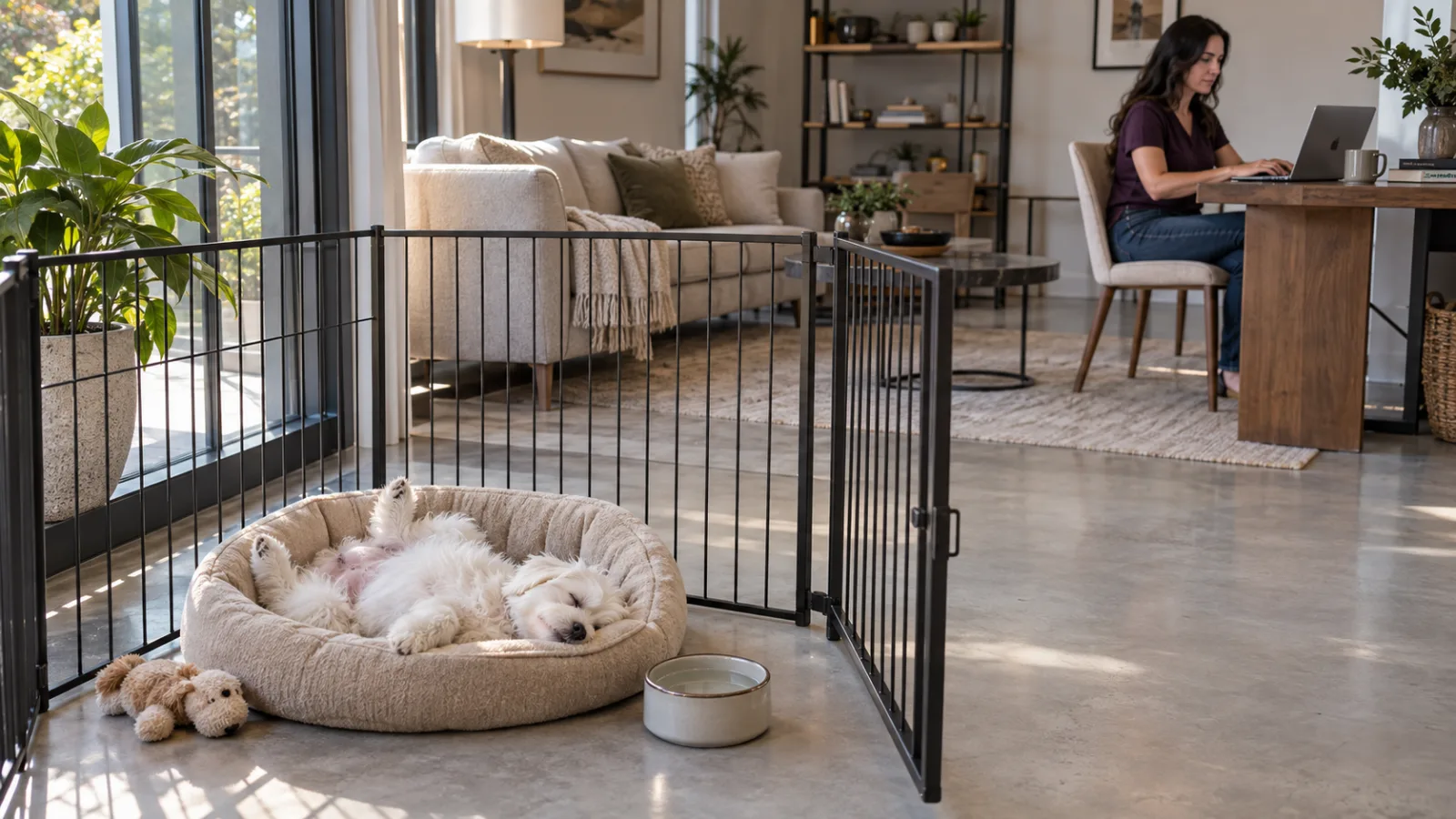
Time in a puppy playpen should depend on your puppy's ability to feel comfortable there. When they're awake and you can give them attention, make time for play and learning. Supervise as they explore the house. When you're busy or your puppy is tired, offer a safe area they've gradually learned to enjoy, with water and a resting spot.
Never use the pen as punishment or ignore ongoing distress. Start with short periods while you stay nearby. Choose chew toys and food-dispensing toys appropriate for your puppy's age and size, and supervise their use before allowing independent access.
Frequently Asked Questions
How Much Should an 8-Week-Old Puppy Sleep?
Often about 18 to 20 hours per day, spread across several sleep periods. Also consider sleep quality and how alert and engaged your puppy is when awake.
What If My Puppy Won't Sleep and Keeps Biting?
First check whether they need to go potty, are hungry, or seem uncomfortable. Stop exciting play and help them settle in a familiar place. An unusual change in behavior or signs of pain call for a veterinary assessment.
How Many Meals a Day Does a Puppy Need?
Four meals are common at 8 to 12 weeks. Between 3 and 6 months, puppies often transition to three meals, depending on individual needs. For a three-meal version of this schedule, omit the 4:00 PM meal and redistribute the same daily food allowance among the remaining meals. Source: AKC puppy feeding guidelines.
Can We Change the Routine on Weekends?
Yes, gradually. Maintain regular potty opportunities and enough rest. Don't expect your puppy to hold it longer simply because you'd like to sleep in.
How Can I Teach My Puppy to Stay Occupied While I'm Busy?
Start with an easy food-dispensing toy near you, using part of their daily food allowance. Gradually increase the time as long as your puppy remains relaxed. Independent activities don't replace gradual training to feel comfortable being alone.
Make the Routine a Family Habit With Vupo
Learning how to raise a puppy doesn't mean keeping everything in your head. Save a daily copy of the schedule and record sleep, meals, and potty breaks. Alongside that log, use Vupo to track walks and follow your training plan, and decide who is responsible for each outing. You'll be able to spot patterns and adjust the routine based on what actually works for your puppy.