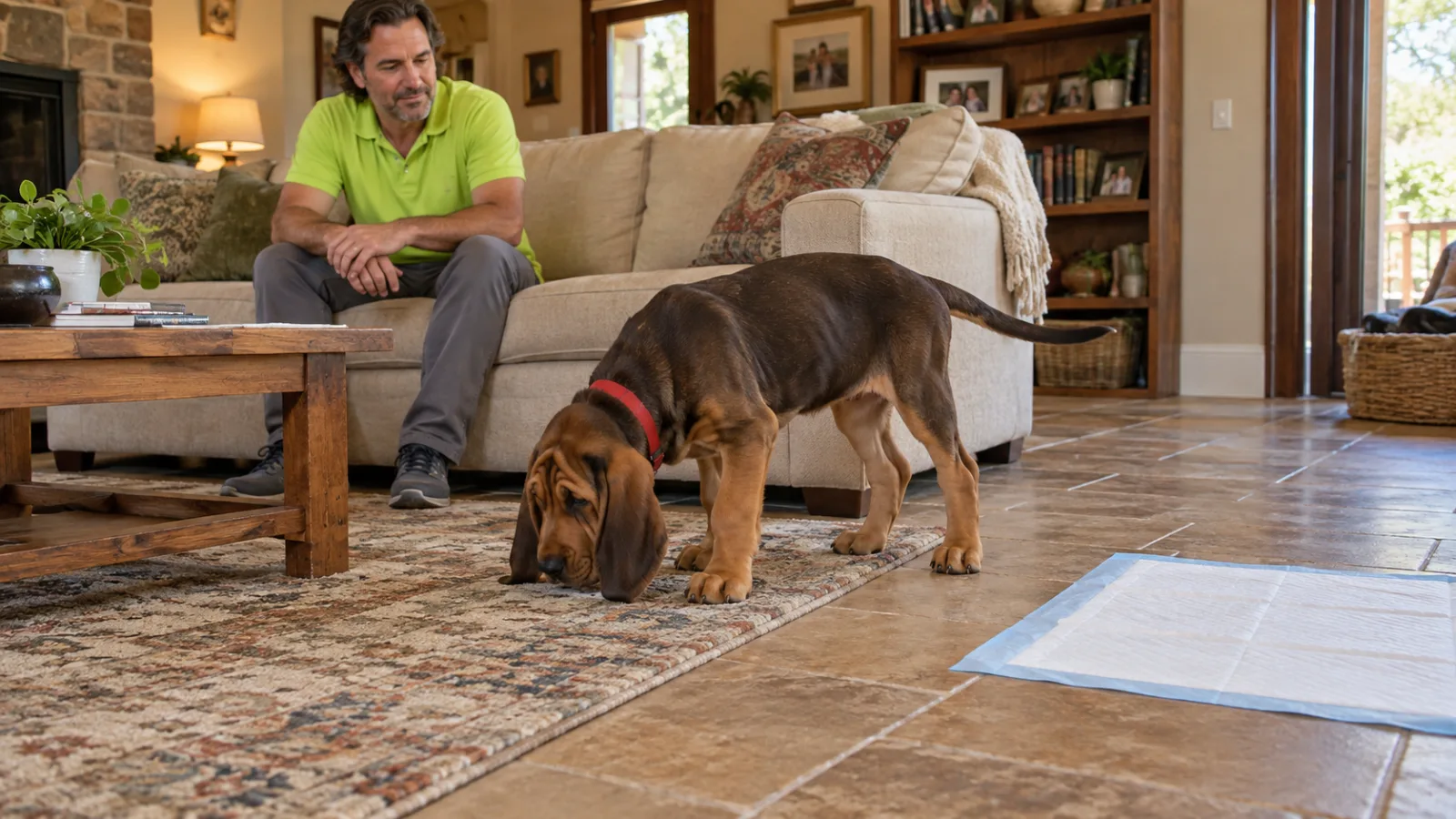
Potty pads seem like the perfect solution: put one down, replace it as needed, and avoid puddles. Yet months later, some puppies still come home from walks to pee. Is the pad to blame?
When weighing the pros and cons of puppy pads, consider the habit you are teaching. Pads help when getting outside in time is difficult, but they may add another training step. If outdoor potty breaks are your goal, plan the transition early.
The Convenience Myth: Why Does Everyone Buy Puppy Pads?
Pads are absorbent, easy to find, and simple to replace. They reduce mess while puppies need frequent potty breaks. But clean floors do not necessarily mean a puppy is housetrained. Your puppy may learn to use a pad without understanding that going outside is the eventual goal.
Disease Concerns Before Full Vaccination
Infection is a valid concern, but puppies do not necessarily need to stay indoors until their vaccinations are complete. The American Veterinary Society of Animal Behavior (AVSAB) emphasizes safe early socialization. Ask your veterinarian where potty breaks are appropriate, based on your puppy’s vaccination status and local risks. A busy dog park differs from a controlled private yard. Pads can bridge the gap when no suitable area is available. [1]
The Downside of Pads: Understanding Substrate Preference
Why Puppies May Start Peeing on Rugs, Couches, Beds, or Clothing
Puppies learn both where to go and what the surface under their paws feels like. Repeated pad use can create a substrate preference, meaning a preference for a particular potty surface. A puppy peeing on a rug instead of a pad may be applying that learned habit to another soft surface. [2][3]
Blankets, clothing, and bedding may also become targets. However, this is a possibility, not an inevitable outcome. Accidents on furniture do not prove that pads caused them. Infrequent potty breaks, lingering odors, fear of going outside, and medical issues also deserve consideration.
Do Pads Delay Learning to Hold It?
Think of this as a learned habit, not psychological damage. An available pad allows immediate indoor relief, potentially reducing opportunities to learn to wait briefly for an outdoor break. The sources cited here do not establish that pads harm the development of bladder control.
Age and health also affect how long a puppy can wait. Never teach bladder control through painful delays, water restriction, or prolonged crating. [3]
The Risk of Swallowing Absorbent Filling and Plastic
Why does your puppy shred and eat the pad? Moving edges and an interesting texture invite chewing and play. Boredom may contribute. Toxicity is not the only concern: swallowed filling or fragments can become foreign bodies and cause an intestinal blockage. [3][4]
If you suspect ingestion, contact your veterinarian promptly and provide the packaging. Vomiting, abdominal pain, loss of appetite, or lethargy require urgent veterinary attention. Do not induce vomiting without veterinary instructions.
When Are Potty Pads Appropriate or Necessary?
Senior Dogs With Incontinence or Dogs Recovering From Surgery
Pads can help dogs with limited mobility or bladder control. Sometimes they provide a useful long-term accommodation. New urinary incontinence needs veterinary evaluation. After surgery, follow your veterinarian’s instructions. Keep the area clean and continue outdoor breaks when your dog’s condition allows. [5]
Young Puppies in Upper-Floor Apartments Without an Elevator
If getting outside takes longer than your puppy can wait, pads offer a practical compromise. They can also help owners with mobility limitations. Establish a designated potty area away from food and bedding, while continuing outdoor practice when possible. Pads do not replace walks, socialization, or enrichment. [2]
How to Transition From Puppy Pads to Outdoor Potty Breaks
Start by tracking naps, meals, potty breaks, and accidents. Choose a safe, accessible outdoor spot and have treats ready. This plan suits puppies already using pads consistently. Progress should depend on success, not a fixed deadline.
Gradually Move the Pad Toward the Door
Move the pad a short distance toward the exit and guide your puppy to it when needed. Move it again only after your puppy reliably finds the new location. If accidents happen at the old spot, return to the last successful position. There is no required daily distance. [6]
In an apartment building, keep this process inside your unit. Do not create a potty station in a shared hallway or lobby.
Take the Pad Outside and Reduce Its Size
A familiar pad can help your puppy understand the new outdoor potty area. Place it there and reward your puppy immediately after they finish. Following repeated successes, gradually reduce the exposed pad area until your puppy uses the ground. AKC recommends this as one transition option. [6]
You can fold and secure the pad under supervision. Avoid exposing the filling or leaving loose pieces that could be swallowed. Pick it up afterward. If your puppy fears the outdoors, build confidence first. Do not abruptly remove the only potty option they can use successfully.
Build a Consistent Potty-Break Schedule
Go outside after waking, meals, and play, before bedtime, and frequently throughout the day. RSPCA suggests every 45–60 minutes during initial training, adjusted to the puppy. Some need more frequent breaks. Sniffing and circling mean it is time to go now. [7]
If nothing happens, resume close supervision and try again soon. Reward outdoor pottying immediately, while still outside. Gradually reduce pad access as successes increase and you can reliably provide timely breaks.
For more guidance, see The Practical Guide to Puppy Potty Training and How to Introduce Your Puppy to a Crate or Playpen. Confinement supports safe management; it should never force prolonged holding.
In Vupo, you can log every walk your puppy takes and look back at the history to notice which intervals work best for them. A clear record helps with consistency, but watching your puppy still matters.
Puppy Pad FAQs
Do Puppy Pads Make Potty Training Take Longer?
They can delay the transition outdoors because your puppy must learn a new location and sometimes a new surface. This does not happen to every puppy, and there is no fixed amount of added training time. [2][6]
What If My Puppy Tears Up Pads and Eats the Filling?
Prevent access to chewable pads, provide appropriate chew toys and enrichment, and consider a protective pad holder under supervision. If your puppy can still reach the filling, choose another setup. Suspected ingestion requires veterinary advice. [3][4]
How Do I Stop My Puppy From Treating Rugs Like Pads?
Temporarily remove rugs and clothing, limit furniture access, and clean accidents with a suitable enzymatic cleaner. Increase supervision and reward outdoor pottying. Avoid scolding, which can teach puppies to hide when they need to go. [5][7]
Is Artificial Grass on a Balcony Better Than Pads?
It can be an alternative, but it is not automatically better. Your puppy still needs help transitioning outdoors. Clean it thoroughly and prevent chewing. Real grass may help when it matches the outdoor surface, but no material replaces a consistent routine. [2]
How Long Does the Transition Take?
It may take weeks or longer, depending on age, established habits, and consistency. Track more outdoor successes and fewer accidents rather than focusing on a deadline. [5]
When Should I Stop Using Puppy Pads?
When you can provide enough outdoor breaks and your puppy succeeds outside consistently. If accidents increase, slow down and review the schedule. Common mistakes include removing pads too soon or keeping them indefinitely without a transition plan. Aim for a clear routine your puppy can manage.
Professional Sources
- AVSAB — Position Statement on Puppy Socialization
- American Kennel Club — Indoor Potty Training for Puppies
- IAABC Foundation Journal — All the Worst Puppy Problems: Housetraining Hang-Ups
- Cornell University College of Veterinary Medicine — Gastrointestinal Foreign Body Obstruction in Dogs
- Dogs Trust — Why Toilet-Trained Dogs Have Accidents
- American Kennel Club — The Ins and Outs of Potty Pad Training
- RSPCA — How to Toilet Train Your Puppy or Dog