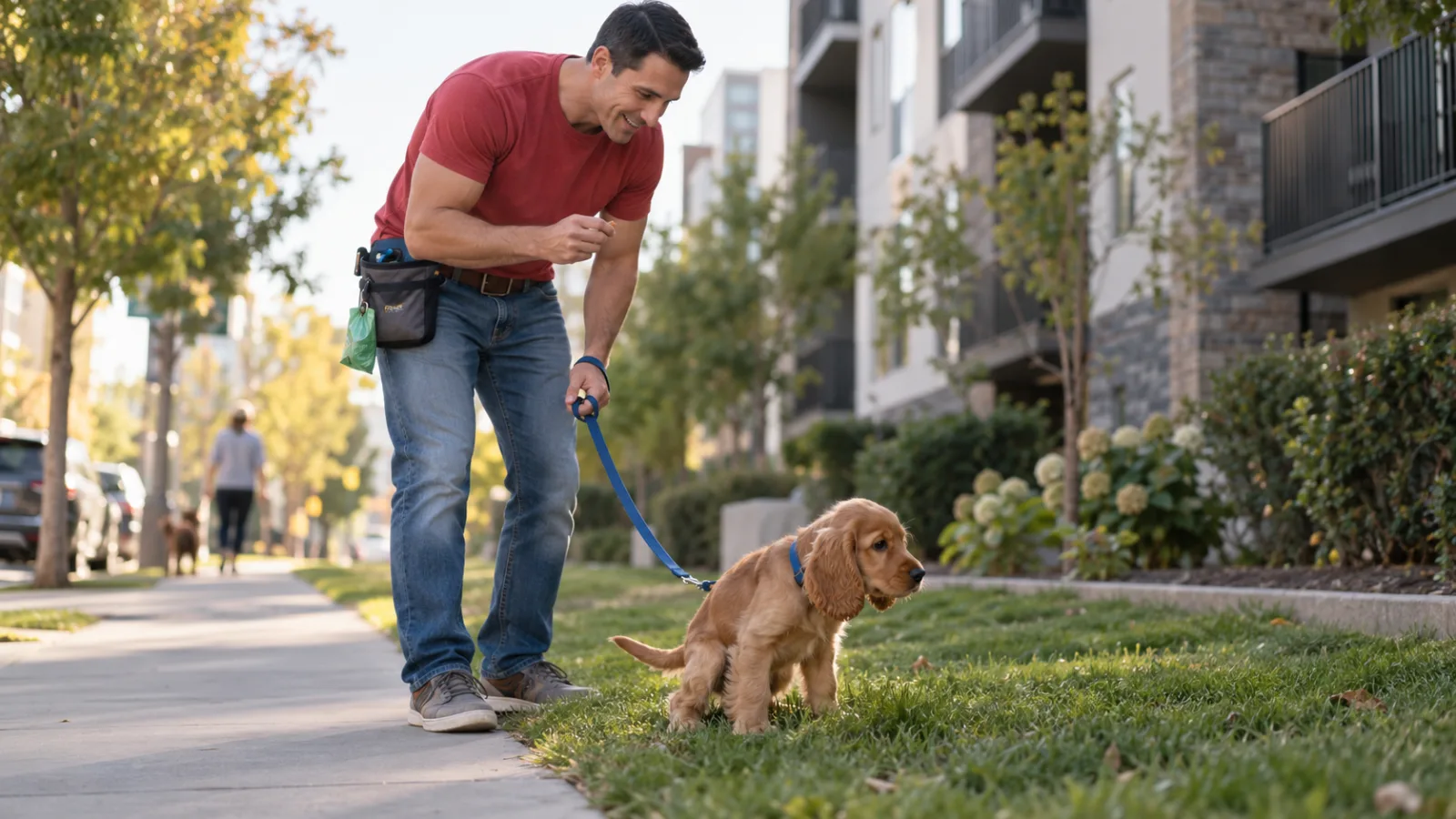
You brought home a new puppy – curious, adorable, and full of energy. Along with all that excitement comes the question almost every new puppy owner asks: how to potty train a puppy quickly, consistently, and without damaging your relationship with them.
At Vupo, we believe that puppy potty training is not about luck, and certainly not about punishment. Successful house training is built on three simple foundations: understanding your puppy's physiology, managing their environment correctly, and creating a consistent daily routine. In this guide, we'll walk you through a practical protocol designed to get results with as little frustration as possible.
Puppy Physiology: Why Can't Puppies Hold It?
Before beginning potty training, it is important to understand one simple biological fact: when your puppy leaves a puddle on the floor, they are not being "stubborn", getting revenge, or testing your boundaries.
The muscles that control the bladder and bowel sphincters are still developing during the first weeks and months of a puppy's life. The physical ability to hold urine and stool requires muscular and neurological development that happens gradually.
The Age-Based Rule for How Long a Puppy Can Hold It
To set realistic expectations and understand how long it takes to potty train a puppy, a commonly used rule of thumb is:
Puppy's age in months + 1 = maximum number of hours they may be able to hold it while resting
- 2-month-old puppy (8 weeks): 2 + 1 = up to 3 hours at most while resting. When awake, active, and playing, it may be only 1 to 1.5 hours.
- 3-month-old puppy: 3 + 1 = up to 4 hours while resting.
- 4-month-old puppy: 4 + 1 = up to 5 hours while resting.
Important: These numbers represent an approximate upper limit while a puppy is sleeping or resting. When your puppy is awake, moving around, playing, eating, or drinking, the time between potty breaks can be significantly shorter.
Critical Potty Windows: When Does Your Puppy Need to Go Outside?
In addition to watching the clock, there are three major biological triggers that commonly create an immediate need to eliminate:
- Immediately after waking up: Whether first thing in the morning or after a daytime nap, take your puppy outside as quickly as possible.
- 10–20 minutes after eating or drinking: The gastrocolic reflex stimulates the digestive system after food enters the stomach and may quickly create the urge to eliminate.
- Immediately after a play session: Physical and emotional excitement can increase pressure on the bladder and trigger the need to urinate.
The Puppy Pad Myth: Why Pee Pads Can Delay Complete House Training
One of the most common questions among new puppy owners is whether puppy pee pads are a good or bad idea. Although pee pads are sold in almost every pet store, relying on them can significantly extend the house-training process.
The Risk of "Substrate Preference" – Why Puppies Move From Pee Pads to Rugs and Bedding
Dogs can develop what is known as a substrate preference at an early age. When we teach a puppy to eliminate on a soft, absorbent surface inside the house, the puppy may learn that this particular texture under their paws is an appropriate place to go.
When the pee pad is moved or removed, the puppy does not necessarily understand that they are now expected to hold it until they go outside. Instead, they may simply look for the closest similar surface – a living room rug, a blanket that fell off the bed, or a floor mat.
Instead of teaching the puppy that potty happens outside on grass, gravel, or pavement, we may unintentionally teach them that certain surfaces inside the home are acceptable bathroom areas.
When Can Pee Pads Be Used as a Temporary Emergency Solution?
Pee pads should generally be reserved for situations such as:
- Very young puppies that have not yet completed their vaccination protocol and whose veterinarian has specifically advised against allowing them onto public outdoor surfaces.
- See article on vaccination schedule
- Situations where the owner must be away significantly longer than the puppy can physically hold it – for example, nine hours – and there is no option to use a dog walker, neighbor, friend, or family member.
In these cases, place the pad in one consistent location, well away from the puppy's sleeping and feeding areas. As outdoor potty breaks become possible, gradually move the pad closer to the exit and eventually remove it completely.
A Practical Potty-Training Protocol: Build a Clockwork Routine
Fast and effective potty training depends largely on preventing accidents before they happen and creating a predictable schedule.
Recommended Puppy Potty Schedule – From 8 Weeks to 6 Months
Learn why regular walks are important for your dog
- 8–12 weeks – every 2–3 hours while awake: immediately after waking, about 15 minutes after meals, after play, and before bedtime.
- 3–4 months – every 3–4 hours: early morning, midday, afternoon, evening, and before bed.
- 4–6 months – every 4–5 hours: morning, midday or afternoon, evening, and before bed.
- 6 months and older – 3–4 times per day: a regular adult-dog routine – morning, midday, evening/night.
Environmental Management: Using a Puppy Pen Without Punishment
One of the most effective tools in house training is proper environmental management. Puppies naturally tend to avoid soiling the area where they sleep and rest. If you give a young puppy unrestricted access to an entire house or apartment, however, it becomes very easy for them to wander into a distant corner and have an accident.
See article on Your Dog’s Safe Place
- The setup: Use a designated puppy pen containing an open sleeping crate or bed, a water bowl, and safe chew toys. This can also help redirect behaviors such as puppy biting and chewing furniture.
- The reasoning: Limiting the puppy's living area makes it easier to supervise them and encourages their natural tendency to keep their resting area clean.
- The golden rule: The puppy pen must always be a safe, calm place – never a punishment. You must take the puppy outside on time. Leaving a puppy confined beyond their physical ability to hold it can force them to eliminate in their sleeping area and interfere with their natural instinct to keep that area clean.
Manage your puppy's routine with Vupo:
Instead of trying to remember when your puppy last went outside, the Vupo app lets you log walks and potty breaks with a tap, keep the entire household coordinated in real time, and track successful daily routines and streaks that can help you stay consistent throughout the house-training process.
Positive Reinforcement vs. Responding to Accidents Indoors
The 3-Second Rule: When Should You Give a Treat and Praise Outside?
Timing matters. Dogs associate consequences with behavior that happened only moments earlier.
- Wait patiently until your puppy has completely finished eliminating outside.
- Within 1–3 seconds, use a verbal marker or praise such as "Yes!" or "Good job!" and immediately give your puppy a high-value treat, such as a small piece of hot dog, boiled chicken, or cheese.
- A common mistake: Waiting until you reach the stairs, lobby, or front door before giving the reward. By then, your puppy may associate the reward with entering the building rather than with eliminating outside.
What Should You Do If You Catch Your Puppy in the Act vs. Finding an Accident Later?
- If you catch your puppy in the act: Calmly say something like "Oops", and immediately pick up or guide your puppy outside to the designated potty area. If they finish outside, reward generously.
- If you discover the accident later: Simply clean it up without making a fuss. Ideally, clean it while your puppy is occupied elsewhere so the cleaning process does not become an opportunity for play with the mop, paper towels, or cleaning cloth.
- Never punish your puppy: Rubbing a puppy's nose in urine, yelling, or hitting them with a newspaper does not teach them where they should go. Puppies do not understand that your current anger is connected to an accident that happened earlier. Instead, punishment can teach the puppy to fear eliminating in front of you, which may result in "hidden pottying" behind the couch, under a bed, or in another room.
Enzymatic Cleaners vs. Bleach and Ammonia-Based Products
A dog's sense of smell can detect traces of urine long after an area appears clean to us. Those remaining odors may encourage the puppy to return to the same location.
- The mistake: Using ammonia-based cleaning products. Because urine naturally contains ammonia-related compounds, these cleaners may leave odors that resemble urine to a dog's sensitive nose and can encourage repeat accidents.
- The solution: Use a dedicated enzymatic pet-urine cleaner. These products are designed to break down the compounds and proteins in urine rather than simply masking the smell.
Frequently Asked Questions About Puppy Potty Training
At What Age Does a Puppy Gain Full Bladder and Bowel Control?
Most puppies develop substantially better physiological control between 4 and 6 months of age, although the exact timing varies based on the individual puppy, breed size, development, routine, and training consistency. Very small breeds may sometimes require more frequent potty breaks because of their smaller bladder capacity and faster metabolism.
What Should I Do If My Puppy Holds It During a Walk and Goes as Soon as We Get Home?
A puppy that refuses to eliminate outside may simply be overwhelmed by the environment. The outside world is full of smells, sounds, movement, people, dogs, and other distractions that can keep a puppy alert and prevent them from relaxing enough to go. Home, on the other hand, feels safe and familiar, making it easier for the puppy to relax.
The solution is to take your puppy to the same quiet, boring outdoor potty spot for 10–15 minutes. If they do not go, return home and keep them in their puppy pen or under close supervision for about 15 minutes, then take them back to the same spot and try again.
Does Scolding or Getting Angry Help Potty Train a Puppy?
No. Punishment can create anxiety and teach the puppy that eliminating in your presence is dangerous. It does not teach them that they should avoid eliminating indoors. Instead, some puppies learn to hide from their owners when they need to go, resulting in accidents behind furniture, under beds, or in other hidden locations.
How Many Times a Day Should I Take an 8-Week-Old Puppy Outside?
A young puppy should generally be taken outside every 2–3 hours during the day, as well as immediately after waking up, eating, drinking, and playing. For many puppies, this can mean approximately 8–10 short potty trips per day.
How Should I Handle Potty Training at Night?
Plan a final potty break immediately before bedtime. During the first few weeks, consider placing your puppy's sleeping area near your bed so you can hear when they wake up, become restless, or signal that they need to go outside. If your puppy wakes during the night, take them outside quietly and calmly for a potty break only. Keep the environment low-key, avoid play, and return them to their sleeping area afterward.