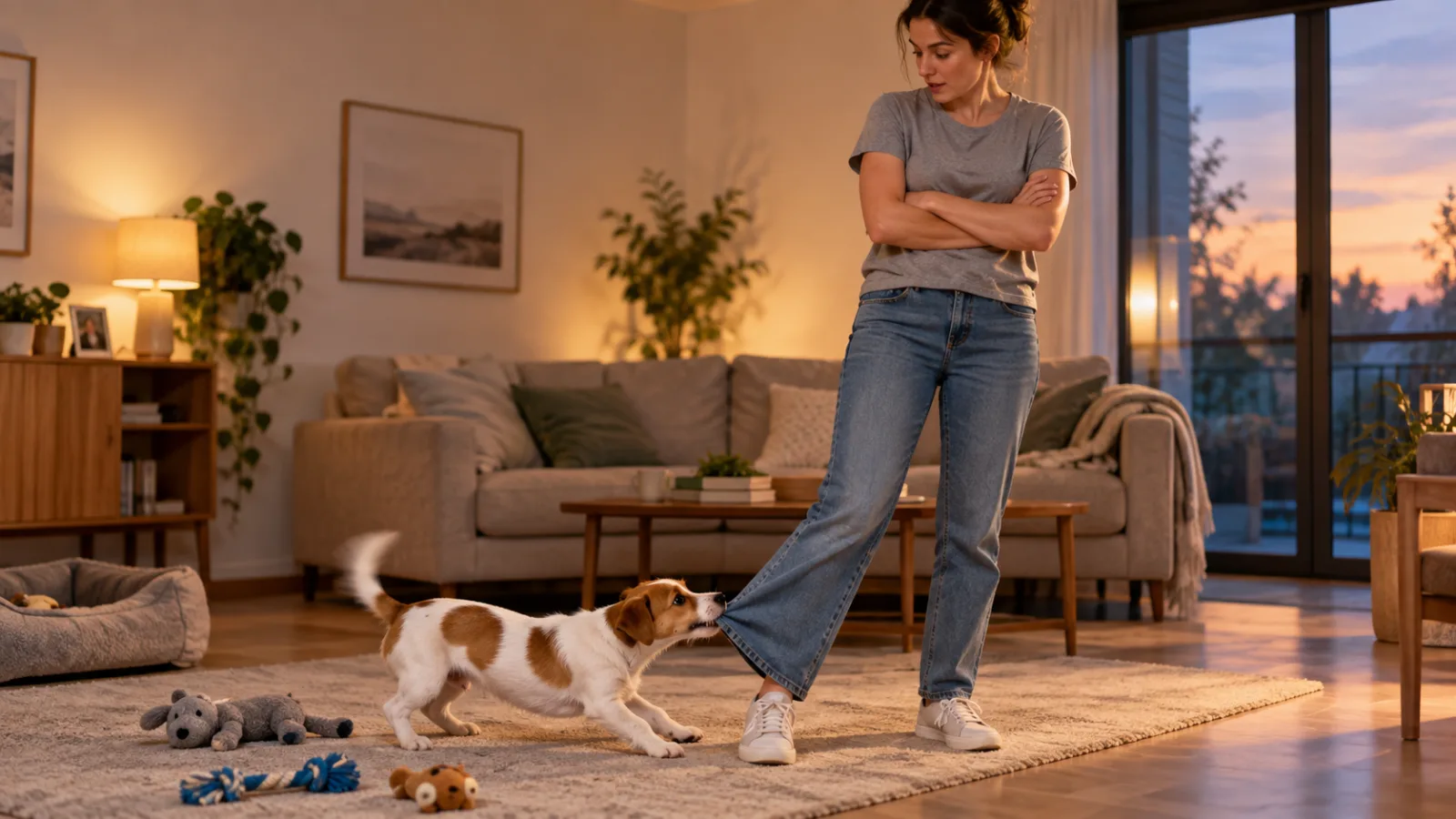
You brought an adorable little puppy home, but it did not take long to discover that behind all that cuteness are teeth as sharp as needles. Scratched hands, torn pants, and chewed-up shoes leave many new puppy owners frustrated and wondering: How do I get my puppy to stop biting?
Puppy biting and mouthing are among the most common challenges new dog owners face. The good news is that this behavior does not mean your puppy is "bad" or aggressive. By understanding normal canine behavior and using modern training methods, you can learn exactly how to teach a puppy not to bite and bring some calm back into your home.
Why Do Puppies Bite? Understanding the Behavior Behind Those Sharp Teeth
Before trying to stop the behavior, it is important to understand why your puppy is biting in the first place.
Exploring the World Through the Mouth and Normal Puppy Play
Dogs do not have hands to touch and examine new objects. Their mouths are one of their primary tools for exploring the world around them, including different textures, tastes, shapes, and surfaces.
Puppy play also naturally involves chasing, wrestling, mouthing, and using their teeth. This is part of how puppies communicate, interact, and show interest in one another.
Teething Pain: Baby Teeth and Adult Teeth
At around 3 to 4 months of age, puppies typically begin losing their sharp baby teeth as their permanent adult teeth start coming in. This process usually continues until around 6 months of age.
Teething can cause significant irritation, pressure, and discomfort in the gums. Chewing and biting objects can provide direct physical relief from the soreness and pressure associated with teething.
Overstimulation, Fatigue, and Poor Emotional Regulation
Just like overtired toddlers can become irritable and difficult to settle, puppies can struggle with self-regulation when they do not get enough sleep.
An overtired puppy may become highly overstimulated. At that point, self-control decreases dramatically, and the result may be a frantic biting episode in which the puppy grabs at hands, clothing, feet, and almost anything else that moves.
Bite Inhibition: One of the Most Important Skills a Puppy Can Learn
One common mistake is trying to eliminate every instance of tooth contact immediately instead of first teaching the puppy bite inhibition.
How Puppies Learn to Control Bite Pressure From Their Mother and Littermates
During the first weeks of life, puppies play together and frequently bite and mouth one another.
When one puppy bites another puppy too hard, the puppy that was bitten may yelp and stop playing. The message is simple: "If I bite too hard, the game ends."
Through this immediate feedback, puppies gradually learn to control how much pressure they apply with their jaws.
Teaching Bite Pressure Before Eliminating Mouthing Completely
The goal of the first stage is not necessarily to eliminate all mouthing overnight. Instead, the puppy should first learn to use its mouth gently, often referred to as developing a soft mouth.
A puppy that develops good bite inhibition learns an important form of lifelong impulse control. Even if the dog is startled, frightened, or in pain later in life, it has already practiced controlling the amount of pressure it applies with its mouth.
Once the puppy has learned to regulate bite pressure, you can gradually teach it that chewing and biting should be directed toward appropriate objects rather than people.
What to Do When Your Puppy Bites
If you are wondering how to respond when your puppy bites too hard, follow these steps.
Use the Freeze Technique and Stop Interaction Immediately
Sudden hand movements, quickly pulling your feet away, or making excited noises can trigger a puppy’s natural chase and prey instincts. To the puppy, your reaction may turn the situation into an exciting game.
When your puppy’s teeth touch your skin:
- Freeze completely.
- Avoid eye contact.
- Close your hands or fold your arms against your chest.
- Remain still and uninteresting.
By removing movement and interaction, you remove much of the reward from the behavior and communicate a clear message: "The game stops when teeth touch skin."
If your puppy bites your feet or ankles, stop walking completely. Once the puppy lets go or settles down, calmly reward the appropriate behavior and continue walking.
Redirect Biting to Appropriate Chew Toys
Puppies have a genuine physiological need to chew, especially while teething. Simply telling a puppy what not to bite is not enough. You also need to provide an appropriate alternative. Keep several puppy-safe chew toys nearby so you can redirect the puppy when necessary.
- Durable rubber chew toys: tough enough to last, and a satisfying, appropriate outlet for a puppy that needs to chew.
- Frozen food-stuffed toys: fill a suitable toy with a small amount of wet dog food and freeze it. This provides longer-lasting enrichment while the cold surface can help soothe sore gums.
- Frozen damp rope or fabric toys: a puppy-safe rope or fabric toy can be dampened and chilled or frozen. The cold can help soothe teething discomfort while giving the puppy an appropriate object to chew.
Always supervise your puppy with toys that can potentially tear, fray, or break apart.
Managing Evening Puppy "Zoomies"
Many puppies experience a burst of intense energy in the evening. They may run wildly around the house, jump, grab clothing, and bite much more frequently. Instead of fighting against the puppy’s behavior, try to recognize when these high-energy periods usually occur and manage them proactively.
Redirect the puppy toward calming or structured activities such as:
- Lick mats
- Appropriate chewing activities
- Controlled physical activity
- Short mental enrichment or training sessions
Maintaining a consistent daily routine can also help prevent overtiredness and reduce situations in which a puppy cries at night and cannot settle.
The Vupo step-by-step training program provides short daily exercises designed to build self-control and calm behavior. It also helps you manage your puppy’s daily routine and walks in a way that can significantly reduce excessive biting episodes.
A consistent potty schedule is also essential to a puppy’s development. Read more in our guide: How to Potty Train a Puppy.
What Not to Do: Common Mistakes That Can Make Puppy Biting Worse
Rough Hand Play, Hitting the Nose, Yelling, or Holding the Jaw Shut
Some reactions can increase frustration, arousal, fear, or defensive behavior.
- Using your hands as toys: this teaches your puppy that hands are legitimate objects to chase, grab, and bite.
- Physical punishment or hitting the puppy on the nose: this can create fear, damage trust, and potentially turn normal playful mouthing into defensive behavior.
- Holding the puppy’s jaw or forcing the mouth closed: this can increase frustration and arousal, causing the puppy to struggle, resist, and potentially bite even harder.
Frequently Asked Questions
When Does Puppy Biting Stop Naturally?
Many owners wonder when puppy biting will stop. Most teething-related biting decreases significantly by around 6 months of age, when most of the permanent teeth have erupted. However, appropriate and consistent training is still important to teach the puppy where and when chewing and mouthing are acceptable.
Does Puppy Biting Mean My Dog Will Become Aggressive?
No. Puppy biting and mouthing are a normal part of puppy development, play, and exploration. By themselves, they do not mean that a puppy will become aggressive as an adult.
Why Does My Puppy Bite My Ankles When I Walk?
If you have ever wondered, "Why does my puppy bite my pants when I walk?", the answer is often movement. Moving feet, ankles, shoelaces, and loose fabric can trigger a puppy’s natural chase and prey-related behaviors. Stopping completely removes the moving target and helps teach the puppy that legs and clothing are not toys.
Does Yelling "Ouch!" Really Help?
For some puppies, a sharp "Ouch!" can imitate the reaction of another puppy and interrupt the biting. For highly excitable puppies, however, the sound may have the opposite effect. They may interpret it as excitement or play, increasing their arousal and causing them to bite even more. If saying "Ouch!" makes your puppy more excited, stop using it and switch to the freeze technique instead.
What Are the Best Toys for Soothing Teething Pain?
High-quality puppy-safe rubber toys filled with wet food and frozen can be especially useful during teething. The cold can help soothe irritated gums, while licking and chewing provide the puppy with a safe, calming, and appropriate activity.