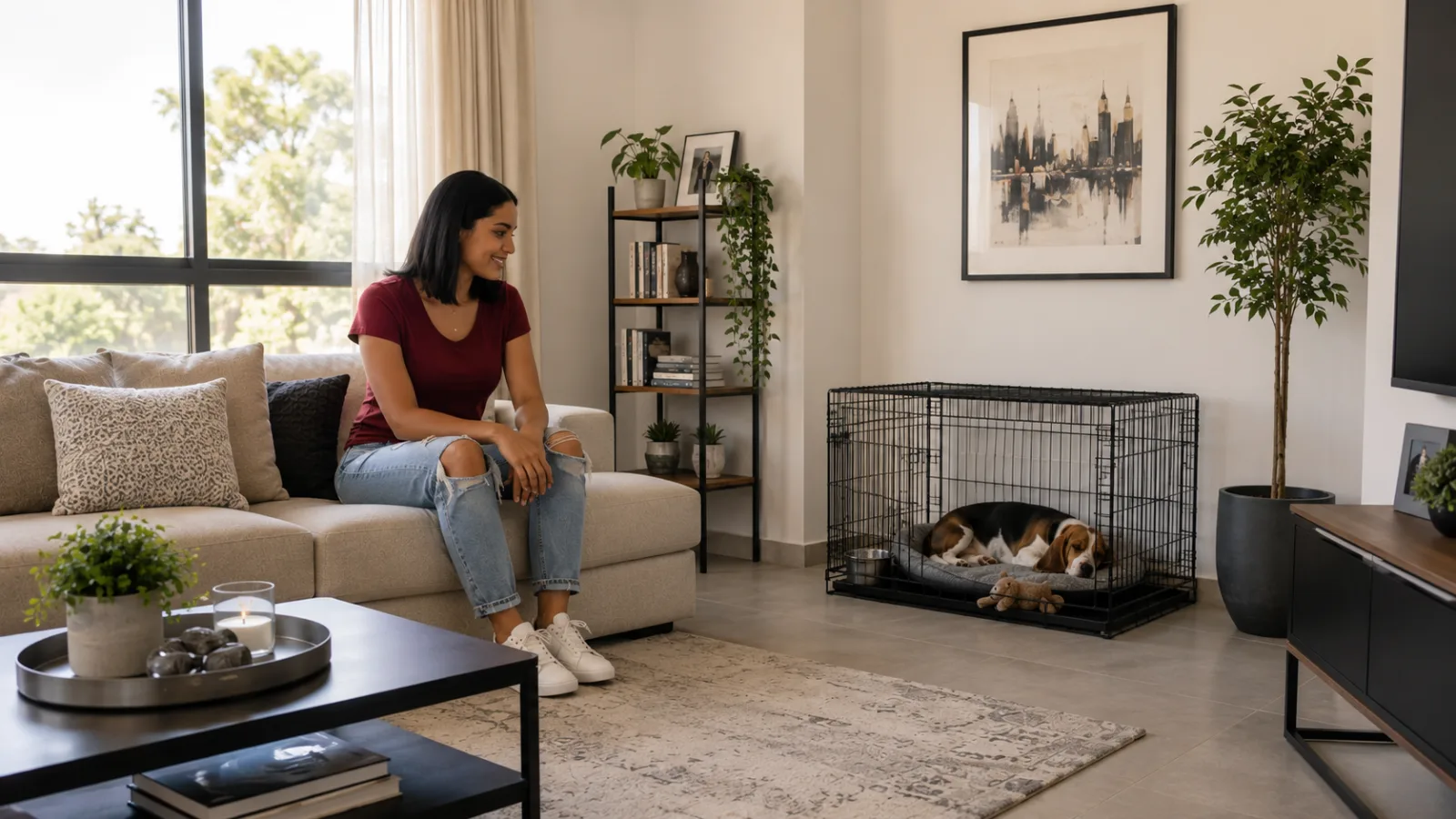
Your Dog’s Safe Place: How Crate Training Can Help Them Relax
When thinking about canine welfare, it is important to remember that dogs need more than nutritious food, walks, and playtime. They also need to feel safe, have a way to step away from stimulation, and have a quiet place where they can rest without being disturbed.
Adult dogs commonly sleep around 12 to 14 hours a day, while puppies may need 18 to 20 hours of sleep.
Without a quiet, clearly defined resting area, a dog may be constantly exposed to household noise, movement, visitors, and other stimulation. This can make it harder for the dog to settle, rest properly, and regulate their behavior.
This is where a dog crate can be useful. A better way to think of it is as the dog’s personal safe space.
Unlike the outdated belief that a crate is automatically a form of punishment or confinement, a crate that is introduced correctly can provide a calm, secure, and clearly defined resting area. Many dogs enjoy having a protected place where they do not need to follow everything happening around the house, react to every sound, or deal with constant activity.
An important note: A crate should be a place the dog enters willingly and feels comfortable in. It should never be used as punishment, and a dog should not be left inside for longer than is appropriate for their age, physical needs, and individual comfort.
Why Is Crate Training Important for Puppies?
It helps puppies settle and avoid overstimulation
Young puppies, much like toddlers, do not always recognize when they are tired or know how to stop playing on their own. In fact, some puppies become more active, mouthy, or restless when they need sleep.
A crate that has been introduced gradually can provide a quiet environment with fewer distractions. This may help the puppy lower their activity level, settle down, and transition naturally into rest or sleep.
The crate should not be used to force a frightened or highly active puppy to “calm down.” The goal is to teach the puppy that the crate is a predictable and comfortable place to rest.
It can support potty training and a consistent routine
Most dogs prefer not to eliminate in the area where they sleep. For this reason, appropriate crate use can support potty training and help establish a consistent routine for sleep, outdoor potty breaks, meals, and activity.
However, a crate is not a substitute for taking a puppy outside often enough. Young puppies cannot hold their bladder for long periods. Crate use must always be combined with regular potty breaks and close attention to the puppy’s needs.
Accidents inside the crate should not be punished. They often indicate that the puppy was left too long, the crate is not the right size, the training progressed too quickly, or the puppy has a medical or digestive issue.
It can help build independence and prevent unsafe behavior
When a puppy learns to relax in their own space while family members are still at home, they begin to understand that they do not need to take part in every activity.
This skill may help reduce constant dependence on the owner and prevent chewing, swallowing unsafe objects, or other unwanted behaviors when direct supervision is not possible.
However, crate training does not prevent or treat separation anxiety by itself. A dog that experiences serious distress when left alone needs an individual behavior plan. Confining an anxious dog in a crate may make the problem worse if the dog feels trapped or tries to escape.
How Do I Make a Dog Crate a Safe Place?
The most important part of successful crate training is not the crate itself. It is the way the dog is introduced to it.
Forcing a dog inside, closing the door before the dog is ready, allowing the dog to panic, or using the crate when you are angry can create a negative association. Crate training should be gradual and based on positive experiences, rewards, and a pace that matches the individual dog.
During the first stage, allow the dog to enter and leave freely. Keep the door open and place treats, toys, or meals near the entrance and gradually farther inside. Reward the dog for approaching, entering, resting, or remaining calm.
Do not push, pull, or physically place the dog inside.
Only after the dog enters willingly and remains relaxed should you begin closing the door. Start with very short periods while you remain nearby. Open the door before the dog becomes stressed, and gradually increase the duration over several training sessions.
Positive associations and gradual increases in duration are central to current veterinary crate-training guidance.
For a more detailed walkthrough of the introduction process, read How to Crate Train a Puppy or Adult Dog: A Step-by-Step Guide to Crates and Playpens.
What Are the Benefits of Crate Training an Adult Dog?
Adult dogs can also benefit from having a quiet and protected resting place, especially if they find household noise, visitors, children, or frequent activity difficult to manage.
For an adult dog, the crate can become an optional retreat where they choose to rest and step away from the environment. It may also be useful when traveling, visiting the veterinarian, recovering from certain medical procedures, or staying in an unfamiliar place.
Adult dogs that have never used a crate should be introduced to it slowly. They may need more time than a young puppy to feel comfortable.
Pay close attention to the dog’s response. Signs that the dog may not be coping well include:
- Heavy panting when the dog is not hot
- Excessive drooling
- Repeated barking or howling
- Frantic scratching or biting at the crate
- Attempts to bend the door or escape
- Refusing treats that the dog normally enjoys
- Urinating or defecating because of distress
If the dog shows these behaviors, do not force them to remain inside. A playpen, a dog-proofed room, or an area separated by a baby gate may be more suitable. For severe fear, confinement anxiety, or separation-related behavior, consult a qualified behavior professional or veterinarian.
Crate Training Is About Safety, Not Control
When crate training is done correctly, the crate can become one of the dog’s preferred resting places. It may provide calm, predictability, clear boundaries, and a sense of security. It can also help family members manage the home more safely when they cannot supervise the dog directly.
The goal is not to make the dog surrender, tolerate fear, or accept forced confinement. The goal is to teach the dog that the crate is a safe, comfortable, and predictable place where they can rest.
In the Crate Training program in the Vupo app, you will learn how to build this process gradually and clearly. The program guides you step by step, explains how to use positive reinforcement, helps you adjust the pace to your dog, and allows you to monitor their response throughout the process.
Ready to help your dog find a quiet and secure place of their own? Join Vupo and start the Crate Training program today.