Important: This article provides general information about dog nutrition and was written by a dog trainer, not a veterinarian. It is not a substitute for veterinary advice or for a feeding plan tailored to your individual dog.
In addition, if your dog has a medical condition, a suspected food sensitivity, or needs a therapeutic diet, consult your veterinarian before changing their food.
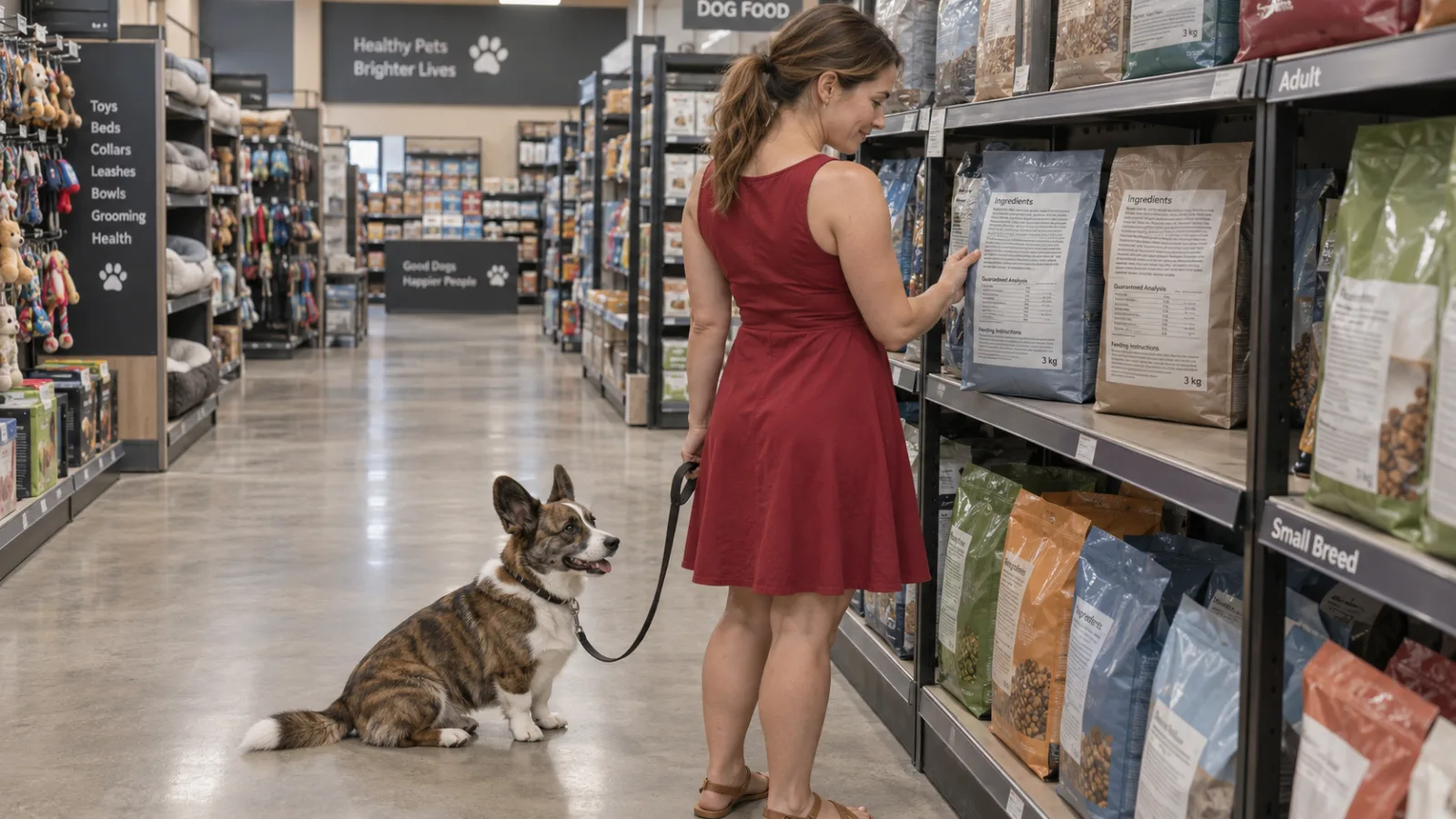
How do you choose dry dog food when every bag promises better health, premium meat, and the perfect formula? Start with the back of the bag. The right food is complete and balanced, suits your individual dog, and comes from a manufacturer with nutritional expertise and reliable quality control. A high price, a picture of a steak, or a rating on a commercial dog food website is not proof of quality.
Beyond the Packaging: Understanding Dog Food Labels
When learning how to read dog food labels, first look for a nutritional adequacy statement confirming that the food is complete and balanced for your dog's life stage. In the United States, this may state that the food meets AAFCO nutrient profiles or that its nutritional adequacy has been substantiated through feeding trials. These statements carry more weight than ordinary marketing claims, but they do not mean that AAFCO has approved the product. Labeling rules vary by market. AAFCO's guide to reading labels.
Also check the manufacturer or distributor, best-by date, lot number, feeding directions, and calorie content. US labels list calories in kilocalories per kilogram, usually alongside a familiar unit such as cups. In the guaranteed analysis, look for protein, fat, fiber, and moisture. The protein percentage alone does not tell you how digestible the protein is or whether the food supplies all the essential amino acids your dog needs.
Ingredient Order: Listed by Weight
Ingredients appear in descending order by weight when added to the recipe, including the water they contain. The first ingredient helps explain the formula, but it is not the most important measure of quality. Chicken at the top of the list does not prove that a food is better than one listing another ingredient first. Evaluating dog food ingredients requires looking at the entire formulation.
Fresh Chicken vs. Chicken Meal
Fresh meat contains substantial amounts of water, sometimes around 70%, much of which is removed during manufacturing. Chicken meal has already been dried, so it generally provides more concentrated protein by weight. A pound of fresh chicken is not nutritionally equivalent to a pound of chicken meal.
A clearly named animal source helps you understand what is included, but "meal" does not mean inferior, and "fresh" does not guarantee quality. Combining the two is not automatically ideal either. Digestibility, nutritional balance, and ingredient quality control matter more. Tufts on interpreting ingredient lists.
Common Marketing Traps to Watch For
What is the difference between premium dog food and a cheaper option? The word "premium" alone is not a nutritional standard that guarantees a better product. Ask who formulates the food, what qualifications they have, and which tests are performed on the finished product. A higher price is no substitute for answers. Tufts' consumer nutrition guidance.
Ingredient Splitting
Corn, corn flour, and corn gluten meal may appear separately, placing each ingredient farther down the list. Peas, pea starch, and pea protein can have a similar effect. This makes it harder to estimate how much of the formula comes from a particular source.
However, these ingredients serve different purposes, and listing them separately is not necessarily deceptive. Their positions on the list cannot tell you the exact carbohydrate content. Grains are not automatically worthless "fillers."
By-Products, Artificial Colors, and BHA/BHT
Animal by-products can include nutritious organs such as the liver and heart. The term does not mean waste. Artificial colors are not nutritionally necessary, and you may prefer food without them, but their presence alone does not prove that a food is unsafe.
BHA and BHT are antioxidants that help keep fats from going rancid. Safety depends on the substance, amount, and conditions of use. The FDA is reassessing these substances in the food supply; that review does not establish that a dog food containing them will harm your dog. FDA information on these reviews.
Grain-Free Food and the Research on DCM
"Grain-free" does not mean healthier. The FDA has investigated a possible connection between certain diets and dilated cardiomyopathy, a heart muscle disease known as DCM. Many reports involved foods with legumes, such as peas and lentils, high on their ingredient lists.
The reports included both grain-free and grain-containing diets. The relationship is complex, and the evidence does not establish that all grain-free foods are dangerous or that legumes themselves cause the disease. "Grain-free" alone is not a reason to choose a food. The FDA's DCM questions and answers.
Matching Food to Life Stage and Breed Size
Large-Breed vs. Small-Breed Puppies: Calcium, Phosphorus, and Growth
Puppies need complete and balanced food formulated for growth. For large-breed puppies, choosing an appropriate formula is especially important: excess calories and calcium can interfere with healthy skeletal development. The calcium-to-phosphorus ratio matters too, but a correct ratio cannot compensate for inappropriate amounts.
Choose food specifically labeled as suitable for the growth of large-breed dogs, and do not add calcium to a complete diet unless your veterinarian recommends it. For small-breed puppies, consider kibble size and meal frequency as well. VCA's puppy feeding guidance.
Active Adults vs. Overweight Dogs
A dog working for hours each day has different energy needs from one spending most of the day indoors. Compare calorie density, not just fat percentages or the word "light." For dogs with obesity, a veterinarian-guided weight-loss plan, sometimes including a therapeutic diet, is preferable to drastically cutting portions of regular food.
How to Transition Your Dog to a New Food
Make the Switch Gradually Over 7-10 Days
A gradual transition can reduce the risk of digestive upset, although it cannot eliminate that risk:
- Days 1-3: 75% old food and 25% new food.
- Days 4-6: Equal parts old and new food.
- Days 7-9: 25% old food and 75% new food.
- Day 10: New food only, provided your dog is tolerating the change.
Adjust portions for differences in calorie density. Dogs with sensitive stomachs may need a slower transition. Contact your veterinarian if your dog develops persistent diarrhea, vomiting, blood in the stool, or weakness.
Simple Rules for Choosing Quality Dog Food
- Choose complete and balanced food appropriate for your dog's age, size, and health.
- Look for a manufacturer that shares information about its nutrition experts and quality control.
- Do not judge food solely by its first ingredient or meat percentage.
- Compare the cost per day of feeding, not just the price of the bag.
- Weigh portions and monitor your dog's weight and body condition.
- Start with a small bag to assess suitability before buying a larger one.
Frequently Asked Questions
How Can I Tell Whether a Food Suits My Dog?
Firm, easy-to-pick-up stools, an appropriate weight, a healthy coat, and normal energy levels are encouraging signs. Itching and excessive gas deserve attention, but they do not prove a food allergy. Looking healthy also does not, by itself, confirm that a diet is nutritionally balanced.
Which Is Better: Fresh Meat as the First Ingredient or Meat Meal?
Neither automatically wins. Fresh meat contains more water, while meat meal is more concentrated. The quality of the overall formula matters more than choosing one over the other.
What Percentage of Meat Should Dog Food Contain?
There is no universal meat percentage that guarantees quality. Dogs need nutrients in appropriate amounts and proportions. Meat percentage alone cannot tell you whether a food meets those needs.
Do I Need to Change My Dog's Food Occasionally?
No. If the food suits your dog, there is no need to switch. There is no evidence that routinely rotating protein sources prevents food allergies, and changes in the gut microbiome do not necessarily represent a health improvement. Tufts on food allergies.
How Much Dry Food Should a Puppy or Adult Dog Eat Each Day?
The manufacturer's feeding chart is a starting point. Check whether it refers to your dog's current weight or expected adult weight, then adjust for activity, growth, and body condition. Use a kitchen scale to measure portions in grams, and include treats when calculating total intake.
How Can I Switch Foods Without Causing Diarrhea?
Follow the gradual transition above, avoid introducing new treats at the same time, and slow down if needed. No transition schedule can guarantee that diarrhea will not occur.
In Vupo you can log your dog's walks and review their routine over time, alongside your own records of weight and food portions. Walk duration alone is not an accurate measure of calories burned.
Further reading on the blog: What Can Dogs Eat? Safe and Toxic Foods Explained and How Much Does It Cost to Own a Dog?