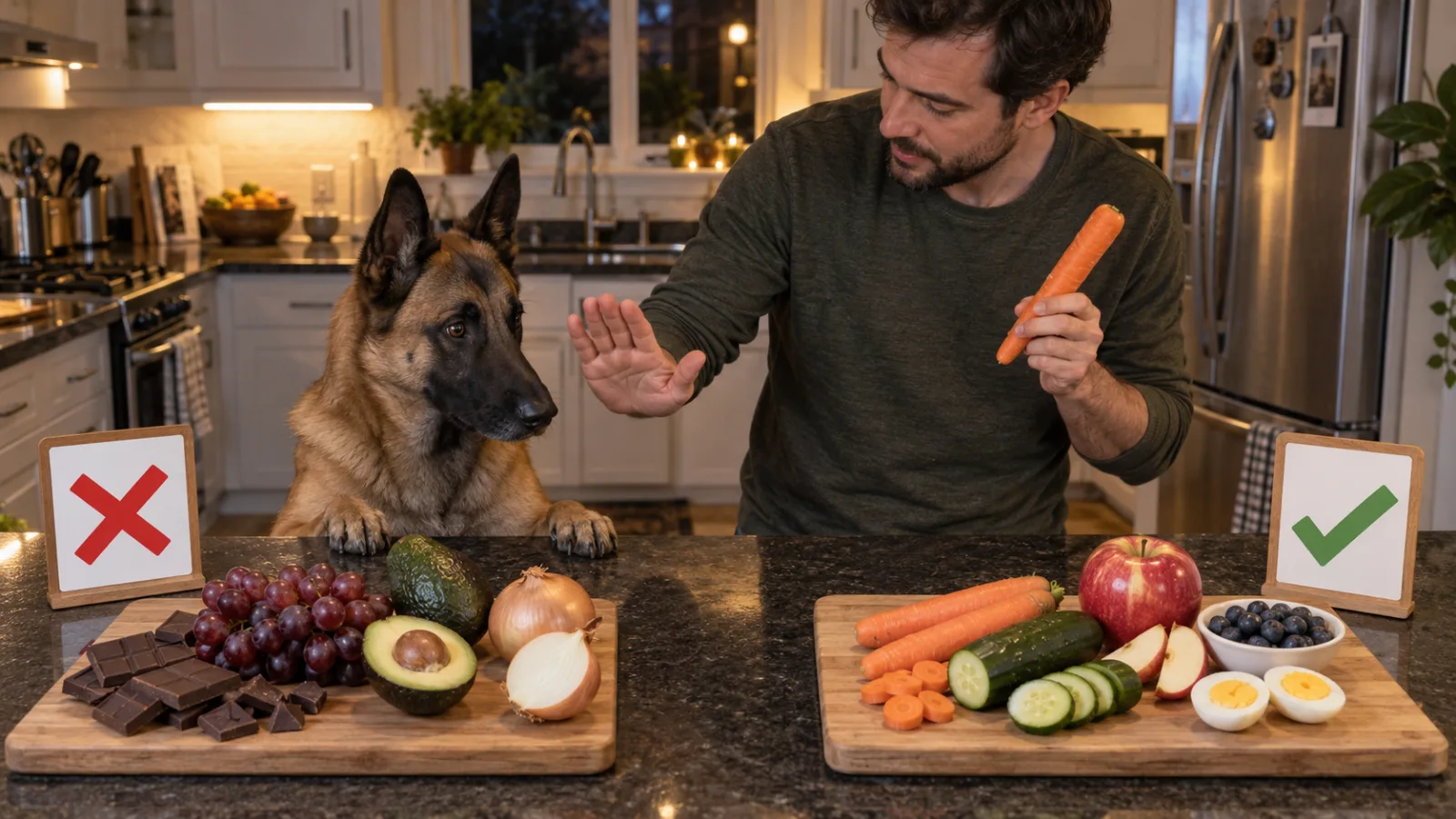
When dog owners ask what foods can dogs not eat, it is important to distinguish between foods that are truly toxic, foods that may cause injury or intestinal obstruction, and foods that are generally safe in moderation.
Even safe human foods should not replace a complete and balanced canine diet. For a healthy dog, treats and extras should generally make up no more than about 10% of total daily calories. If your dog has a chronic condition, food allergy, history of pancreatitis, or is on a prescription diet, consult your veterinarian before adding new foods.
The Most Toxic and Dangerous Foods for Dogs
Chocolate and Caffeine: A Risk to the Nervous System and Heart
Why is chocolate dangerous for dogs? Chocolate contains theobromine and caffeine, which can cause vomiting, restlessness, rapid or abnormal heart rhythms, tremors, seizures, and, in severe cases, death.
The darker the chocolate and the higher the cocoa content, the greater the risk. Cocoa powder and baking chocolate are especially dangerous. Toxicity depends on the dog's weight, the type of chocolate, and the amount eaten.
Grapes and Raisins: A Risk of Acute Kidney Injury
Can dogs eat grapes? No. Grapes and raisins can cause acute kidney injury. Early signs may include vomiting, diarrhea, lethargy, and loss of appetite. In severe cases, urine production may decrease as kidney function worsens.
There is no reliable way to predict which dogs will become ill, so any ingestion should prompt a call to a veterinarian.
Onions, Garlic, and Other Allium Plants: Damage to Red Blood Cells
Onions, garlic, chives, and leeks can cause oxidative damage to red blood cells and may lead to hemolytic anemia. The risk remains whether these foods are raw, cooked, dried, or powdered.
If your dog eats a significant amount of onion or garlic, contact a veterinarian rather than waiting for weakness, pale gums, rapid breathing, or unusual fatigue.
Xylitol: Severe Hypoglycemia and Possible Liver Injury
Xylitol is a sweetener found in some sugar-free gum, candy, baked goods, toothpaste, and nut butters.
In dogs, it can trigger a rapid release of insulin, causing severe hypoglycemia and, in some cases, liver injury. Weakness, vomiting, poor coordination, seizures, or collapse can develop quickly. Xylitol ingestion is a veterinary emergency.
Cooked Bones and Avocado: Different Risks, but Both Require Caution
Cooked bones can splinter, become lodged in the digestive tract, or cause internal injury.
Avocado requires more nuance. Dogs are relatively resistant to persin, and avocado flesh is not considered a classic canine toxin. However, it is high in fat and may cause digestive upset or contribute to pancreatitis in susceptible dogs. The pit can also cause an intestinal obstruction. Guacamole may be more dangerous because it often contains onion or garlic.
Healthy Human Foods Dogs Can Eat
Crunchy, Low-Calorie Vegetables
Vegetables that can be given to dogs as treats include carrots, cucumbers, zucchini, and green beans. Serve them plain, raw or cooked, without salt, oil, butter, sauces, or seasoning. Cut them into pieces appropriate for your dog's size.
Fruits Rich in Nutrients and Antioxidants
Some fruits dogs can eat include apples with the seeds and core removed, watermelon without seeds or rind, bananas, strawberries, and blueberries. Because fruit contains natural sugar, keep portions small.
Lean Protein and Simple Carbohydrates
Plain cooked chicken without skin, bones, or seasoning, hard-boiled eggs, and plain cooked white rice are generally safe for healthy dogs. They can be occasional additions, but should not replace a complete and balanced diet.
Quick Reference Table: Safe, Unsafe, or Limited
| Food | Status | Notes |
|---|---|---|
| Chocolate | Unsafe | Theobromine and caffeine |
| Coffee, tea, energy drinks | Unsafe | Caffeine |
| Grapes | Unsafe | Kidney injury risk |
| Raisins | Unsafe | Kidney injury risk |
| Onion | Unsafe | Damages red blood cells |
| Garlic | Unsafe | Allium family |
| Xylitol | Unsafe | Hypoglycemia and liver injury |
| Alcohol | Unsafe | Toxic |
| Raw yeast dough | Unsafe | Expansion and alcohol production |
| Macadamia nuts | Unsafe | Weakness and tremors |
| Cooked bones | Unsafe | Splintering and obstruction |
| Avocado pit | Unsafe | Obstruction risk |
| Avocado flesh | Limited | High in fat |
| Apple without seeds or core | Safe | Cut into pieces |
| Banana | Limited | High in natural sugar |
| Watermelon | Safe | No rind or seeds |
| Blueberries | Safe | Small amounts |
| Strawberries | Safe | No added sugar |
| Orange | Limited | A few segments |
| Carrot | Safe | Low-calorie treat |
| Cucumber | Safe | Plain |
| Zucchini | Safe | Raw or cooked |
| Green beans | Safe | No added salt |
| Cooked pumpkin | Safe | Plain |
| Cooked chicken | Safe | No skin, bones, or seasoning |
| Hard-boiled egg | Safe | Plain |
| Cooked white rice | Safe | Occasional addition |
| Plain yogurt | Limited | Must be xylitol-free |
| Cheese | Limited | Fat, salt, and lactose |
| Peanut butter | Limited | Only if xylitol-free |
Emergency Protocol: Your Dog Ate a Toxic Food. What Should You Do?
- Remove any remaining food and keep the package or ingredient label.
- Note what your dog ate, the estimated amount, when it happened, and your dog's weight.
- Call your veterinarian or an emergency veterinary hospital immediately. Do not wait for symptoms after ingestion of dark chocolate, grapes, raisins, xylitol, onions, or garlic.
- Do not induce vomiting or give salt, oil, milk, hydrogen peroxide, or other home remedies unless a veterinarian specifically tells you to do so.
- If your dog develops repeated vomiting, tremors, loss of coordination, seizures, weakness, collapse, breathing difficulty, or pale gums, seek emergency veterinary care immediately.
In the United States, you can also contact a veterinary poison-control service such as the ASPCA Animal Poison Control Center or Pet Poison Helpline. These services may charge a consultation fee.
Frequently Asked Questions
How Much Chocolate Is Considered Lethal for a Dog?
There is no single dangerous amount for every dog. Toxicity depends on body weight, chocolate type, and cocoa concentration. Dark chocolate, baking chocolate, and cocoa powder are particularly dangerous, so suspected ingestion should be assessed by a veterinarian.
Can Dogs Eat Cooked Chicken Bones from Soup?
No. Cooked chicken bones can splinter and may cause choking, gastrointestinal injury, or intestinal obstruction.
Can Dogs Eat Dairy Products Such as Cheese?
Sometimes, in very small amounts. Many adult dogs do not tolerate lactose well, and cheese is also high in fat and salt. A small piece may be acceptable as an occasional training treat for some dogs, but larger amounts can cause gas or diarrhea.
What Should I Do If My Dog Ate Onion?
Contact your veterinarian and provide your dog's weight, the estimated amount eaten, whether the onion was raw, cooked, dried, or powdered, and when it was eaten. Do not wait for signs of anemia, which may be delayed.
Can a Dog Eat Just One Grape?
There is no reliably safe dose of grapes or raisins for dogs. Because individual sensitivity is unpredictable, contact a veterinarian even after a small ingestion.
The information in this article is for general educational purposes only and is not a substitute for diagnosis, treatment, or individualized veterinary advice.
Professional Veterinary References
- Merck Veterinary Manual - Food Hazards
- Merck Veterinary Manual - Chocolate Toxicosis in Animals
- Merck Veterinary Manual - Grape, Raisin, and Tamarind Toxicosis in Dogs
- Merck Veterinary Manual - Garlic and Onion Toxicosis in Animals
- Merck Veterinary Manual - Xylitol Toxicosis in Dogs
- WSAVA Nutrition Committee - Feeding Treats to Your Dog
- ASPCA Animal Poison Control - People Foods to Avoid Feeding Your Pets