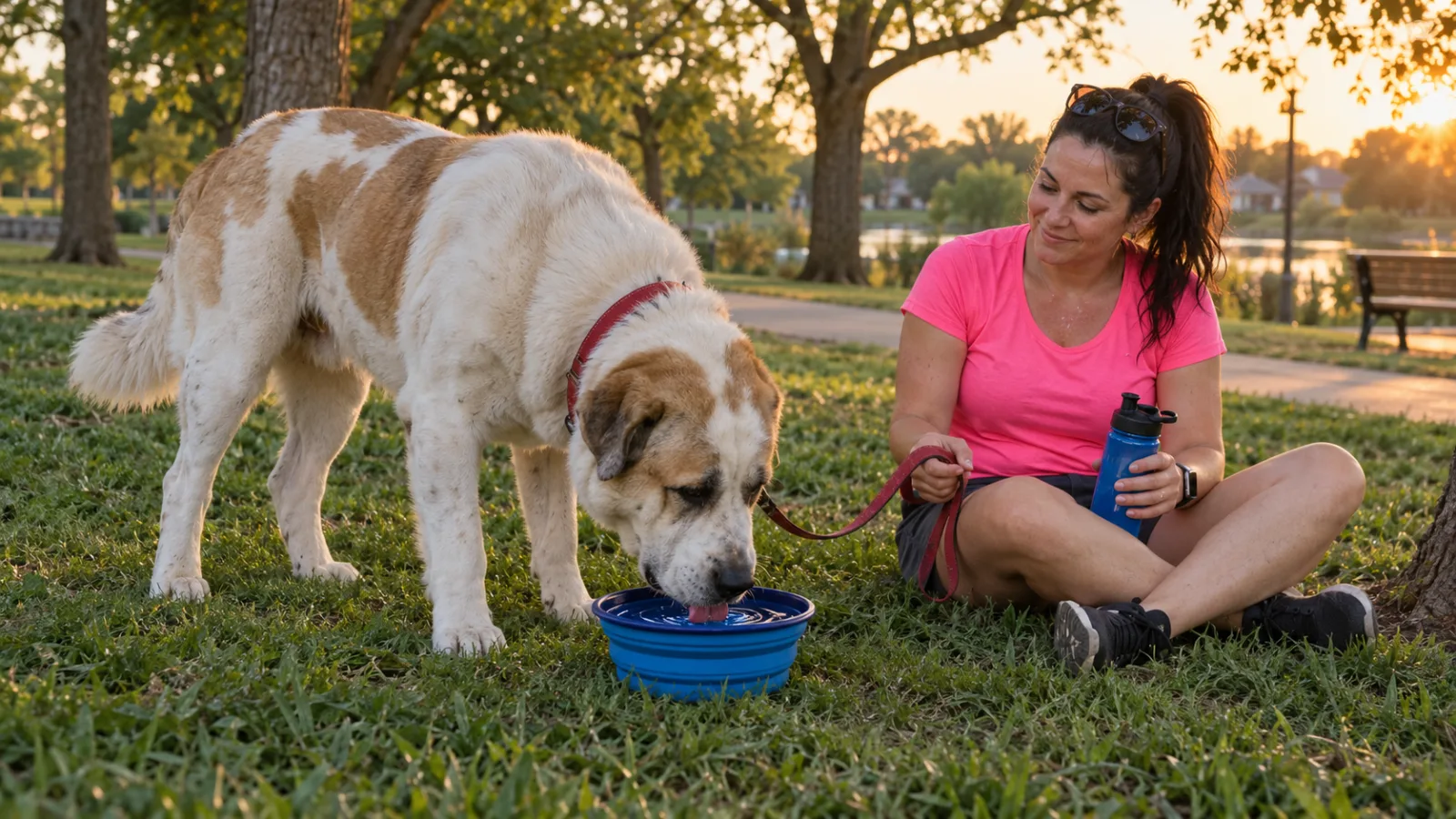
How much water should a dog drink a day? It depends on weight, diet, activity, and weather. Too little water can cause dehydration. Unusual thirst may signal illness. Keep fresh water available and watch for changes, rather than making your dog drink a fixed amount.
Important notice: This article is intended for general informational purposes only and does not constitute veterinary advice, diagnosis, or treatment. The author is not a veterinarian. If you notice an unusual change in your dog’s water intake, signs of dehydration, weakness, or any other concerning symptoms, consult a veterinarian for professional evaluation and diagnosis.
Daily Water Intake: How Much Is Enough?
The basic calculation: 50–100 mL per kilogram per day
The 50–100 mL/kg range is a broad estimate, not a universal target or a guarantee that every amount within it is normal. Veterinary experts cited by the American Kennel Club describe typical intake as about 40–60 mL/kg daily. Consistently drinking more than 100 mL/kg generally warrants investigation. A marked increase below that threshold also matters. [1]
For a starting estimate, multiply weight in kilograms by 50. That equals roughly 23 mL per pound, or 0.8 US fluid ounces per pound daily.
| Dog’s weight | Starting estimate: 50 mL/kg daily | 100 mL/kg: a level to discuss with your vet |
|---|---|---|
| 11 lb (5 kg) | 250 mL ≈ 1 cup | 500 mL ≈ 2.1 cups |
| 22 lb (10 kg) | 500 mL ≈ 2.1 cups | 1,000 mL ≈ 4.2 cups |
| 44 lb (20 kg) | 1,000 mL ≈ 4.2 cups | 2,000 mL ≈ 8.5 cups |
| 66 lb (30 kg) | 1,500 mL ≈ 6.3 cups | 3,000 mL ≈ 12.7 cups |
Amounts use US measuring cups; conversions are rounded.
These figures are not limits. Never remove water because your dog reaches a number. To measure intake, record water added over 24 hours and subtract leftovers. Account for spills, shared bowls, and drinks during walks. [1, 2]
Dry, wet, and home-cooked food
Dry food often contains around 10% moisture; wet food may contain 70%–80%. Home-cooked food varies by recipe. Dogs eating moisture-rich food may drink less from their bowls. For example, 400 grams (about 14 ounces by weight) of food with 75% moisture provides about 300 mL of water. Check labels and consider all water sources. [2, 3]
Hot weather and strenuous exercise
Heat and panting increase water loss. Walk during cooler hours, carry water and a bowl, and offer breaks. There is no fixed increase that suits every dog. Drinking water does not make exercise in extreme heat safe: even a hydrated dog can develop heatstroke. [4]
Related reading: Walking Your Dog in Hot Weather and Preventing Heatstroke.
Can You Check for Dehydration in Five Seconds?
A quick check may reveal warning signs, but it cannot rule out dehydration. Signs include sticky gums, weakness, reduced skin elasticity, and sometimes sunken eyes. Do not judge hydration by your dog’s nose alone. [5]
The skin tent test: checking skin turgor
Gently lift loose skin over the back of the neck or between the shoulder blades, then release it. It should settle quickly. A slow return or a persistent “tent” may suggest dehydration. [5]
This test checks skin elasticity. Age and body condition affect the result. Learn what is normal when your dog is healthy; a normal-looking result does not prove adequate hydration. [6]
Gum color, moisture, and capillary refill time
If your dog calmly allows it, lift the lip. Unpigmented gums should look pink and feel moist. Press gently until an area turns pale, then release. Color usually returns within one to two seconds. Delayed return, pale gums, or unusual color needs attention. Capillary refill time (CRT) mainly assesses circulation, not hydration alone. [6]
Severe weakness, collapse, confusion, or breathing trouble requires emergency care. For suspected heatstroke, move somewhere cool, wet the body with cool water, provide airflow, and seek veterinary care immediately. Do not force drinking or delay care for home tests. [4]
Excessive Thirst (Polydipsia): A Medical Warning Sign
Arrange a veterinary visit for new or persistent excessive drinking. Increased urination, nighttime bathroom trips, or accidents add to the concern. Do not restrict water to reduce urination. Drinking may be replacing fluid lost in urine. [1, 2]
Diabetes, kidney disease, pyometra, and Cushing’s disease
Possible causes include:
- Diabetes mellitus: Thirst, increased urination, and weight loss despite an appetite.
- Kidney disease, including kidney failure: Poor urine concentration can increase water loss.
- Cushing’s disease: Excess cortisol may cause thirst, hunger, panting, and skin changes.
- Pyometra: This uterine infection affects unspayed females, often after a heat cycle. Thirst with lethargy, vomiting, or vaginal discharge requires urgent assessment. Discharge may be absent. [1, 7, 8]
Some medications, including corticosteroids, also increase thirst. Your vet may recommend bloodwork and urinalysis. Bring a medication list and drinking records, but do not delay care to finish measuring. [7]
Water Intoxication: Risks at Pools and the Beach
Swallowing water during hose play or swimming
Water intoxication is rare but dangerous. Swallowing excessive fresh water quickly can dilute blood sodium, causing cells—including brain cells—to swell. Prolonged hose play or retrieving toys from water can trigger it. [9]
Signs include vomiting, abdominal swelling, weakness, an unsteady gait, and seizures. Stop the activity and seek emergency veterinary care. Do not try salt or homemade drinks as treatment. [9]
Ocean water poses a different danger: Saltwater ingestion can cause excess blood sodium and dehydration. Both conditions need professional care. Supervise water play, provide breaks, and bring fresh drinking water. Fear of water intoxication is not a reason to restrict normal bowl access. [9, 10]
Frequently Asked Questions
How much water should a 22-pound dog drink daily?
About 500 mL (2.1 cups) is a starting estimate. Roughly 400–600 mL fits the usual range under ordinary conditions. Diet, heat, and activity affect intake. Consistently drinking a liter daily, or noticeably more than usual, warrants a vet visit. [1]
How much water should puppies get? Should I limit it before bedtime?
Keep fresh water accessible to weaned puppies and consider weight and diet when monitoring intake. Do not routinely restrict water to prevent accidents without veterinary guidance. Plan a bedtime potty trip and age-appropriate bathroom breaks instead. [2, 12]
Related reading: Why Your Puppy Cries at Night.
What if my dog refuses water on a hot day?
Move into air conditioning and offer fresh water in a clean bowl. If your dog is alert, try adding water to food. Persistent refusal, weakness, vomiting, or unusual panting requires veterinary advice. Never force water into the mouth with a syringe. [4, 5]
Are ice water and ice cubes safe?
Healthy dogs can have cold water or a little ice under supervision. Prefer crushed ice or ice chips over hard cubes to chew. Ice does not treat heatstroke or replace veterinary care. [11]
Why drink from puddles or the toilet?
Temperature, smell, or location may attract your dog. Clean the bowl, refresh the water, and offer another drinking spot. Block access to toilets and puddles, which may contain cleaners or contaminants. Standing water can transmit leptospirosis. [13]
After tracking a walk in Vupo, offer water and check your dog’s recovery. If you notice unusual drinking, jot it down in your dog’s notes — alongside the walk’s logged duration, it gives your vet a clearer picture.
This article provides general information and does not replace veterinary care.
Sources
- American Kennel Club — Why Is My Dog Drinking So Much Water?
- PDSA — Why Is My Dog Drinking Lots of Water and Weeing More Than Usual?
- Frontiers in Veterinary Science — Dietary Moisture and Water Consumption in Dogs
- Cornell University College of Veterinary Medicine — Summer Heat Safety Tips for Dogs
- AAHA — Fluid Therapy for Pets
- AAHA — 2024 Fluid Therapy Guidelines: General Principles
- VCA Animal Hospitals — Testing for Increased Thirst and Urination
- VCA Animal Hospitals — Pyometra in Dogs
- PDSA — Water Intoxication in Dogs
- Merck Veterinary Manual — Salt Toxicosis in Animals
- Blue Cross — Ice Cubes for Dogs
- PDSA — Your Dog’s Diet
- Cornell University College of Veterinary Medicine — Canine Leptospirosis