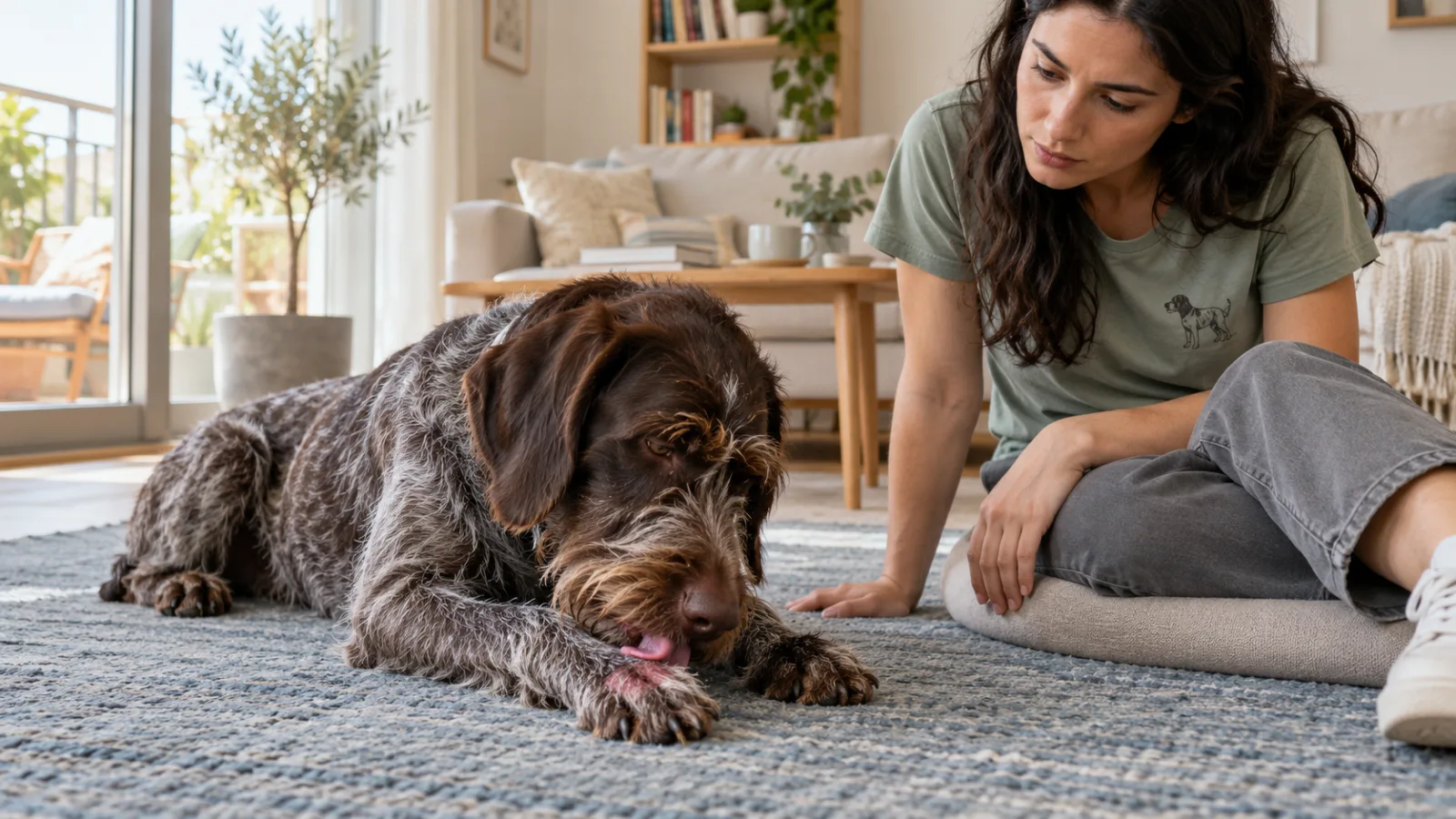
Does your dog wake up to scratch, lick their paws constantly, or keep getting ear infections? These signs deserve attention. If you are wondering, “Why is my dog itching without fleas?”, remember that fleas may still be involved even when you cannot see them. Other possible causes include food allergies, environmental allergies, other parasites, and skin infections.
This article provides general information and does not replace veterinary care. Sudden facial swelling, trouble breathing, or collapse requires immediate emergency veterinary care. An oozing sore, significant pain, or itching that prevents sleep needs prompt veterinary attention.
What Do Dog Allergies Look Like?
Paw Licking and Rust-Colored Fur
Repeated paw licking, chewing between the toes, and redness can be signs of allergic itching. Frequent contact with saliva may turn the fur reddish-brown. This staining alone does not prove that a dog has an allergy or infection.
Why does your dog keep licking their paws? Besides allergies, possible causes include a thorn, an injury, pain, or an infection. Sudden licking of just one paw makes a local problem especially important to check. Do not assume your dog is bored, and do not punish the licking.
Ear Infections, Red Patches, and Hot Spots
Ear odor, head shaking, and recurring ear infections can accompany allergies. Redness, small bumps, and thinning fur may appear on the belly or under the front legs. Red circles on the skin are not specific to allergies and can be associated with infection.
A hot spot is a moist, inflamed, often painful skin lesion, not simply a bald patch. Scratching and licking can quickly make it worse. Bacterial and yeast infections can add to allergic itching and need treatment too. [1,2]
Three Common Types of Dog Allergies
Flea Allergy: One Bite May Be Enough
Flea allergy dermatitis, or FAD, is a reaction to substances in flea saliva. In a sensitive dog, even one bite can trigger intense itching. Commonly affected areas include the base of the tail, lower back, and thighs.
Not finding fleas at home does not rule them out. Dogs may remove them while grooming. Treatment includes consistent flea prevention, appropriate treatment for all pets in the household, and environmental control when needed. Never use a dog-only flea product on a cat. [3]
Environmental Allergies: Pollen, Dust Mites, and Grass
Canine atopic dermatitis is a chronic inflammatory skin disease. It involves an individual predisposition, a weakened skin barrier, and often sensitivity to environmental allergens.
Pollen can cause seasonal flare-ups, while house dust mites may cause problems throughout the year. Not every summer itch comes from grass, and environmental allergies do not always disappear in winter. The paws, ears, face, and belly are commonly affected. [2]
Food Allergies: Grains Are Not the Only Concern
A food allergy is a reaction to an ingredient, usually a protein. Chicken, beef, and dairy products can be triggers, but so can proteins in grains. A “grain-free” label does not guarantee that a food is suitable for a dog with allergies.
Signs of food allergies in dogs include itching and ear infections. Some dogs also have vomiting or diarrhea. An allergy can develop to food a dog has eaten for a long time. The appearance of a rash cannot identify the ingredient responsible. [4,5]
How Vets Find the Cause
Your veterinarian will ask when the itching started, which areas are affected, what your dog eats, and which parasite treatments they receive. Skin and ear samples may be examined under a microscope for bacteria and yeast. The vet treats any problems found, then checks which signs remain. More than one condition can be present at the same time. [1]
An Elimination Diet: Eight Weeks of Consistency
To investigate a food allergy, your vet may choose a veterinary diet with hydrolyzed protein or a novel protein your dog has never eaten. Hydrolyzed protein is broken into smaller pieces that are less likely to trigger an immune response. There is no single best dog food for every dog with allergies. [5]
The trial usually lasts eight weeks, although some dogs need longer. During this time, feed only the selected diet and water. Avoid table scraps, other treats, chew products, and flavored toothpaste. Ask your vet about flavored medications and supplements. Do not stop prescribed treatment on your own.
If your dog improves, your vet will guide you through reintroducing the previous diet to see whether signs return. This food challenge is important for confirming the diagnosis. Improvement after switching foods is not enough by itself. Anti-itch medications can mask the response, so their use must also be planned with your vet. [4,6]
Allergy Blood Tests and Skin Scrapings
Skin scrapings help vets look for mites and certain other parasites. Blood tests and skin tests for environmental allergens are mainly used to select allergens for immunotherapy after a clinical diagnosis of atopic dermatitis. These tests alone do not establish that a dog has allergies. Blood, saliva, and hair tests for food allergies are not reliable substitutes for an elimination diet. [1,4]
Treatment Options for Itch Relief
Apoquel and Cytopoint: What Is the Difference?
Apoquel (oclacitinib) is an oral medication that blocks signals involved in itching and inflammation. It is neither a steroid nor a biologic treatment. It is approved for dogs at least 12 months old. Possible side effects include vomiting and diarrhea. It may increase the risk of infections and worsen existing cancers. Veterinary assessment and monitoring are necessary. It should not be used in dogs with serious infections. [2,7]
Cytopoint (lokivetmab) is an injectable antibody treatment. It targets a protein involved in sending itch signals. Relief may last several weeks, but the response varies between dogs. Possible side effects include lethargy and digestive upset. Both treatments relieve itching, but neither replaces treatment for parasites or infections. [2,8]
For environmental allergies, your vet may also recommend allergen-specific immunotherapy. This treatment aims to reduce sensitivity over time. It takes months and does not provide immediate relief during a flare-up. [9]
Medicated Shampoos and Gentle Rinsing
How can you help an itchy dog at home? Gently rinse the paws after walks and dry carefully between the toes. Bathing with a suitable dog shampoo may help remove allergens. If an infection is present, your vet can recommend a medicated shampoo and bathing schedule. Do not apply essential oils, rubbing alcohol, or human skin creams without veterinary guidance. [1,2]
Frequently Asked Questions
Why Is My Dog Still Itching After a Flea Treatment or Flea Collar?
Possible reasons include ongoing flea exposure, incorrect product use, inflammation that remains after a bite, or another condition. Check with your vet before adding another flea product. [3]
Can I Give My Dog a Human Antihistamine Without Asking a Vet?
No! Your vet needs to check the exact product, dose, and your dog's health. Antihistamines are also not a reliable treatment for severe allergic itching. [1]
How Can I Tell a Food Allergy from a Seasonal Allergy?
Seasonal patterns offer clues, but they do not confirm a diagnosis. Environmental allergies can cause symptoms year-round, and a dog can have both food and environmental allergies. [2,4]
How Long Does an Elimination Diet Take to Work?
Some dogs improve within a few weeks. Do not decide too early that the trial has failed. Complete the prescribed trial and the food challenge under veterinary guidance. [5,6]
Can Frequent Baths Make Itching Worse?
The wrong shampoo and hot water can irritate the skin. A properly planned bathing routine can help. The right frequency depends on your dog's skin and the product used. [1,2]
Keep Track with Vupo
Record your dog's daily itch level from 0 to 10. Take photos of irritated areas and note foods, treats, and treatments. Compare your notes each week. Use Vupo reminders to stay on schedule with parasite prevention. Sharing a clear diary with your vet can help them spot changes and assess how well treatment is working.
Sources
- AAHA: 2023 Management of Allergic Skin Diseases in Dogs and Cats Guidelines
- Merck Veterinary Manual: Atopic Dermatitis in Dogs
- Merck Veterinary Manual: Flea Allergy Dermatitis in Dogs and Cats
- Merck Veterinary Manual: Cutaneous Food Allergy in Animals
- Canadian Academy of Veterinary Dermatology: Diagnosing Food Allergies in Dogs
- VCA Animal Hospitals: Implementing an Elimination-Challenge Diet Trial in Dogs
- Zoetis: Apoquel and Official Safety Information
- Zoetis: Cytopoint
- Cornell University College of Veterinary Medicine: Allergy Testing and Immunotherapy