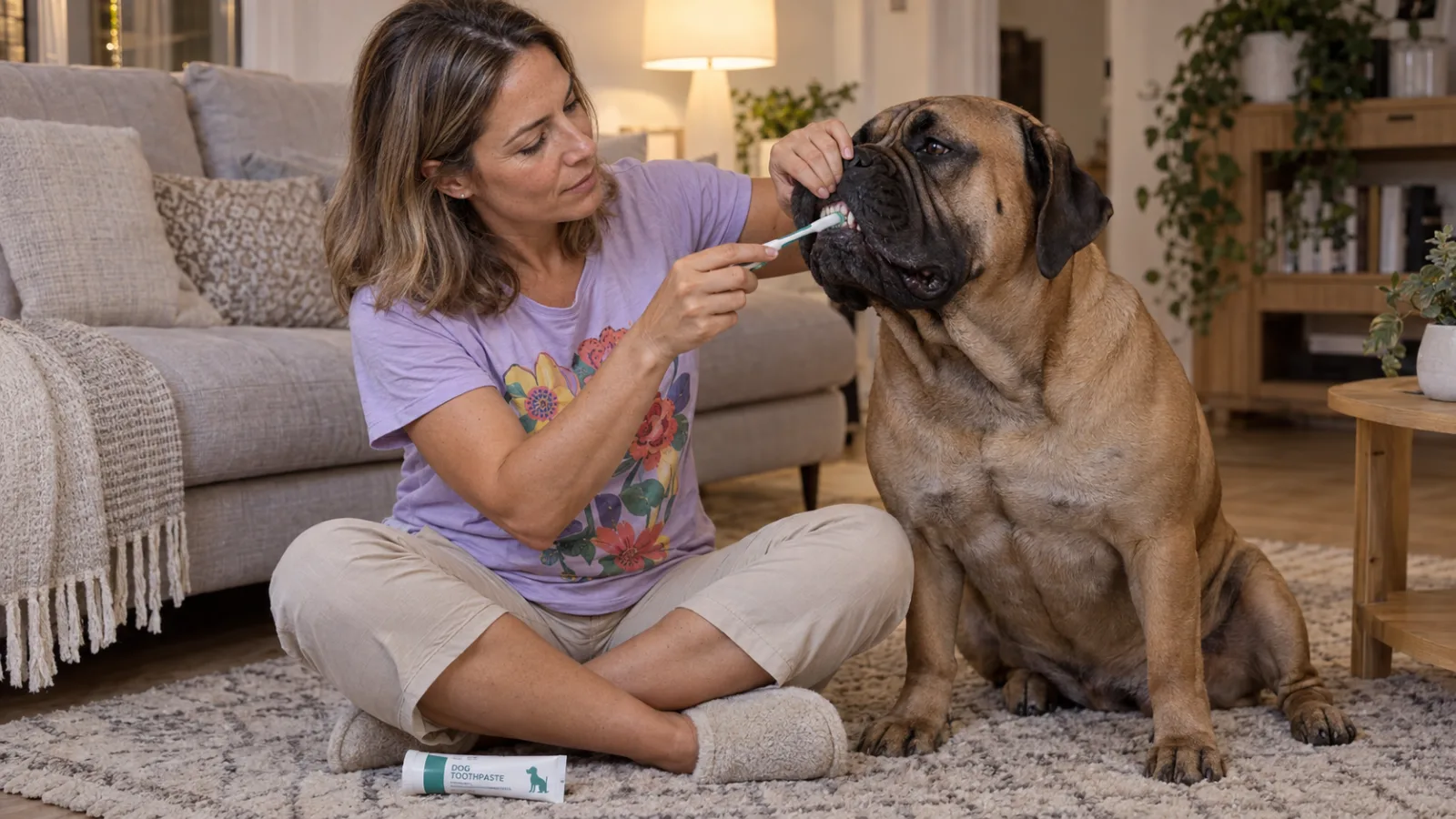
Bad breath when your dog comes close is not something you simply have to live with. Sometimes, it is the first sign of an oral health problem. Brushing your dog's teeth is a small daily habit that can reduce plaque buildup and help keep the gums healthy.
This guide explains how to introduce brushing without a struggle, what supplies to choose, and when to see your veterinarian. Keep in mind that even excellent brushing cannot guarantee your dog will never need dental treatment under anesthesia. [1]
This article provides general information and does not replace an examination or advice from your veterinarian.
Why Brushing Your Dog's Teeth Matters
Tartar, Gum Disease, and Overall Health
According to the American Veterinary Medical Association (AVMA), periodontal disease affects nearly 80% of dogs by age three. This disease affects the tissues that support the teeth. It starts with a sticky layer of bacteria called plaque, which can harden into tartar. As inflammation progresses, it can damage the tissues and bone holding the teeth in place. This can lead to pain, loose teeth, and tooth loss. [2]
Periodontal disease has been linked to overall health problems, including conditions affecting the heart and kidneys. However, this does not mean every case of tartar buildup will damage those organs. Brushing removes soft plaque. It does not remove tartar that has already hardened. [1, 3]
Bad Breath: A Dental Problem or a Stomach Problem?
Do not assume bad breath comes from the stomach. Dental and gum disease are common causes. Other conditions may also need investigation. Switching foods or offering a breath-freshening treat will not identify the cause.
If your dog's bad breath persists, schedule a veterinary exam. Red gums, drooling, blood in the saliva, or changes in chewing are additional reasons to get help. Dogs may keep eating normally despite dental pain. Facial swelling or difficulty eating calls for prompt veterinary attention. [4]
Choosing Safe Dental Supplies
Why You Should Never Use Human Toothpaste
Dogs swallow toothpaste. Human toothpaste is not designed for this, and some products contain xylitol, which is toxic to dogs. Swallowing a substantial amount of fluoride can also be harmful. Do not use human toothpaste, including children's toothpaste, or substitute baking soda. [5]
Finger Brushes, Dog Toothbrushes, and Flavored Toothpaste
Choose a small, soft-bristled brush that fits your dog's mouth. A finger brush may work for some dogs, but it does not protect your finger from a bite. Dog toothpaste in a flavor your pet enjoys can make the introduction easier.
Look for toothpaste made for dogs, with clear instructions and ingredients suitable for your dog's health needs. The Veterinary Oral Health Council (VOHC) lists products with evidence supporting their ability to reduce plaque or tartar. The word "enzymatic" alone does not prove a product is effective. [5, 7]
A Gentle Introduction in Four Steps
Before starting, make sure your dog does not have oral pain or inflammation that needs treatment. Choose a quiet place and a stable surface. Keep early sessions brief, just a few seconds to half a minute, and stop before your dog becomes uncomfortable. Each stage may take several days or longer. Let your dog's response determine the pace. [1, 6]
Step 1: Let Your Dog Lick the Toothpaste
Offer a small amount of dog toothpaste according to the label. If your dog tends to grab at fingers, use a small dish. Let your dog approach and lick voluntarily. You do not need to touch the mouth yet. If your dog dislikes the flavor, try another suitable toothpaste.
Step 2: Introduce Gentle Touch Without a Brush
Touch the side of your dog's lip for a second, remove your hand, and give a small treat. Later, briefly lift the lip and release it. Once your dog is comfortable, gently touch the outside of a tooth and the gumline with a clean finger or damp gauze.
Keep your finger out from between the upper and lower teeth. Pulling away, freezing, or growling means you should stop and return to an easier step. Never punish a growl. You can also teach your dog to rest their chin on your palm and pause whenever they lift it. [4, 6]
Step 3: Gently Brush the Outer Tooth Surfaces
Let your dog explore the brush and lick a little toothpaste from it. Start by briefly touching one tooth, then reward and stop. Gradually add small, gentle brushing movements where the teeth meet the gums.
Work up to more teeth on both sides of the mouth. Never force the jaws open. If you notice bleeding, pain, or new resistance, stop and arrange a veterinary exam. [5, 6]
Step 4: Build a Daily Routine
Aim to brush every day. Once your dog is comfortable, work toward about 30 seconds per side. Do not turn a time target into a struggle. Pair brushing with an existing habit, such as the evening walk. Rinse the brush afterward and use a separate brush for each dog. [1, 5]
Products That Can Support Dental Care
Dental Chews and Chew Toys
Certain dental chews can help reduce plaque or tartar. Check the exact product on the VOHC list, and follow the package guidelines for your dog's age and size. Supervise chewing and count edible chews toward your dog's daily food intake.
A toy with ridges or bumps has not necessarily been tested for dental benefits. Avoid very hard items that could fracture teeth. Chews and toys can support dental care, but they do not replace brushing or veterinary exams. [7, 8]
Water Additives and Seaweed Supplements
Some water additives and food supplements have earned the VOHC Seal of Acceptance for reducing plaque or tartar. Acceptance applies to the specific product, not every product in that category. Follow the instructions, and stop using a water additive if it makes your dog drink less.
Seaweed-based products may contain iodine. If your dog has a thyroid condition, ask your veterinarian about suitability and follow the manufacturer's warnings. Do not substitute seaweed from your kitchen for a formulated dental product. [7, 9]
Frequently Asked Questions
How Often Should I Brush My Dog's Teeth?
Every day. Weekly brushing does not replace daily care because plaque keeps forming. During the introductory stages, start with short practice sessions and build up gradually. [1]
Do I Need to Brush the Inside Surfaces of the Teeth?
Focus first on the outer surfaces and gumline. If your dog is comfortable, your veterinarian can show you how to reach additional areas. Never force the mouth open to reach the inner surfaces. [5]
When Should I Introduce a Puppy to Toothbrushing?
Start during puppyhood, once your puppy has settled into your home. Begin with toothpaste tasting and brief, pleasant handling. During teething, adjust the routine to your puppy's comfort and avoid brushing sore areas. [4, 8]
When Does My Dog Need a Professional Cleaning Under Anesthesia?
When a veterinary exam identifies tartar or dental disease that requires professional treatment. General anesthesia allows a thorough oral examination, dental X-rays, and cleaning below the gumline. Your veterinarian tailors the anesthesia plan to your dog's health. Scraping tartar off an awake dog's teeth is not a substitute. [1, 10] This treatment is part of the ongoing cost of dog ownership; for the full picture, see How Much Does It Cost to Own a Dog in the U.S.
Are Natural Beef Bones Safe for Cleaning Teeth?
No. Even raw, natural bones can fracture teeth. Cooked bones can splinter and cause internal injuries. Bones should not be considered a safe dental cleaning method. [8]
Make Oral Care Part of Your Routine
Start today with a step your dog accepts comfortably. Vupo's care reminders can help you keep your veterinary check-ups on track. Brushing should remain a daily goal. Alongside home care, have your veterinarian check your dog's mouth at least once a year, or more often if recommended. [2]
Professional Sources
- AAHA: Recommending Home Oral Hygiene and Products.
- AVMA: "Doggie Breath" Could Be a Sign of Serious Disease and Pet Dental Care.
- AAHA: Periodontal Health and Systemic Health.
- Dogs Trust: Dog Dental Hygiene and Toothbrushing, With Step-by-Step Illustrations.
- VCA Animal Hospitals: Brushing Your Dog's Teeth.
- VCA Animal Hospitals: Successful Toothbrushing Training for Happy Dental Care.
- Veterinary Oral Health Council: Accepted Products.
- RSPCA: Caring for Your Dog's Teeth.
- Swedencare: ProDen PlaqueOff Powder for Dogs, Including Manufacturer Warnings. Used for product warnings, not as independent evidence of effectiveness.
- AAHA: Nonanesthetic Scaling of Teeth.