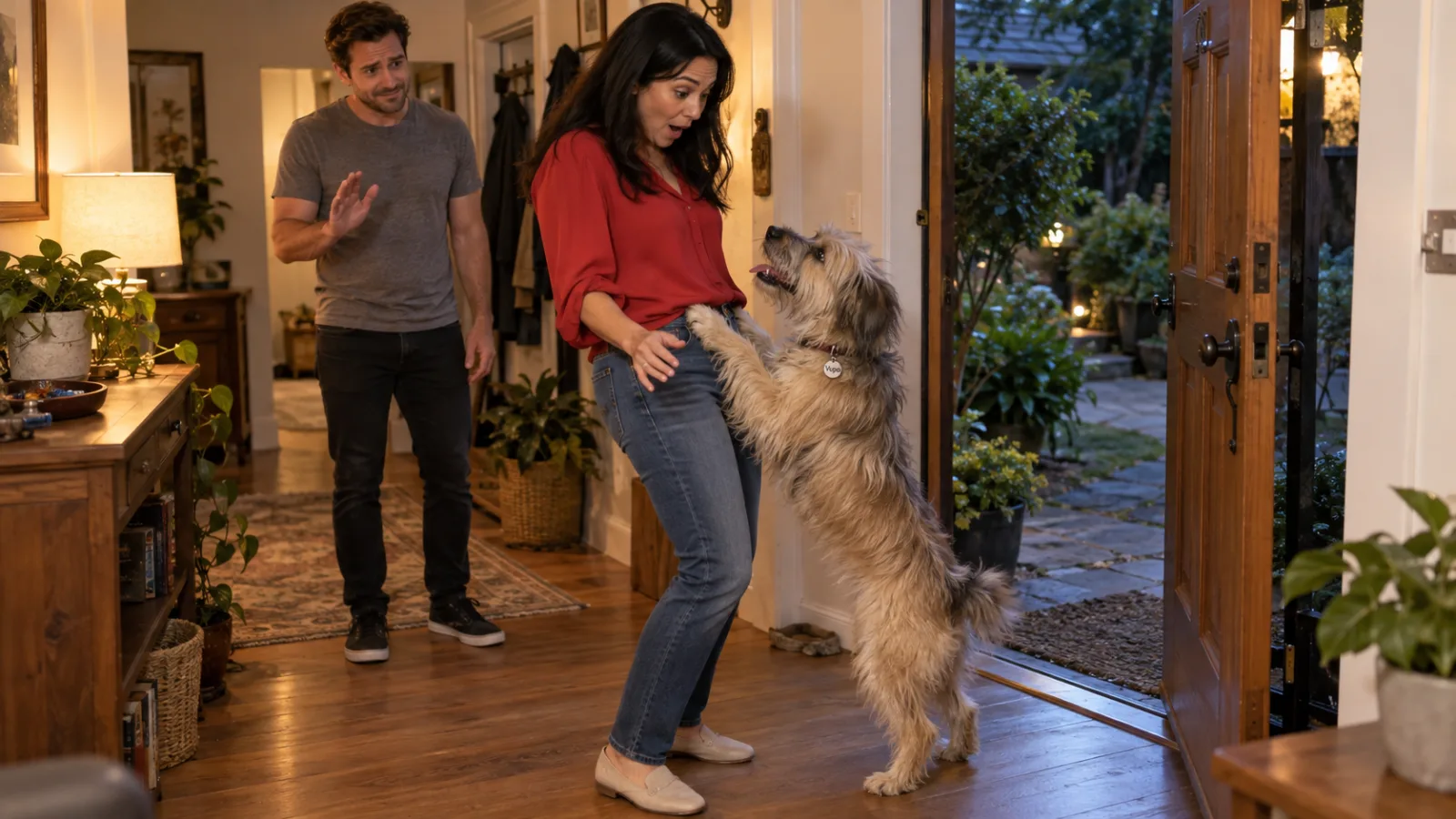
The door opens, your dog jumps, and your guest tries to keep muddy paws off their clothes. You say “Stop,” but it happens again next time. Learning how to stop a dog from jumping on people starts with changing the greeting: prevent jumping when possible, and reward your dog for keeping all four paws on the ground.
Before the next visit, prepare treats, a collar and leash, or a pet gate. Explain the rules to your guest. Start training in a quiet setting with someone your dog knows.
Why Do Dogs Jump on People?
Getting Closer to Your Face
Dogs may jump to get closer to our faces and interact with us. This is common behavior, but it is not appropriate for every greeting. Even a friendly dog can knock over a child or scratch a guest. The goal is to teach a safer way to get attention. AKC’s guide to jumping.
Excitement and Overarousal
Excited jumping is common when someone comes home. But jumping can also reflect anxiety or frustration. If your dog moves away, stiffens, or tucks their tail, do not force an interaction. Jumping does not necessarily mean your dog wants petting. Dogs Trust’s explanation.
Accidental Reinforcement
A puppy jumps and gets petted. As the puppy grows, the behavior continues because it has worked. Talking, laughing, or touching your dog during a jump may also provide the attention they want. Everyone in the household needs to follow the same rules. VCA’s behavior guidance.
Mistakes to Avoid
Kneeing, Pushing, or Yelling
A knee to the chest, a leash jerk, or yelling can cause pain or fear. Even if it interrupts a jump, it does not teach your dog how to greet someone. Your dog may associate the unpleasant experience with approaching people.
The American Veterinary Society of Animal Behavior (AVSAB) recommends reward-based training and advises against physical or psychological punishment. AVSAB’s humane training position.
Why Pushing Can Feel Like Play
Some dogs interpret pushing hands and body movement as a game. Others become frightened. Either response can make learning harder. When safe, stop physical attention during jumping and resume it when all four paws are down. AKC’s explanation.
A Three-Step Plan to Teach Greetings Without Jumping
Step 1: Teach “Four on the Floor”
Start in a quiet room with small treats within reach.
- Let your dog approach.
- Before they jump, say “Yes” and deliver a treat at their natural mouth level, or place it between their front paws.
- Keep rewarding at short intervals while all four paws stay down.
- Step away and repeat.
Reward success before the jump. Avoid creating a routine of jumping, landing, and getting a treat. If your dog jumps, pause the interaction and make the next attempt easier. VCA’s gradual training approach.
For example, practice five calm approaches near the couch. If those go well, move slightly closer to the door next time. Do not add both a doorbell and a new guest at once.
Step 2: Practice Coming Home Without Rewarding Jumping
Begin with a brief exit and a calm return while another household member stays with your dog. Have a reward ready before opening the door.
If your dog jumps, avoid petting, pushing, or talking to them. Turn slightly sideways. Reward them when all four paws return to the floor. You do not need to ignore your dog for several minutes or wait for perfect calm.
If jumping continues, use a pet gate and make the greeting easier. Do not stand there getting scratched. Ignoring jumping is only part of training; your dog also needs to learn what earns attention. VCA’s greeting advice.
Step 3: Teach Your Dog to Sit for Petting
Once your dog approaches without jumping, add the “Sit” cue if they already know it. Ask once, reward the sit, and offer brief petting if your dog enjoys touch.
Stop petting if they jump. Gradually extend the greeting. Sitting is a useful option, but standing steadily with four paws down also counts as success. AKC’s alternative greeting exercises.
Managing Guests at the Door
Use a Leash During the First Few Minutes
Do not expect an excited dog to remember every lesson. Attach a leash to a harness before opening the door. An adult should hold it and keep enough distance to prevent the dog from reaching the guest with a jump. Do not pull the dog downward.
Allow room to move, and never leave the leash attached without supervision. If your dog struggles, use a familiar space behind a gate with a suitable activity. Greetings can wait until the guest sits down.
Tell Guests What to Do Before They Arrive
Send a simple message:
“We’re practicing greetings without jumping. Please wait for my instructions. Only pet when all four paws are down, and stop petting if our dog jumps.”
Start with a willing helper. Give them one clear job: enter, stand quietly, and wait. Do not also ask them to juggle bags, hand out treats, and manage your dog.
If they say, “I don’t mind,” explain: “Thanks, but we’re teaching a habit that needs to work around children and older adults, too.” If they will not cooperate, end the greeting and let your dog settle in a comfortable separate space.
Frequently Asked Questions
What If a Guest Keeps Petting My Dog During Jumps?
Use distance or a gate to prevent access. Try again when the guest agrees to follow the plan. Scolding your dog will not help while someone keeps rewarding the behavior.
How Do I Stop My Puppy From Jumping on Children During Walks?
An adult should hold the leash and maintain enough distance to prevent jumping. Reward calm observation. Allow a brief greeting only with the child’s and parent’s permission, and when your puppy can keep four paws down. Children should not manage the training. Dogs Trust’s safety guidance.
How Long Does It Take to Stop an Excitable Adult Dog From Jumping?
Improvement may appear within days or weeks. Reliable greetings across different situations can take months. Age, habits, and consistency matter. Track fewer jumps and more successful greetings. Dogs Trust on training timelines.
Does Scattering Treats When Guests Arrive Help?
Yes, when planned before jumping starts. Scatter a few suitable treats in a safe spot. Gradually practice greetings without continuous scattering. This is a training aid, not a replacement for learning. AKC’s four-on-the-floor exercise.
Why Does My Dog Jump Mostly When I Get Home From Work?
Reunions are exciting, and jumping may have become a reliable way to get attention. Prepare a quiet greeting and reward standing. Practice easier, shorter arrivals at other times, too.
What If My Dog Is Too Excited to Respond?
Increase distance and reduce distractions. If jumping involves fear, biting, or safety concerns, seek a qualified trainer or behavior consultant who uses positive reinforcement.
Make Practice a Habit
To teach a puppy not to jump on people at home, start with one household rule and apply it consistently. Build the habit through brief, successful greetings.
Include practice with basic cues in your Vupo training plan.
For related reading on the blog, see Teaching “Come”: Building a Reliable Recall and A Daily Routine for Your New Puppy.