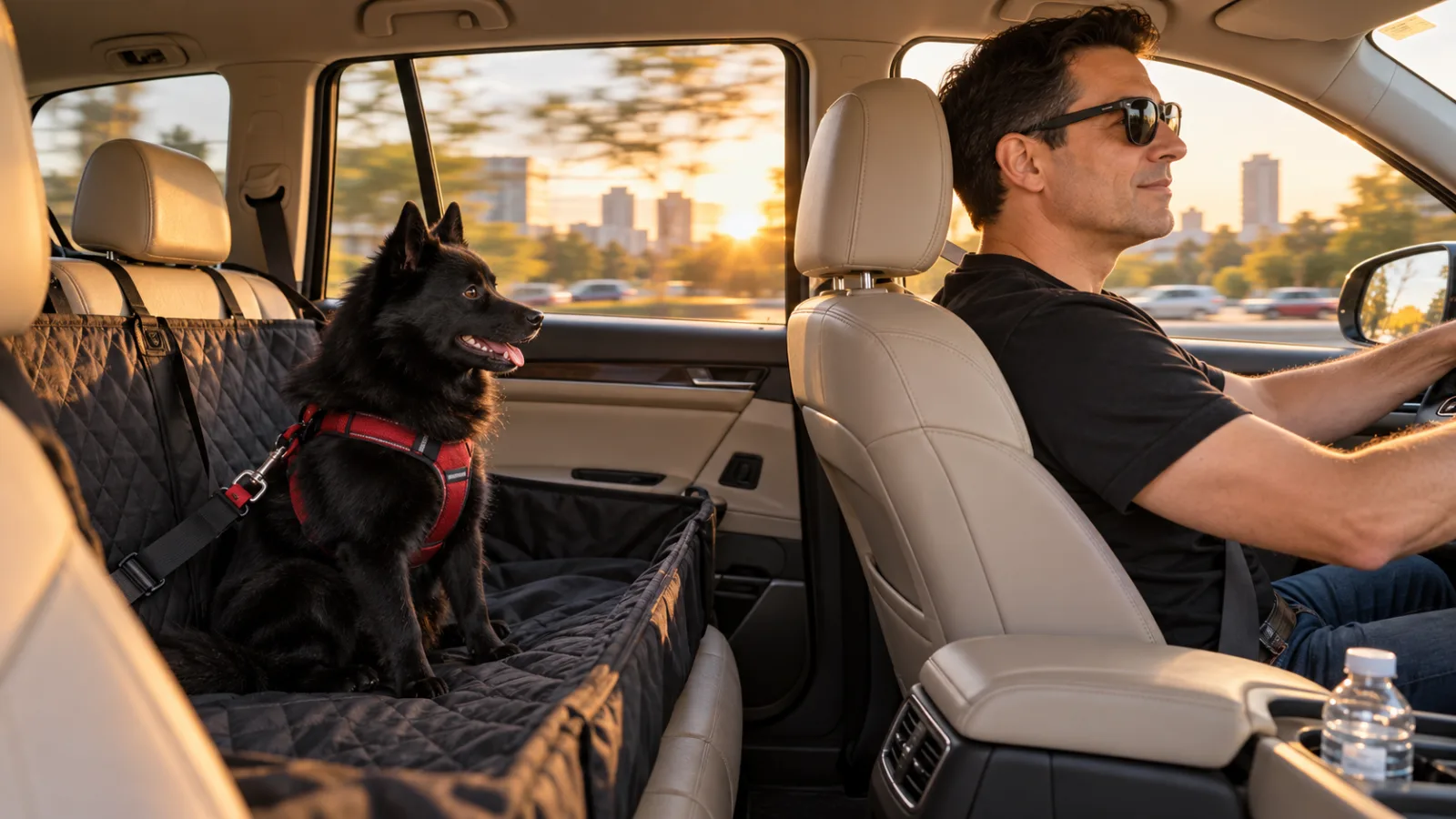
Some dogs jump into the car as soon as the door opens. Others refuse to get in, start drooling or shaking, whine during the ride, or vomit after only a few minutes.
To understand how to get your dog used to car rides, first identify what is causing the distress. Some dogs mainly suffer from motion sickness. Others are afraid of the car because of past experiences. Many dogs have both problems.
A common mistake is to assume that a dog will simply "get used to it" with more driving. If every trip causes nausea or fear, repeated long drives can make the negative association stronger.
Motion Sickness or Anxiety? Identify the Cause First
Puppies and the Developing Inner Ear
Motion sickness involves the vestibular system in the inner ear, which helps control balance. Puppies are more likely to get carsick than adult dogs because this system is still developing.
A puppy who vomits in the car is not necessarily afraid of the vehicle. Many puppies improve as they mature. However, repeated nausea can create a learned fear. If every ride makes the puppy feel sick, the car can quickly become a predictor of something unpleasant.
A Negative Association: "Car Ride Means a Vet Visit"
Dogs learn through associations. If most rides end at the veterinary clinic, groomer, or another stressful place, the car itself can become a trigger.
A dog with this type of fear may stop before reaching the vehicle, pull backward, pant, whine, or refuse treats before the engine is even running.
Common Signs: Drooling, Panting, Shaking, and Vomiting
Heavy drooling, lip licking, restlessness, whining, panting, and vomiting can occur with motion sickness, anxiety, or both.
Timing can help. If the symptoms begin mainly after the car starts moving, motion sickness may be the main problem. If your dog starts shaking or drooling while the car is still parked, fear may also be involved.
Repeated vomiting, loss of balance, a persistent head tilt, or nausea outside the car should be discussed with a veterinarian.
Step-by-Step Car Training: From a Parked Car to a Real Drive
The goal is not to put your dog in the car and wait until they "get over it." Use gradual desensitization and counterconditioning instead.
Step 1: Start With a Parked Car
Begin with the car turned off in a safe location. Let your dog approach, sniff, and move away.
Reward calm interest with high-value treats. When your dog is comfortable, encourage them to get inside.
Do not pull your dog into the car with the leash or force a fearful dog inside.
At first, do not drive anywhere. Get in, give a few treats, stay for a short time, and get back out.
If your dog refuses food they normally love, the exercise may be too difficult. Make the next session easier.
Step 2: Turn On the Engine Without Driving
Once your dog is relaxed in the parked car, add the normal parts of a trip one at a time.
Close the doors. Sit in the driver's seat. Secure your dog with the travel restraint you plan to use. Then start the engine.
Let the engine run briefly, reward your dog, and turn it off.
The goal is to teach your dog that the sound and vibration of the car do not predict something scary.
Step 3: Take Very Short Trips to Fun Places
When your dog can stay relaxed with the engine running, begin driving.
The first trip can be extremely short, such as backing out of the driveway and returning or driving around the block.
Then take short rides to places your dog enjoys, such as a nearby park, walking trail, or dog-friendly outdoor area.
If every trip ends at the veterinary clinic, it is much harder to build a positive association with the car.
For more on safe behavior and body language at dog parks, read Dog Parks: A Guide to Safe Behavior, Reading Body Language, and Preventing Fights.
Increase the trip length gradually. If your dog starts drooling heavily, crying, trying to escape, or vomiting, you may have progressed too quickly, or the dog may need veterinary treatment for motion sickness.
Car Safety: How Should You Restrain a Dog in the U.S.?
A loose dog can distract the driver and can be seriously injured during sudden braking or a crash.
For safer travel, use a properly fitted vehicle safety harness attached according to the manufacturer's instructions, or a secure travel crate or carrier that is properly anchored.
When possible, choose a restraint system that has undergone independent crash testing. The Center for Pet Safety publishes testing and certification information for pet travel restraints.
A back-seat cover or hammock can protect the upholstery, but it is not a crash restraint by itself.
For a full list of what to prepare for a new puppy, see New Puppy Checklist: Everything to Have Ready Before Your Puppy Comes Home.
Does U.S. Law Require Dogs to Wear Seat Belts?
There is no single federal law requiring every dog in a passenger vehicle to wear a canine seat belt.
State laws vary. Some states regulate animals riding on a driver's lap, distracted driving, dogs transported in open pickup beds, or unsafe transportation of animals. Local rules may also apply.
Check the current law in each state where you plan to drive.
Regardless of the legal requirement, securing your dog is the safer choice.
Do not let your dog ride with their head hanging out of an open window. Flying debris can injure the eyes and face, and sudden braking or a collision can cause serious injury.
Medical Options for Motion Sickness and Severe Car Anxiety
If your dog regularly vomits during car rides, training alone may not be enough.
A dog that feels nauseated every time the vehicle moves will have a hard time learning that car travel is safe.
Your veterinarian can check for other medical causes and may recommend anti-nausea medication.
One commonly prescribed option in the United States is Cerenia, the brand name for maropitant citrate. The FDA has approved maropitant products for preventing vomiting caused by motion sickness in dogs.
Cerenia is a prescription medication. Do not give it, sedatives, or human motion-sickness medication without veterinary guidance.
Motion sickness and anxiety are different problems. A dog with both may need a combination of veterinary treatment and behavior modification.
Cornell University College of Veterinary Medicine advises that dogs prone to motion sickness may benefit from avoiding food for about four to six hours before travel. This is not appropriate for every dog, so ask your veterinarian what is right for your dog.
Frequently Asked Questions
Do Puppies Outgrow Motion Sickness?
Many puppies improve as they mature, but not all do. Positive car training is still important because repeated nausea can create a learned fear of the vehicle.
Should I Feed My Dog Before a Car Ride?
Avoid a large meal immediately before travel if your dog is prone to motion sickness. Your veterinarian may recommend leaving several hours between the meal and the trip.
Does My Dog Have to Wear a Seat Belt in the U.S.?
There is no nationwide federal rule requiring every dog to wear a canine seat belt in a passenger car. State and local laws vary. Even where a specific restraint is not legally required, a secured harness, crate, or carrier is safer.
Does Opening the Window Help With Motion Sickness?
Cool air and good ventilation may help some dogs. Use air conditioning or controlled ventilation when possible. Do not allow your dog to hang their head out of the window.
What Should I Do if My Dog Refuses to Get Into the Car?
Do not drag your dog inside. Start at a distance where your dog can remain calm. Reward small steps toward the vehicle and move closer gradually.
For a very fearful dog, the first successful session may end with the dog simply walking up to the open car door. That is still progress.
The Bottom Line
To understand how to get your dog used to car rides, separate motion sickness from fear. In many dogs, both are present.
The best approach usually combines gradual training, short trips to enjoyable destinations, a safe restraint system, and veterinary treatment when nausea or severe anxiety is involved.
When the car stops predicting nausea or stress and starts leading to parks, trails, and enjoyable social outings, many dogs learn to travel more comfortably.
For Vupo users, comfortable car travel also makes it easier to explore new dog-friendly places, visit dog parks, and join community meetups.
Professional Sources
- Cornell University College of Veterinary Medicine - Traveling Safely With Your Dog
- American Kennel Club - Preventing Motion Sickness and Anxiety in Dogs During Car Rides
- American Kennel Club - Desensitization and Counterconditioning
- American Animal Hospital Association - Traveling Safely With Your Pet
- U.S. Food and Drug Administration - Maropitant Citrate for Prevention of Vomiting in Dogs
- Center for Pet Safety - Canine Automotive Restraint Crash Testing