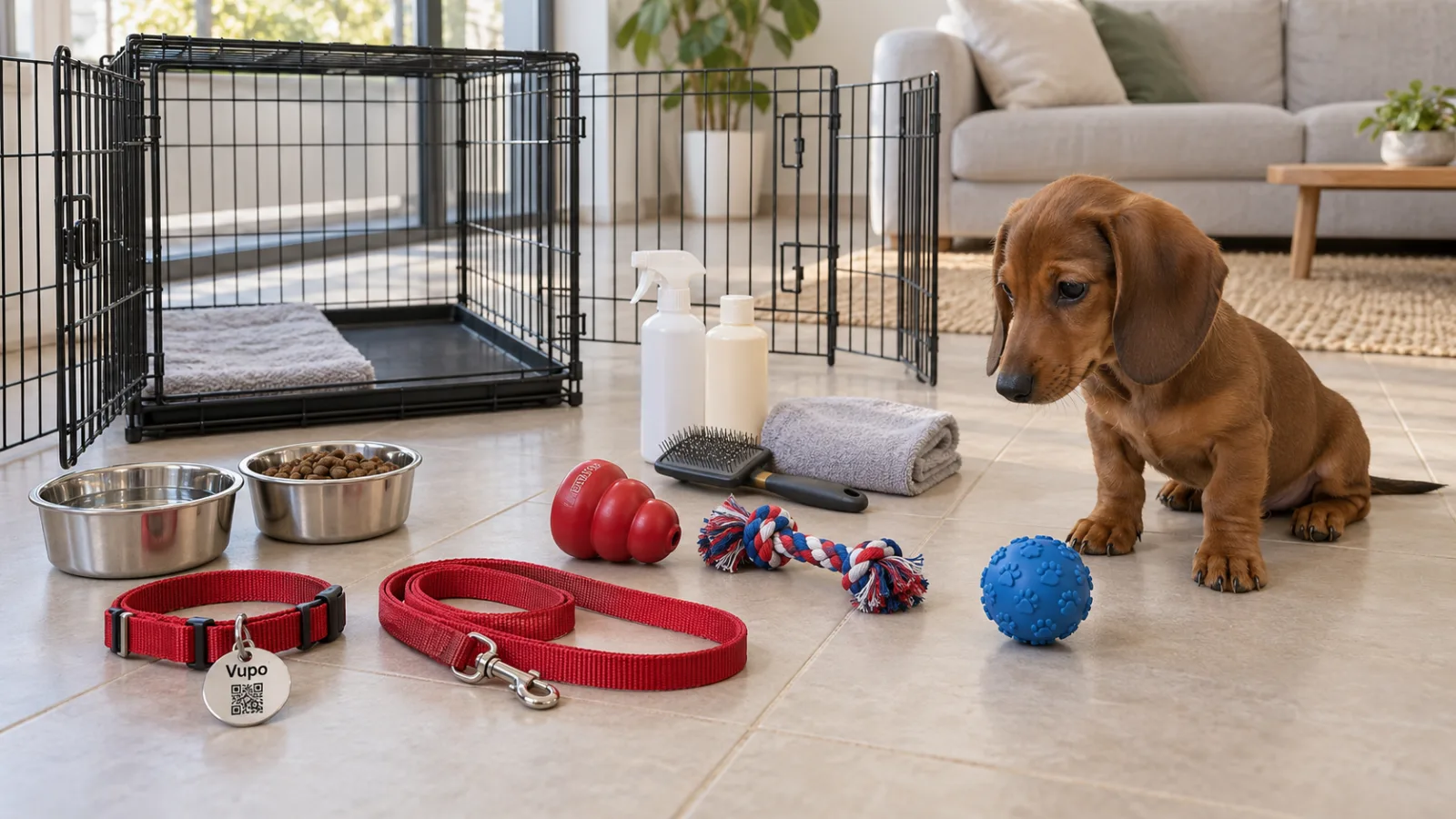
A new puppy is coming home, and suddenly everything at the pet store looks essential. In reality, your new puppy checklist can be short and practical. Your puppy needs a safe place to rest, suitable food, walking gear, and a few things to chew. A wardrobe and twenty toys can wait.
Start with supplies for the first week. Add more once you know your puppy's size, preferences, and routine. This keeps your shopping focused and leaves room in your budget for veterinary care and training.
Getting Ready: Why Preparing Your Home Matters
Less Stress for Your Puppy and Your Family
Before shopping, choose a quiet resting area. Put cords, medications, cleaning products, and small objects out of reach. Decide who will handle potty breaks, where meals will happen, and where your puppy will sleep. Planning ahead reduces confusion and helps prevent a chase over a stolen shoe.
Let your puppy explore gradually, without too many visitors or nonstop play. Supplies work best alongside a predictable routine. For more guidance, read A Daily Routine for Your New Puppy.
Essential Supplies for Day One
Sleep and Safe Spaces: A Bed, Playpen, or Crate
Start with a simple, washable mat without parts your puppy can pull off. An expensive bed may become a chew toy. If your puppy tears up the bedding, find a safer option and supervise its use.
Playpens and crates can be very helpful for potty training, but they serve different purposes. A playpen creates a safe area and makes supervision easier. A crate, introduced positively, can help you manage rest periods because many dogs avoid soiling their sleeping area. It must be large enough for your puppy to stand, turn around, and lie down comfortably. AKC's guide to puppy potty training.
Introduce the space gradually with treats and short rest periods. Never confine a puppy to force them to hold their bladder beyond their ability, or use a crate as punishment. If your puppy is distressed, adjust your approach. Provide frequent potty breaks and reward success outside. You do not have to buy both a crate and a playpen.
For more advice, read A Practical Guide to Puppy Potty Training.
Food and Water: Stainless Steel, Ceramic, or Plastic Bowls?
Buy two stable bowls that are easy to wash. Stainless steel is practical. Ceramic is suitable if it is food-safe and free of cracks. Plastic is not automatically a bad choice, but replace a bowl that becomes scratched or chewed.
Choose complete and balanced puppy food suited to your puppy's expected adult size. Start with the food your puppy already knows, and make any changes gradually. Add a few small training treats. Keep fresh water available; do not restrict drinking to prevent accidents.
Walking Gear: A Standard Leash About 5 Feet Long
Choose a lightweight leash with a clip suited to your puppy's size, an adjustable flat collar, an ID tag, and poop bags. A standard leash about 5 feet long is a practical starting point. A retractable leash is not the best choice for early leash training.
What about a harness for a growing puppy? A harness may harm a growing puppy's skeletal development. A poorly fitted harness can rub, create pressure, or restrict movement. Check the fit frequently as your puppy grows. Do not buy an oversized harness for your puppy to “grow into.”
A harness does not teach leash manners; a collar is the more suitable tool for teaching it. Puppies learn through practice and rewards for walking on a loose leash. A flat collar can work when there is no tension on the neck. If your puppy pulls, coughs, or has neck sensitivity, consider a properly fitted harness and seek professional guidance. Do not teach with sharp leash jerks.
Cleaning and Grooming: Enzymatic Cleaner, a Comb, and Puppy Shampoo
An enzymatic cleaner designed for pet urine helps break down lingering odors. Follow the label and keep your puppy away until the area is safe. Add a towel and a comb suited to your puppy's coat. Buy puppy shampoo when a bath is needed, without stocking up on products. Ask your veterinarian to select parasite prevention appropriate for your puppy's age and weight.
Enrichment and Chew Toys: What Helps Sore Gums?
Stuffable Rubber Toys, Such as a KONG
Look for durable but flexible rubber made for puppies, in a size suited to your puppy's mouth. Durable should not mean rock-hard. A suitable stuffable toy, such as a puppy KONG, lets your puppy work for part of a meal.
You can chill or freeze a suitable filling if the product instructions allow it. Start with an easy setup. Check for wear and remove toys that are coming apart. Chewing may ease discomfort, but toys alone will not solve puppy biting. Enough sleep and breaks from play matter too.
Rope and Fabric Toys: Supervise and Check for Damage
Use rope toys for supervised play together. Stop using them if fibers come loose or your puppy swallows pieces. The same applies to fabric toys with stuffing or squeakers. Supervise any new toy until you know how your puppy uses it. For more guidance, read Puppy Biting and Bite Inhibition.
5 Purchases You Can Skip
Why You Should Avoid Stockpiling Puppy Pads
1. A large supply of puppy pads: If your goal is outdoor potty training, buy pads only for a temporary need. They teach your puppy that one indoor spot is an acceptable bathroom, which can sometimes make the move outdoors harder. Transition gradually once outdoor breaks are possible. Do not remove pads before your puppy has enough opportunities to go outside. AKC's explanation of puppy pads.
There is no single timeline that suits every puppy. Ask your veterinarian about safe outdoor options during the vaccination series, based on local conditions and disease risks.
Unnecessary Clothing, Choke Collars, and Retractable Leashes
2. Clothes for decoration: Most puppies do not need them. Buy clothing for warmth based on the weather and your puppy's sensitivity to cold.
3. Choke and prong collars: These are not recommended puppy training supplies. Choose equipment that is not designed to cause pain, and invest in training guidance.
4. A retractable leash as your first leash: Skip it while teaching basic leash skills.
5. An expensive designer bed: Wait until you know your puppy's sleeping and chewing habits. A simple, washable mat is usually enough to start.
Your Printable New Puppy Checklist
What should you buy before bringing your puppy home? Start here:
- ☐ Familiar puppy food and two bowls.
- ☐ A washable mat and a safe resting area.
- ☐ A playpen or crate, if needed, with a gradual introduction plan.
- ☐ A flat collar, ID tag, and standard leash; a properly fitted harness if appropriate.
- ☐ Poop bags and an enzymatic cleaner.
- ☐ Three different toys and small training treats.
- ☐ A comb and towel; shampoo and puppy pads only as needed.
- ☐ A suitable setup for a safe ride home.
- ☐ Vupo for care reminders and a training routine.
Frequently Asked Questions
How Much Do Initial Puppy Supplies Cost?
There is no useful average without specifying sizes, brands, and whether you need a crate or playpen. Make a basic shopping list and compare prices at two stores. Budget separately for ongoing food, veterinary care, and training.
Should I Buy an Expensive Bed Right Away?
No. Start with safe, simple bedding that is easy to clean and replace.
Should You Buy a Harness for a Growing Puppy?
Not recommended. Teach your puppy to walk calmly and correctly on a leash using a collar.
How Many Toys Does a Puppy Need on Day One?
Three are enough to start: a stuffable toy, a chew toy, and a toy for playing together. Add variety as you learn what your puppy enjoys.
Do I Have to Buy a Playpen?
No, if you can provide a safe area and adequate supervision. A playpen is especially helpful when it is difficult to keep your puppy away from household objects or notice when they need a potty break.
Add a digital tool to your puppy supplies: download Vupo and set up care reminders and a training routine. The right supplies help you get started. Consistent habits make them useful.