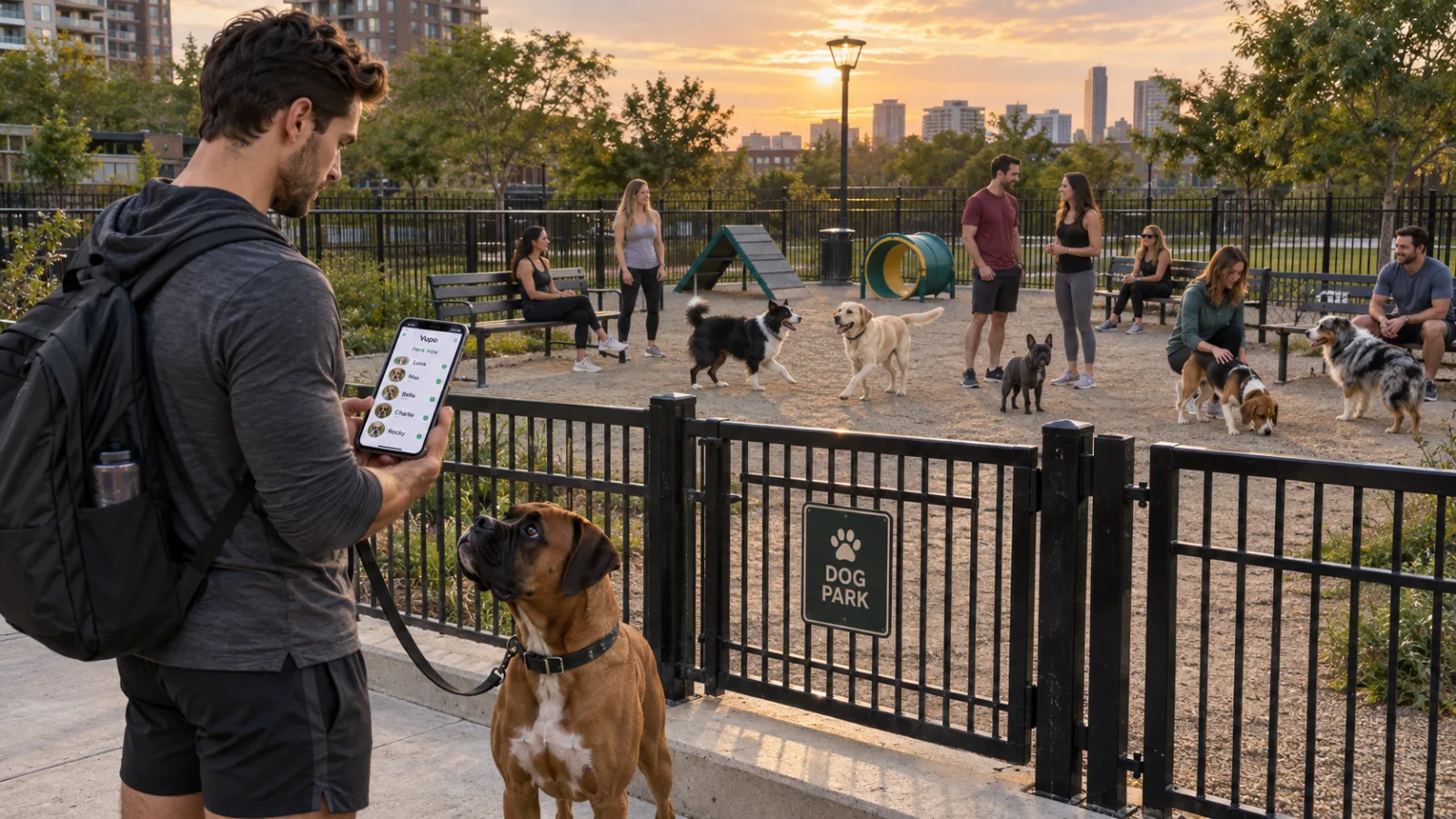
A dog park can be a great place for exercise, play, and social interaction, but it is not the right environment for every dog. One common mistake is assuming that simply taking a dog into a dog park will automatically help them have fun, burn off energy, and come home relaxed.
Sometimes the opposite happens. A dog that feels overwhelmed, anxious, or uncomfortable may leave the park more aroused and stressed than when they arrived, with an even greater need to decompress afterward.
So the real question is not only, "Are dog parks good or dangerous?" It is whether that particular park, the level of activity, and the dogs currently inside are a good match for your dog at that moment.
What Is the Purpose of a Dog Park, and Is It Right for Every Dog?
Dog parks give dogs an opportunity to move freely and interact off leash in a fenced area. But free interaction is not the same thing as healthy socialization. Proper dog socialization means gradual, positive exposure to other dogs, people, environments, and experiences. It does not mean meeting as many dogs as possible.
The Difference Between a Social Dog, a Tolerant Dog, and a Fearful Dog
A genuinely social dog seeks interaction, reads other dogs' signals well, and can also disengage or walk away when needed.
A tolerant dog may be able to "handle" the park without actually enjoying it. A fearful dog may freeze, stay close to their owner, hide, avoid contact, bark, growl, or display defensive behavior in an effort to create distance.
Do not confuse the absence of a fight with a positive experience. If your dog spends most of the visit trying to avoid other dogs, repeatedly returns to you for protection, or appears unable to relax, the dog park may not be appropriate for them at that time.
Risks for Young Puppies: Behavioral Trauma vs. Controlled Exposure
Puppies need positive experiences with other dogs, but a crowded dog park is unpredictable. A group chase, overly rough play, or one intimidating encounter can turn what was supposed to be socialization into a frightening experience.
At what age can a puppy go to a dog park? In general, wait until your veterinarian confirms that your puppy is adequately protected according to their vaccination schedule, often around 14 to 16 weeks of age. Even then, it is better to start during quiet hours and, if possible, with one calm, familiar dog.
For more information, see: How to Socialize a Puppy Properly.
Our article on the Complete Puppy Vaccination Schedule
Reading Canine Body Language: Are They Playing or About to Fight?
Understanding dog body language is one of the most important skills for keeping dog park interactions safe. Play can be noisy, physical, and intense, but healthy play usually includes flexibility, pauses, and mutual participation.
Signs of Healthy Play: Play Bows, Role Reversals, and Loose Movement
A play bow occurs when a dog lowers the front of the body while keeping the rear end raised. It is one of the clearest invitations to play.
Other signs of healthy play include role reversals during chasing, loose and bouncy body movement, curved approaches, an open relaxed mouth, and frequent short pauses.
One of the most useful indicators is choice. If one dog moves away and then voluntarily returns to continue the interaction, that suggests the play is mutual.
For more information, see: How to Introduce Dogs Properly.
Red Flags: Stiff Body, Hard Staring, High Tense Tail, and Pinned Ears
A stiff body, sudden freezing, a closed mouth, and prolonged direct staring are warning signs. A high, rigid tail, pinned ears, repeated mounting, blocking another dog's movement, or one-sided chasing in which only one dog is trying to escape should also get your attention.
If you are trying to understand how to tell whether dogs are playing or fighting, do not judge based on a single growl. Look at the dog's entire body and ask whether both dogs are choosing to stay engaged.
Dog Park Dos and Don'ts Inside the Fenced Area
Remove the Leash After Entering to Reduce Leash Frustration and Reactivity
A leashed dog surrounded by off-leash dogs has fewer options to move away and may feel trapped. That restriction can increase frustration, defensive behavior, or leash reactivity.
Enter calmly, make sure the gate is securely closed, and check that the entrance is not crowded by other dogs before removing the leash inside the fenced area.
If several dogs are clustered around the entrance, ask their owners to call them away for a moment before you enter.
Avoid Treats, Food, and Toys That Can Trigger Resource Guarding
Balls, toys, treats, and other high-value items can create competition and resource guarding. Even a dog that does not normally guard items at home may behave differently in a crowded social environment.
In a public dog park, it is usually safer to avoid bringing items that may become valuable resources worth competing over.
Owner Attention Matters: Why Phones and Distraction Lead to Missed Warning Signs
Your responsibility does not end when you remove the leash.
Owners need to actively watch their dogs and notice subtle changes in body language before tension escalates. Looking at a phone, becoming absorbed in conversation, or standing too far away can cause early warning signs to be missed.
When people say, "The fight came out of nowhere," there were often signals beforehand that no one noticed.
Spotting tension early makes it easier to call your dog away from the situation. For more information, see: How to Teach Your Dog to Come When Called.
What Should You Do If a Dog Fight Breaks Out?
Do not put your hands between the dogs' heads, and do not try to pry open a dog's jaws with your hands. Grabbing a collar near the head can also result in a redirected bite.
Safer Ways to Separate Fighting Dogs Without Getting Bitten
When possible, use a physical barrier and coordinated help from another adult.
The "wheelbarrow method," in which two people approach from behind, each person lifting the rear legs of one dog and moving backward, is sometimes used to separate fighting dogs. However, it is not risk-free and requires coordination. It should not be attempted alone or when approaching from behind cannot be done safely.
After separation, move the dogs far enough apart that they cannot re-engage. Do not immediately bring them back together to "work it out."
If a bite occurred, carefully check both dogs for injuries and contact a veterinarian when appropriate.
If you are asking what to do when aggression repeatedly occurs at a dog park, do not keep returning in the hope that your dog will simply "get used to it." Stop dog park visits and consult a qualified dog trainer or veterinary behavior professional.
How Can Vupo Help Before You Enter the Dog Park?
Vupo's community feature lets you see in real time who is currently at your neighborhood dog park, receive notifications when dogs your dog enjoys spending time with are heading out, and create new local meetup locations.
This can help you choose a better time to visit, avoid interactions with dogs that are not a good match for your dog, or arrange meetings during quieter hours.
For young, sensitive, selective, or easily overwhelmed dogs, better control over the social environment may be more valuable than simply adding more playtime.
Frequently Asked Questions About Dog Parks
At What Age Can a Puppy Go to a Dog Park?
Wait until your veterinarian confirms that your puppy is adequately protected according to their vaccination schedule, often around 14 to 16 weeks of age. Start during quiet hours and, ideally, with a calm, familiar dog.
Why Is It Important to Remove the Leash After Entering the Dog Park?
A leashed dog surrounded by off-leash dogs has limited ability to move away. Once the gate is closed and the entrance is calm, removing the leash inside the fenced area usually gives the dog more natural freedom of movement.
Does Growling During Play Mean a Dog Is Aggressive?
Not necessarily. Growling can be part of normal play when it is accompanied by loose body language, pauses, and mutual engagement. If the body becomes stiff or one dog is trying to escape, interrupt the interaction.
What Should I Do If My Dog Stays Close to Me and Looks Scared at the Dog Park?
Do not force interaction. Move farther away, observe from outside the fenced area, or leave. Repeated forced exposure can make fear and insecurity worse.
Why Shouldn't I Bring Balls or Treats to a Dog Park?
High-value resources can create competition and trigger resource guarding, even between dogs that do not usually show aggressive behavior.
Are Dog Parks Good for Burning Off Energy?
Only if the dog actually enjoys the experience and feels safe. A dog that becomes stressed or over-aroused may come home more wired rather than calmer. Sniff walks, structured play, enrichment, and training can often be better alternatives.