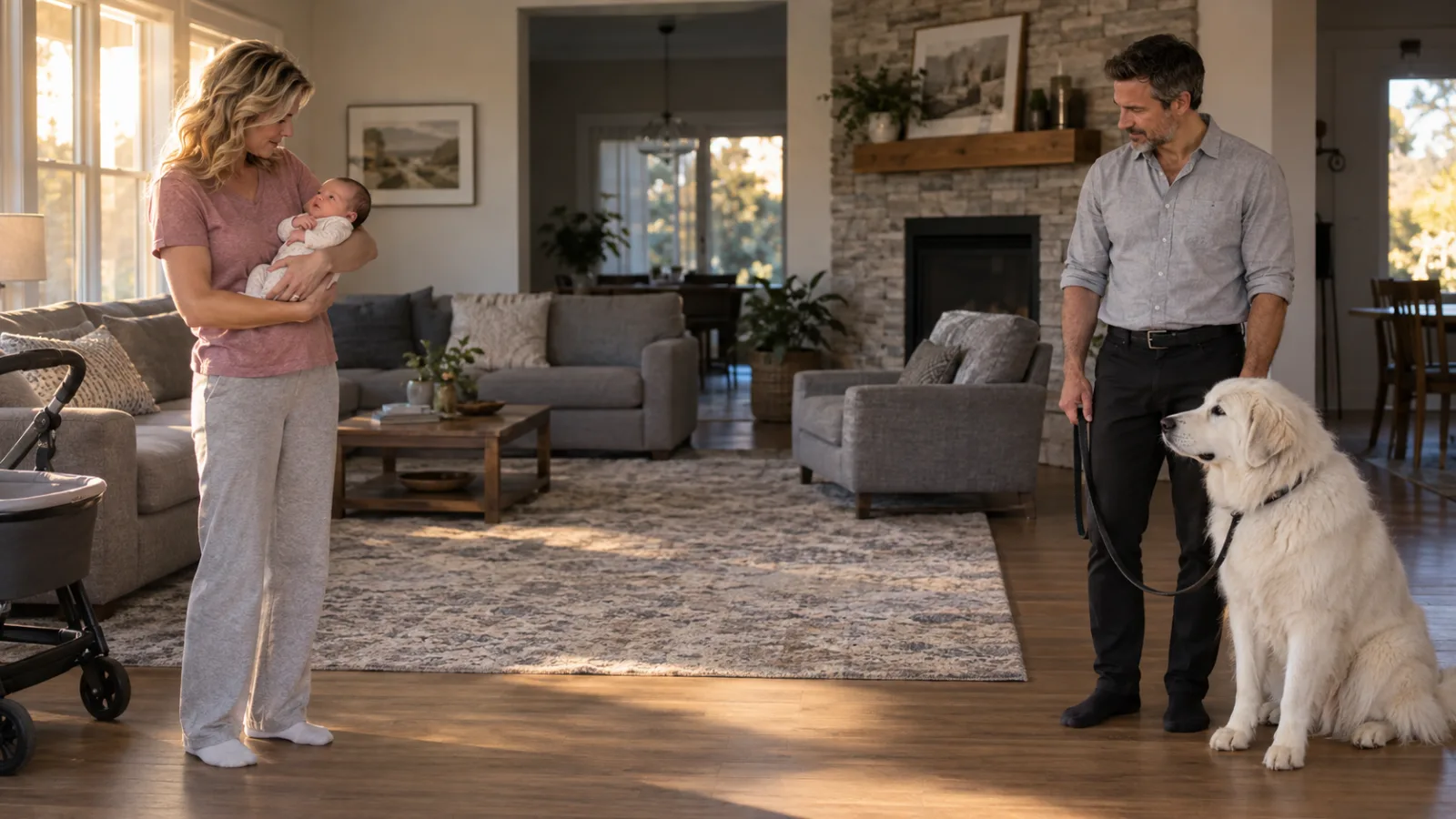
A new baby changes life at home. There are new sounds, smells, and sleep schedules. Parents also have less free time. Your dog needs help adjusting. Bringing a new dog into a home with a baby also requires planning, gradual introductions, and safe separation.
The goal is not to make your dog love the baby right away. It is to help everyone live together calmly while protecting your child and meeting your dog's needs. Preparation should begin well before you bring your baby home.
Start Before the Birth: Prepare Your Home and Build Independence
About two months before your due date is a practical starting point. It is not a deadline that guarantees success. Dogs that struggle with change may need more time. If your dog fears children, guards food, or has a bite history, get help before the baby arrives. Contact a board-certified veterinary behaviorist and a qualified trainer experienced with dogs and young families. [1]
Introduce Crying Sounds and Baby Equipment
Bring in the stroller, crib, and play mat gradually. Let your dog investigate without pulling them toward anything. Practice walking beside an empty stroller while holding the leash yourself.
Play a recording of a baby crying at a low volume during an activity your dog enjoys. If your dog stays relaxed, increase the volume slightly in later sessions. If your dog becomes tense, barks, or moves away, stop. Try a lower volume next time. Do not leave loud crying sounds playing until your dog "gets used to it." A calm response to a recording does not guarantee the same response to a real baby. [2]
Adjust Walk Times and Attention Gradually
During the first few weeks of preparation, decide who will walk your dog during your hospital stay and after you return. Introduce any family member or dog walker who will help.
Next, practice small schedule changes without cutting back on needed potty breaks. Make time every day for play, sniffing, and individual attention. Teach your dog to relax behind a gate while still being able to see you. Start with brief sessions and build up gradually. Persistent whining or escape attempts mean the exercise needs adjustment. Do not ignore these signs. [2]
During the final two weeks, practice your planned routine. You can still give your dog affection. Help them adjust to receiving attention in shorter periods, too. [3]
For more information, see: How Often Should You Walk Your Dog, and for How Long?
Coming Home From the Hospital: The First Introduction
Offer an Item With Your Baby's Scent
You can bring home a piece of clothing or a burp cloth that has been near your baby. Choose one without bodily fluids or waste on it. Let your dog sniff it briefly if they choose. Do not push it toward their nose or leave it out to chew.
This is an optional introduction to a new smell. It is not a required step or a safety test. Your dog's response to the cloth cannot reliably predict their response to your baby. [4]
Plan a Calm Walk Before You Arrive
Arrange a familiar walk with time for potty breaks and sniffing. Match the activity to your dog's age and fitness. Aim to meet their needs and help them settle. Do not try to exhaust them with running or intense play. A tired dog still needs careful supervision and safe boundaries.
Greet Your Dog Before Introducing the Baby
- One adult stays with the baby in a protected area. The returning parent greets the dog separately.
- Once the excitement settles, one adult holds the baby while another manages the dog.
- Start at a distance. Use a secure barrier or have the second adult hold a loose leash. Do not bring the baby up to the dog's face.
- Reward calm behavior and allow the dog to move away. End the session before tension builds.
Physical contact is not necessary during the first meeting. If your dog becomes upset or overly excited, separate them and try again later under easier conditions. Calmly ignoring the baby is a good outcome, too. [1,4]
Build Positive Associations and Clear Boundaries
Help Your Dog Associate the Baby With Good Things
During feeding or diaper changes, another adult can offer your dog treats at a comfortable distance. Reward relaxed lying down or choosing to move away. Do not use food to lure your dog closer to the baby.
Keep spending individual time with your dog away from the baby. This helps maintain connection, activity, and a predictable routine. [3]
Adding another pet to the family? Read How to Help a Dog and Cat Live Together Peacefully.
Teach a Resting Spot and Keep Baby Toys Separate
Teach a "go to your mat" cue by rewarding your dog for stepping onto the mat and resting there. Place it in a quiet area the baby cannot reach. The mat should never be a punishment. A "stay" cue cannot replace a physical barrier.
Store baby toys separately. If your dog takes one, trade it for a treat or one of their own toys. Do not chase your dog or grab the item from their mouth. Seek professional help if your dog growls over objects. [5]
Essential Safety Rules
Never Leave a Dog and Baby or Toddler Together Without Active Supervision
Active supervision means an awake, attentive adult is close by, watching both the dog and child, and ready to intervene immediately. Being in the room while scrolling on your phone is not enough.
When cooking, showering, sleeping, or leaving the room, separate them. Use a closed door or a secure barrier that neither can get past. These rules apply to small dogs, senior dogs, and well-trained dogs, too. Never place a baby on the floor beside a dog for a photo. [6]
Recognize Stress Around a Crawling Baby
Signs of stress may include turning the head away, moving away, lip licking, and yawning. Consider the situation and the dog's whole body. A yawn alone does not prove that a dog is stressed.
Freezing, a stiff body, a fixed stare, or growling mean you should stop the interaction and separate them. Do not punish growling. It is a warning that deserves attention. If your dog lunges, attempts to bite, or becomes unusually fixated on the baby, prevent all access and seek an urgent professional assessment. [5,7]
Bringing a New Dog Into a Home With a Baby
A newly adopted dog must also adjust to an unfamiliar home. Ask about their history with children, fears, and resource guarding. Resource guarding means protecting food, toys, or other valued items. Do not choose a dog based only on breed, size, or a "good with kids" label.
Set up separate areas and a simple routine. Never use your baby to test the dog's reaction. Puppies also need careful management because of play biting and jumping. If your family cannot supervise, separate, and care for both, consider postponing the adoption. [1,5]
Frequently Asked Questions
Can a Dog Really Be Jealous of a Baby?
Behavior that looks like jealousy may reflect attention seeking, frustration, or fear. Do not assume your dog is acting out of spite. Look at what has changed and reward the behavior you want to see.
What Should I Do if My Dog Barks Whenever the Baby Cries?
Gently guide your dog to a comfortable area farther away from the sound. Do not yell. Later, practice with quiet recordings and rewards. This approach also helps when a dog is frightened by crying. If the distress continues, contact a qualified professional. [2,5]
Can My Dog Sniff or Lick My Baby's Feet?
Licking and physical contact are not necessary for an introduction. A brief sniff may be appropriate when your dog is relaxed and two adults are closely supervising. Keep your dog's face away from the baby's face, and do not encourage licking. If you are unsure, maintain distance. [1,4]
When Should I Start Preparing My Dog for the Baby?
Start about two months before your due date, or earlier if your dog has difficulties. Keep practice sessions short and consistent. Progress at a pace your dog can handle comfortably.
What if My Crawling Baby Tries to Reach the Dog's Food Bowls?
Use a physical barrier to prevent access. Let your dog eat and rest without disturbance. Never allow your baby to take food to "teach the dog to share." Do not wait for a growl before stepping in. [5]
Your dog and new baby need a routine that the adults maintain. Divide walking responsibilities ahead of time. Use Vupo to log walks and keep track of your dog's routine. This makes it easier to notice missed walks, even on busy days.
Professional Sources
- VCA Animal Hospitals: Children and Pets - Infants and Dogs - Risk assessment and early introductions.
- Dogs Trust: How to Prepare Your Dog for a New Baby - Gradual preparation, sounds, equipment, and routines.
- American Kennel Club: Prep Your Dog Before the Arrival - Preparation and positive reinforcement advice from GoodDog! Helpline trainers.
- Dogs Trust: How to Introduce Your Dog to Your New Baby - Scent, first meetings, and daily life.
- ASPCA: Dogs and Babies - Boundaries, toddlers, resource guarding, and professional help.
- Family Paws: Dog Aware Supervision - Understanding active supervision.
- UC Davis, Clinical Animal Behavior Service: Facilitating Family Dogs and Cats With Babies - A handout on preparation, separation, and concerning behavior.