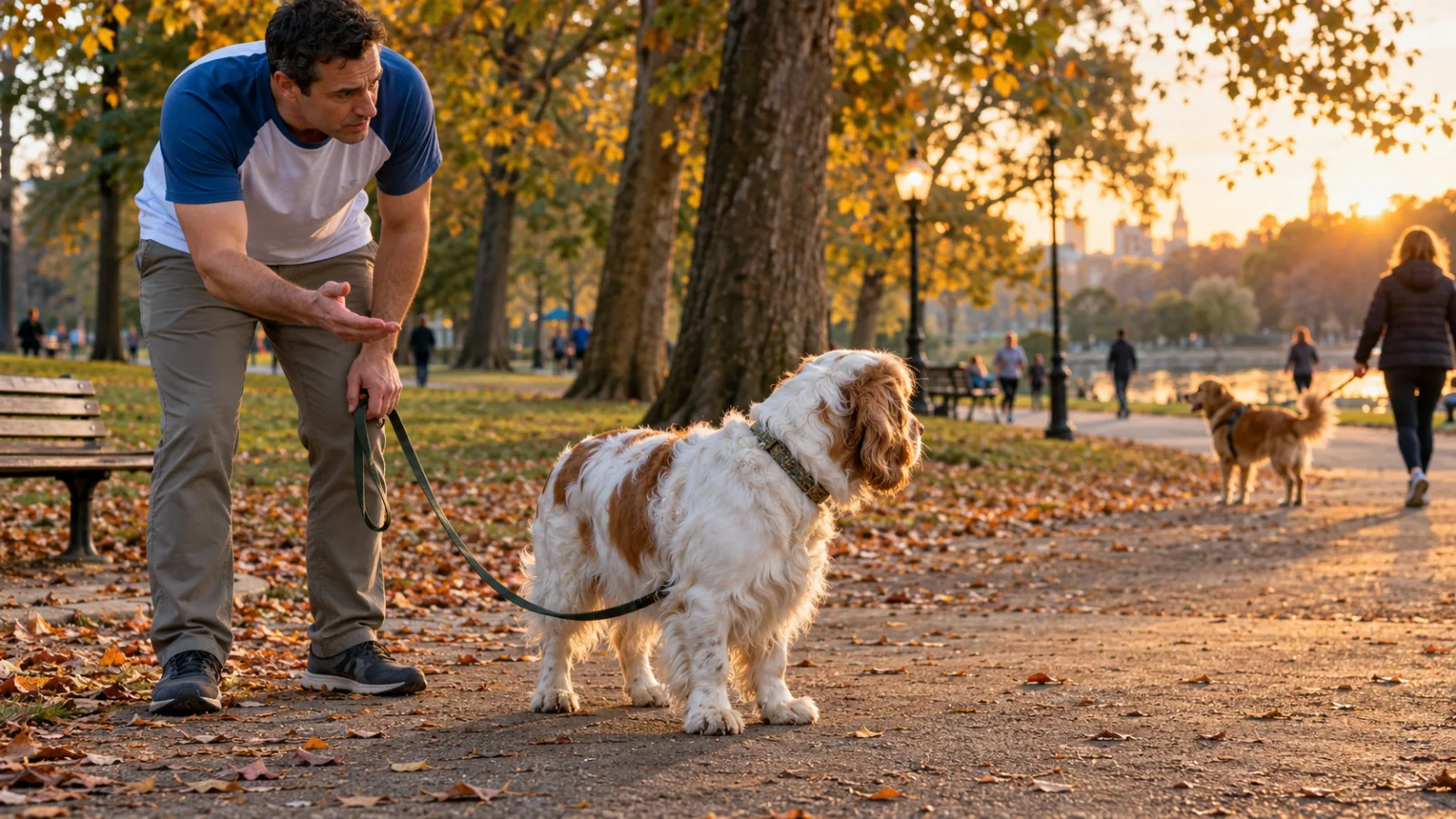
You call your dog and get no response. You ask for “sit,” and your dog looks away. Yet your partner says the same word once, and the dog sits immediately. It is easy to interpret this as stubbornness or a lack of respect. Usually, that explanation is too simple.
Listening is a learned skill. A dog must notice the cue, understand what it predicts, and be able to perform the behavior in that particular situation. Your dog's age, emotional state, environment, and training history all matter. Here are six common explanations and what you can do about them.
What “not listening” really means
Start by checking whether your dog can respond, not whether they want to obey. A dog who is frightened, highly excited, distracted, or uncomfortable may struggle with a familiar task. If your dog's responsiveness changes suddenly, or they appear confused, sore, or unable to hear you, consult your veterinarian before treating it as a training issue.
Reward-based training focuses on making the desired behavior clear and worth repeating. A reward can be food, play, access to sniffing, or affection your dog genuinely enjoys. Rewards are not interchangeable: choose what matters to this dog, in this situation.
1. Your new puppy has not learned their name
A puppy's name does not automatically mean “look at me.” At first, it is simply a sound. Saying it twenty times while the puppy explores the floor rarely teaches a useful response.
Begin in a quiet room. Say your puppy's name once in a friendly tone. When they turn toward you, immediately mark that moment with “yes” and offer a small treat or a favorite game. If they do not turn, make the next attempt easier rather than repeating the name. Practice several short sessions throughout the day.
After the response becomes reliable indoors, try in another room, then in a quiet outdoor area on leash. Avoid using the name mainly before unpleasant events or as a scolding signal. The goal is a simple association: hearing the name makes checking in with you worthwhile.
2. Your dog only sits when you show a treat
Food is not the problem. The problem is that a visible treat may have become part of the signal. Your dog may have learned “follow this hand holding food” rather than “respond to the word sit.”
Luring with food can be a valid way to introduce a movement. But fade the lure early. For example, guide the dog into a sit with a treat a few times, then repeat the same hand movement with an empty hand. After the dog sits, deliver a treat from a pocket or your other hand. Gradually make the hand signal smaller and add the spoken cue clearly.
You can also capture sitting: wait until the dog sits naturally, mark the behavior, and reward it. Once the action is predictable, introduce the word “sit.” Keep rewarding successful responses while you build fluency. You are removing the visible prompt, not eliminating reinforcement.
3. Your adolescent dog seems to have forgotten everything
A young dog who responded beautifully for months may become harder to train as adolescence begins. Increased interest in smells, other dogs, and the wider world can compete with your cues. The timing and intensity vary by dog and breed.
Do not assume that the dog is challenging your authority, or that all problems will disappear when hormones settle. Temporarily return to easier exercises, shorten sessions, reward generously, and manage situations where failure is likely. Practice recall on a long line in safe, suitable areas rather than testing it off leash near roads or other hazards.
Progress may not be linear. Consistency and appropriately graded practice matter more than demanding the performance your dog managed last month.
4. Your rescue dog behaved differently during the first weeks
A newly adopted dog may initially seem unusually quiet, reserved, or easygoing. As they become familiar with the household, their behavior can change. Some dogs become more playful or assertive; others reveal fears, frustration, or behaviors that were not obvious during the initial transition.
This does not prove that the dog was traumatized, nor that a new problem necessarily means they finally feel safe. Every dog's adjustment is different.
Offer predictable routines, a quiet resting space, choice about interactions, and short positive training opportunities. Start with easy skills such as looking toward you, touching your hand with their nose, or coming a short distance for a reward. Avoid flooding the dog with visitors, crowded parks, or demanding lessons. If fear or aggression appears, seek qualified help promptly.
5. Your dog listens at home but ignores you on walks
Dogs do not automatically apply a skill learned in the kitchen to a dog park. The smell of another dog, passing traffic, and the possibility of running can all be more compelling than your usual reward. This is a problem of generalization and distraction, not proof your dog knows the cue and is refusing it.
Teach a familiar cue in several low-distraction locations. Move from the kitchen to the living room, then a quiet yard or sidewalk. Change only one difficulty at a time: distance, duration, or distractions. If the dog fails repeatedly, move farther from the distraction and make the task easier.
For recall, use a secure environment or a safely managed long line. Never release a dog in an unsafe area to “test” whether recall works. Reward returning to you, and sometimes release the dog to resume sniffing. Sniffing itself can become a useful reward.
6. Your dog listens to your partner but not to you
Different people often have different histories with the same dog. One person may use a consistent cue and timing, while the other unknowingly repeats words or gives mixed signals. One may engage in rewarding games, and another may interact mostly during necessary chores.
A lower or louder voice might also change a dog's response, but quicker compliance does not prove a better bond. If the dog appears tense, freezes, crouches, or avoids someone, fear may be influencing the behavior. That is not a training advantage worth copying.
Agree on the same cues and household expectations. Make daily activities more rewarding: use a little of the normal meal for quick training games, practice gentle, gradual brush handling paired with rewards, or scatter a few pieces of food in clean grass for a supervised “find it” game. On walks, give your dog suitable opportunities to sniff and check in. Keep interactions inviting rather than unpredictable or intimidating.
A practical reset plan
- Choose one useful skill, such as name response or “sit.”
- Practice for one to three minutes in a quiet place.
- Say the cue once, mark success, and reward promptly.
- Track where your dog succeeds and where they struggle.
- Increase difficulty gradually. Return to an easier step when responses deteriorate.
- Practice with other household members using consistent words and signals.
A simple written training log or a structured plan in Vupo can help you keep practice consistent.
Measure progress in different environments rather than expecting perfect obedience everywhere.
When to get help
Seek veterinary advice if responsiveness changes abruptly, your dog seems painful or disoriented, or you suspect hearing or other health problems. If you see pronounced fear, panic, aggression, or repeated failure despite making training easier, consult a qualified reward-based dog trainer or veterinary behavior professional.
The useful question is not “Why is my dog ignoring me on purpose?” It is “What is making this response difficult right now, and what can I change to help my dog succeed?”
Frequently Asked Questions
Is my dog just stubborn?
A dog may prefer another activity, but labeling the behavior stubbornness does not identify the cause. Check clarity of the cue, reinforcement, distractions, discomfort, and practice history.
Should I repeat a command until my dog responds?
No. Repeating a cue can teach the dog that several repetitions are normal. Say it once, pause briefly, then reduce difficulty and try again.
Will I always need food treats?
Not necessarily for every familiar response. You can use play, sniffing, praise the dog enjoys, and other reinforcers. Continue to reinforce behavior, especially when the task is difficult; don't abruptly remove all rewards.
Why does my dog listen indoors but not at the dog park?
The park has stronger competing distractions. Practice at a manageable distance and increase difficulty gradually. Do not test off-leash recall in unsafe conditions.
Why does my dog listen to my partner more than me?
Your partner may be more consistent or may have a different history of rewarding responses. Observe cue timing, context, and the dog's body language rather than assuming the dog respects one person more.
Can not listening be a medical issue?
Yes. Sudden changes can be related to pain, hearing problems, illness, or other issues. A veterinarian should assess concerning changes.
Professional References
- AVSAB - Humane Dog Training Position Statement - professional guidance supporting reward-based methods.
- American Kennel Club - Lure-and-Reward Training - fading food prompts.
- Karen Pryor Clicker Training - Food Lures and Training - the distinction between prompts and reinforcement.
- Dogs Trust - Helping a Rescue Dog Settle - gradual adjustment after adoption.
- AAHA - Adopting a Rescue Dog: What to Expect - variability during the transition to a new home.
- Karen Pryor Clicker Training - All About Clicker Training - practical reinforcer selection and maintenance.