Losing a dog is one of the most stressful situations a pet owner can experience. Likewise, coming across a frightened, wandering dog on the street can leave you unsure of what to do: Who should you contact? How can you safely find the owner? And what urgent steps should be taken during the first hour?
This practical emergency protocol brings together the key actions you should take – whether your dog is missing or you have found a dog that appears to be lost.
5 Essential Actions During the First 60 Minutes After Your Dog Goes Missing
The first hours after a dog disappears are the most critical. The faster and more systematically you act, the greater the chances of bringing your dog home safely.
- Create an immediate lost-dog report in Vupo and post in local community channels: The first and most important step is to spread the information as quickly as possible. Immediately create a lost-dog report in the Vupo app. The system activates smart alerts and looks for potential matches among nearby users. At the same time, publish a post with a clear photo, your dog's name, the exact location where the dog went missing, and a phone number where you can be reached. Share it in local Facebook groups for lost and found pets and neighborhood WhatsApp groups.
- Search outward in circles from the last known location: Begin searching on foot within roughly a 1,500-foot radius of the location where your dog disappeared, and gradually expand the search area. Call your dog's name in a calm, inviting voice rather than shouting in panic, which may frighten the dog and cause them to move farther away.
- Leave familiar scent items nearby: Place an item of clothing with your scent, your dog's blanket, or their bed near your front door or the last location where the dog was seen. You can also leave out a bowl of water. Avoid leaving food outside, as it may attract cats, wildlife, or other animals.
- Notify your local animal control authority and nearby shelters or rescue organizations: Report your missing dog to the local municipal or animal control authority and contact nearby shelters and rescue organizations. Make sure they have your name and current contact information in case your dog is brought in.
- Make sure your contact information in the microchip registry is current: Verify that your phone number and contact information are up to date in the relevant dog microchip registry. If an old phone number is still listed, the person who scans your dog's microchip may not be able to reach you.
Found a Dog That Appears to Be Lost? Here's How to Respond Safely
Handling a stray or lost dog correctly can prevent the dog from running away again, protect your personal safety, and speed up the process of finding the owner.
- Take clear photos immediately from a safe distance: The first thing you should do is photograph the dog. Try to take clear pictures from several angles, including the dog's body shape, facial features, coat markings, collar, and any other identifying characteristics. These photos are essential for identification and can be used in an immediate report even before you attempt physical contact.
- Assess the situation carefully – do not approach every dog: It is important to understand that you should not approach every loose dog. If you are not confident that the dog is a lost household pet – for example, if the dog appears feral, is part of a roaming pack, or shows signs of aggression, extreme fear, or a stiff and defensive body posture – do not approach. Moving toward a frightened or unsocialized dog can put you at risk of being bitten. In this situation, take photos, record the location, and contact the appropriate local animal control authority.
- Approach slowly and safely – only if the dog appears to be a household pet: If the dog shows signs of being socialized and distressed – for example, seeking human contact, cautiously wagging their tail, or wearing a collar – approach slowly and calmly. Do not chase the dog. Lower your body to appear less threatening, avoid prolonged direct eye contact, and try to encourage the dog to come closer using a soft voice or food.
- Take the dog to a nearby veterinarian for a microchip scan: If the dog allows you to approach safely, one of the fastest and most effective steps is to take them to a nearby veterinary clinic. Veterinary clinics typically have microchip scanners, and a quick scan can identify the microchip number and help retrieve the owner's registered contact information.
- Immediately report the found dog in Vupo and on local social media: Create a found-dog report in Vupo and upload clear photos to local Facebook and neighborhood WhatsApp groups in the area where the dog was found. Real-time community sharing can save the owner many hours of anxiety.
The Limitations of a Standard Microchip – and Vupo's More Accessible Solution
Many dog owners mistakenly assume that an implanted microchip contains a GPS transmitter that can track the dog's location. In reality, a standard implanted microchip is a passive identification device using RFID technology and contains only a unique identification number.
It must be scanned with a compatible microchip reader. This means that when a dog goes missing, someone generally needs to safely secure the dog and bring them to a veterinarian, shelter, or other location equipped with a scanner.
Implanted Microchip vs. a Smart QR Tag – a Comparison
- How the information is accessed: Implanted electronic microchip – requires a dedicated microchip scanner at a veterinary clinic, shelter, or authorized facility. Vupo smart QR identification tag – can be scanned using the camera on virtually any smartphone.
- Speed of contacting the owner: Implanted microchip – usually requires physically bringing the dog to a location with a scanner. QR tag – immediate, directly from the location where the dog is found.
- Cost to check: Implanted microchip – typically free, but requires access to a scanner. QR tag – free and accessible to almost anyone with a smartphone.
- Legal requirement: Implanted microchip – depends on applicable local laws and regulations. QR tag – recommended as an additional layer of identification and protection.
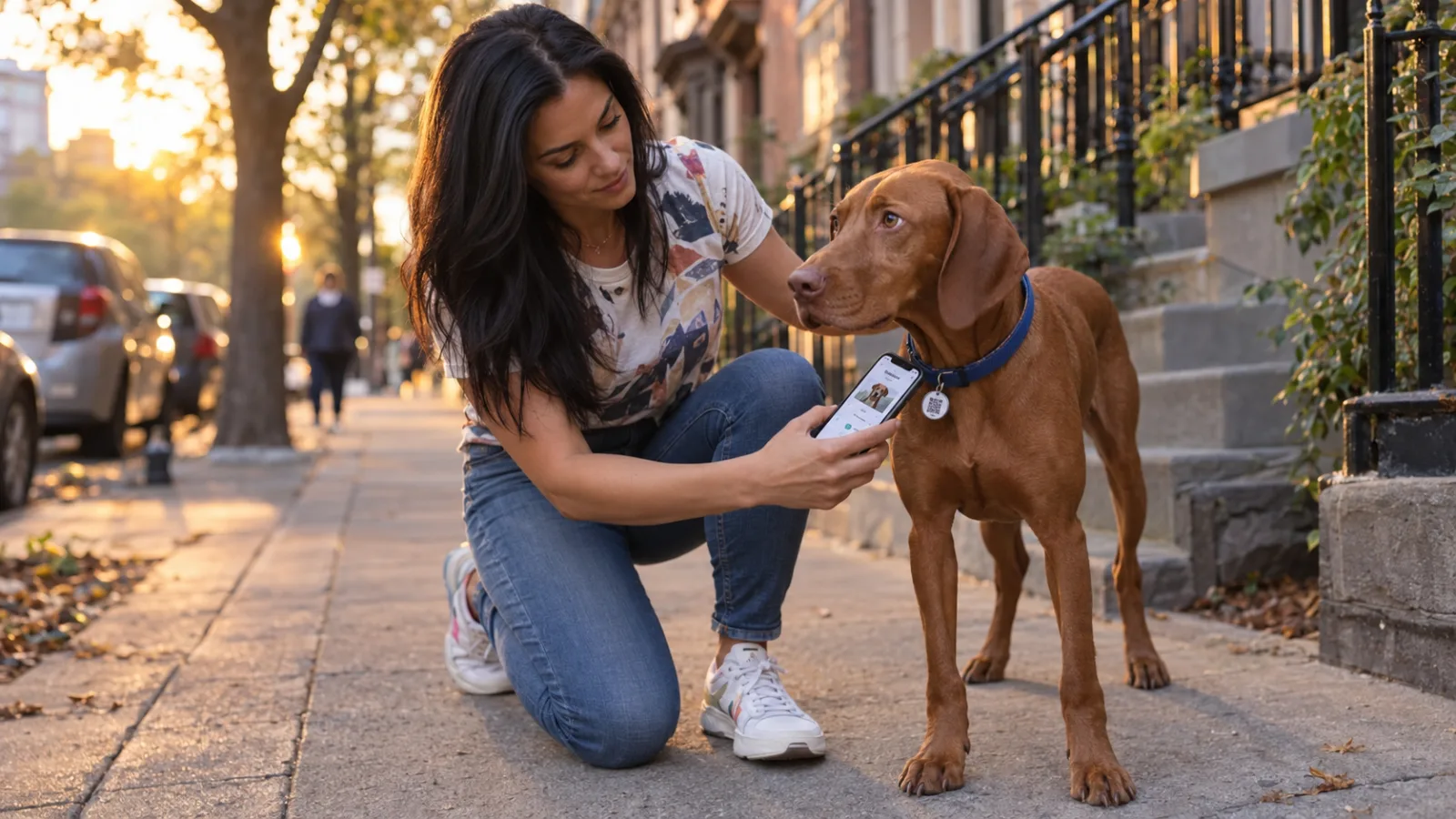
To help bridge this gap, Vupo generates a unique personal QR Code for each dog. The code can be printed or attached to a tag on the dog's collar.
If the dog goes missing, a person who finds the dog does not necessarily need to locate an emergency veterinarian in the middle of the night. By simply scanning the QR Code with a smartphone camera, they can immediately access the owner's contact information and get in touch directly from the location where the dog was found.
Frequently Asked Questions
How can I look up an owner's information using a microchip number?
Microchip lookup procedures vary by country and registry. In general, the microchip number can be entered into the appropriate pet microchip registry or provided to a veterinarian, shelter, or animal control authority that has access to registered ownership information.
Should I bring a found dog to a municipal shelter?
A municipal shelter can scan the dog's microchip and record the dog as found. However, if local regulations allow it and you are able to safely provide temporary foster care for 24–48 hours while actively sharing the dog's photos through Vupo and local community groups, this may sometimes reduce stress for the dog while the owner is being located.
What should I do if the owner's information in the microchip registry is private or outdated?
Contact the local veterinary authority, animal control department, shelter, or veterinarian. Authorized professionals may have access to additional registry information that is not available to the general public.
How can I prevent my dog from escaping again?
Secure fences and gates around your home, check the fit and condition of the collar, and make sure your dog always wears both a physical identification tag and the Vupo QR tag on their collar.
A fast response, professional microchip scanning, a smart QR identification tag, and immediate sharing through Vupo and the local community can significantly improve the chances of reuniting a lost dog with their owner as quickly and safely as possible.