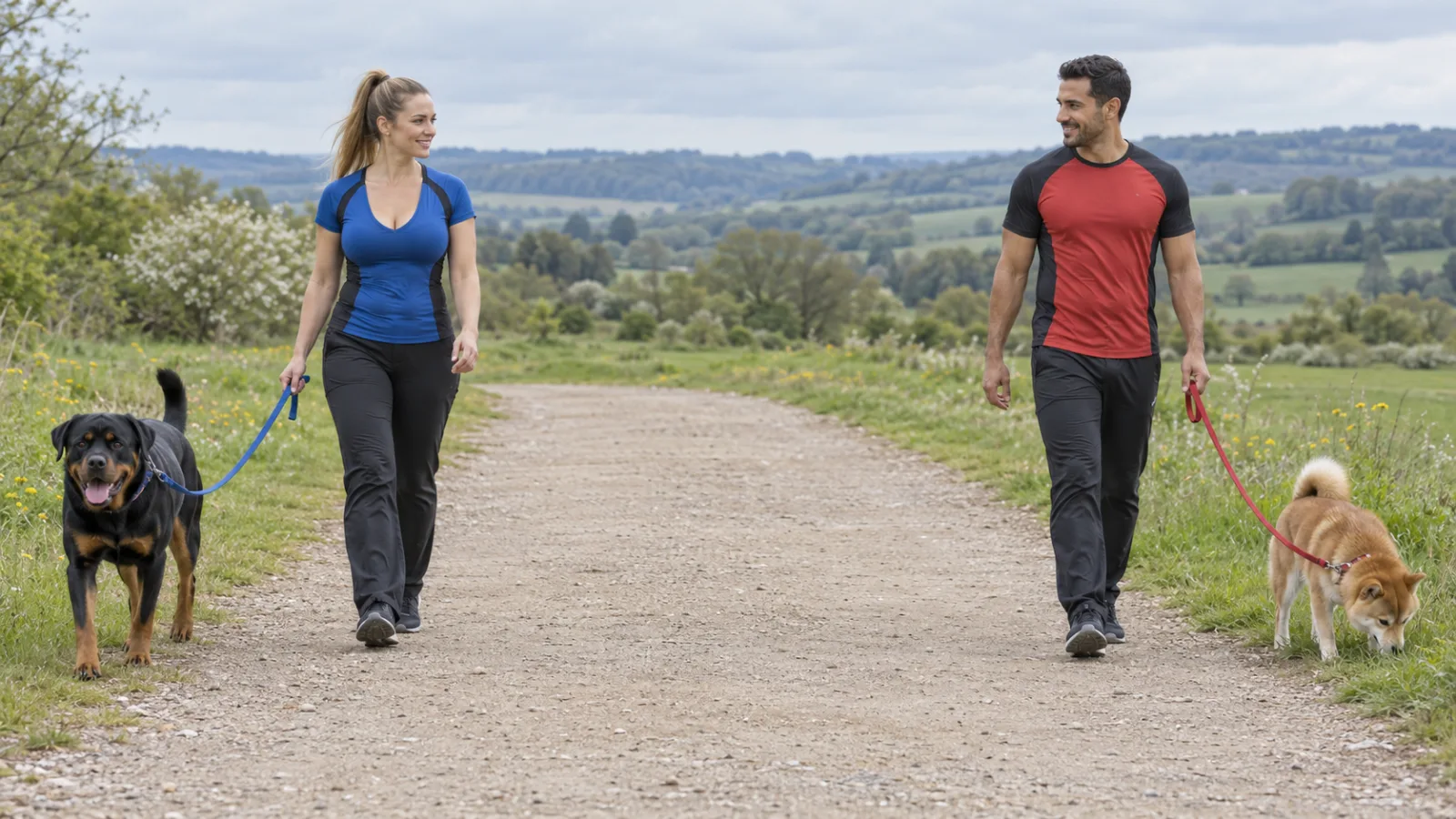
Your dog spots another dog across the street. Their body stiffens, the leash tightens, and suddenly they are barking and lunging. You move away feeling embarrassed, worried, or exhausted. A better walk starts with understanding what happens before that outburst.
Reactive dogs need a plan that combines everyday management with practice they can handle. The aim is not to make your dog greet every dog. Comfortable distance and calm disengagement are worthwhile goals.
What does “reactive dog” mean?
Reactivity describes an intense response to a particular trigger, such as another dog. Barking, lunging, or growling can accompany fear, anxiety, frustration, or excitement. Leash restriction can make the situation harder. The visible reaction alone does not tell you the motivation or the likelihood of a bite. [1]
Record what happens: which dogs trigger a reaction, how close they are, whether they approach directly, and how quickly your dog recovers. These observations help a professional tailor the plan.
Is it too late for socialization?
Puppies have an especially sensitive socialization period, roughly from 3 to 16 weeks. Learning continues afterward. An adult dog is not beyond help, but repeated close encounters are not a reliable way to make a frightened dog comfortable. Quality matters more than the number of dogs encountered. [2]
Start with a more manageable daily routine
For a newly adopted dog, begin with predictable outings, quiet rest, and manageable introductions. Do not use the first few days to test their tolerance at a dog park or busy cafe.
Choose wider routes and quieter times. Before leaving, identify places where you can turn away or move behind a visual barrier. In an apartment building, check the hallway before stepping out and avoid sharing a small elevator with an unfamiliar dog.
Use a secure, well-fitted harness and a sturdy fixed-length leash. A backup connection to a collar may be appropriate for an escape risk. Equipment fit and the handler's ability to manage the dog matter. Avoid leash jerks and equipment used to inflict pain; AVSAB recommends reward-based methods for behavior modification. [3,4]
Recognize difficulty before barking starts
For this article, “below threshold” means the dog notices the trigger but remains comfortable enough to process the situation and respond flexibly. Silence alone is not proof of comfort.
Look at the whole dog. A fixed stare, sudden stillness, closed mouth, weight shift, or inability to turn away can tell you to create more space. Compare these changes with your dog's usual behavior and the surrounding conditions.
Food is one clue. Refusing a normally welcome treat may indicate that the setup is too difficult, but appetite, heat, illness, and food preference also matter. Eating does not automatically mean the dog is relaxed. Stress does not switch learning off; intense distress can interfere with the learning you want.
Why does the same distance work one day and fail the next?
Sleep, previous encounters, discomfort, and the other dog's behavior can change the difficulty of an outing. “Trigger stacking” is a useful way to describe accumulated demands, not a literal numerical formula. There is no universal recovery countdown after an outburst. Adjust the next outing to the individual dog.
A gradual reactive dog training exercise
Desensitization uses carefully graded exposure. Counterconditioning pairs the trigger with something the dog enjoys. Both require attention to the dog's response, rather than following a fixed distance schedule. [5]
The following is a practical starting framework to adapt with a qualified professional:
- Arrange an easy setup. Use an open area with an exit route. A calm helper dog with its own handler can make distance more predictable. Avoid narrow paths and head-on approaches.
- Begin generously far away. The dog should notice the other dog without becoming stuck watching it. If necessary, start farther away than seems useful.
- Pair noticing with food. After your dog notices the other dog, offer several small, easy-to-swallow treats. Use food your dog values and tolerates. Do not lure them toward the trigger.
- Let the encounter end. When the other dog is gone, end that particular food pairing. You can still reward your dog for returning with you or walking away.
- Keep practice brief. A few easy repetitions are preferable to staying until the dog struggles. End while the setup still feels manageable.
- Change one thing at a time. Once similar encounters are consistently comfortable, try a slightly smaller distance. Do not simultaneously add movement, more dogs, and a longer session.
An illustrative log might read: “Dog standing across an open field; loose body; noticed and turned back; recovered immediately.” The description is more useful than a distance without context. Numbers are records, not targets.
Separately, teach a cheerful U-turn and a hand target in a quiet place. Later, these give you familiar ways to leave. Do not require a prolonged sit or constant eye contact when movement would help.
What if another dog appears suddenly?
Prioritize leaving safely. Turn away, cross when safe, or use a parked vehicle as a visual barrier. Keep hands away from the dog's mouth during an outburst and avoid grabbing the collar to confront the dog.
You may use familiar food to help the dog move away if they can eat safely. Feeding a frightened dog does not automatically strengthen fear. Observable behaviors can still be reinforced, so planned practice should begin before repeated barking develops.
Afterward, give the dog a quieter remainder of the walk. One difficult encounter is information about the setup, not evidence that all progress has disappeared.
When professional help matters
Arrange a veterinary assessment for sudden changes, suspected pain, or worsening reactions. Seek a qualified behavior professional promptly for biting, redirected aggression, or a dog you cannot safely control. A veterinary behaviorist can assess whether medication belongs alongside training and environmental changes. [3,4]
Where bite risk exists, ask about gradual basket-muzzle training. A muzzle is an extra safety layer, not permission to bring the dog closer.
Planning suitable outings with Vupo
Vupo lets you arrange outings with familiar dogs. If a professional considers it appropriate, that can help organize a predictable parallel walk with a known dog and agreed spacing. Keep an exit route, avoid surprise greetings, and skip busy dog parks while working on reactivity. Meeting planning supports the training plan; it does not replace it.
Frequently asked questions
Should I let my dog greet more dogs to fix leash reactivity?
Not as a default exercise. First work on being comfortable at a distance. A greeting is optional and should depend on both dogs and the treatment plan.
Does my dog need chicken instead of kibble?
Use food that works for your dog. Kibble may be sufficient in an easy setting; a more valuable reward may help elsewhere. Better food cannot compensate for an overwhelming encounter.
How do I measure improvement?
Look for easier disengagement, quicker recovery, and more comfortable outings. Track similar situations over time rather than counting only silent passes or aiming for ever-closer contact.
Sources
- Veterinary Partner / VIN: Leash Reactivity in Dogs.
- VCA Animal Hospitals: Puppy Behavior and Training - Socialization and Fear Prevention.
- AAHA: How Can I Safely Walk My Reactive Dog?.
- AVSAB: Position Statement on Humane Dog Training.
- VCA Animal Hospitals: Introduction to Desensitization and Counterconditioning.
Educational information, not an individual diagnosis or treatment plan.