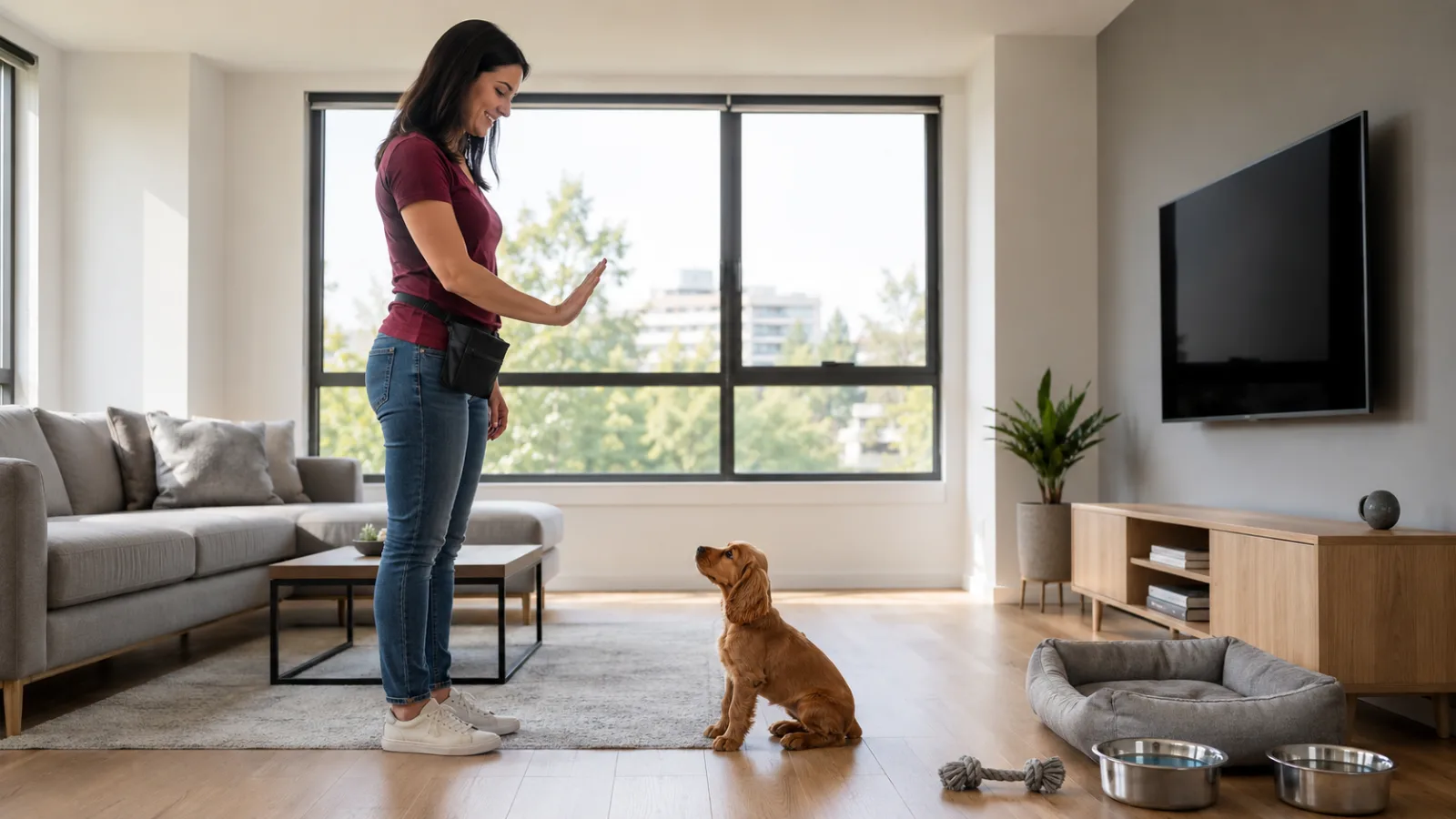
What Age Should You Start Training a Puppy?
One of the most common questions new puppy owners ask is: What age should you start training a puppy?
In the past, many people believed that training should wait until a puppy was six months old or had completed the full series of core vaccinations. Today, we know that learning and training begin on the very first day a puppy arrives in their new home.
During the first few weeks, the goal is not to pressure the puppy or demand strict obedience. Instead, the focus should be on building good habits, establishing clear communication, setting consistent boundaries, and helping the puppy feel safe and secure. These foundations should be developed gradually through trust between the puppy and the people in the household.
The period between 8 and 16 weeks of age is especially important in a puppy’s development. The experiences a puppy has during this time can influence how they respond to people, animals, unfamiliar places, and new stimuli later in life.
A Puppy Training Schedule by Age: The Key Stages
Puppy training is an ongoing developmental process that should be built one step at a time. To help a puppy develop into a confident and well-adjusted dog—and to reduce the likelihood of future behavior problems—it is important to focus on several key areas.
Preparing Your Home and Creating a Safe Space
Set up a safe, quiet, and comfortable area for your puppy. This may include an exercise pen, a crate that has been introduced gradually and positively, or a designated resting area.
This
space gives the puppy a place to rest without interruption, settle down, and
gradually develop the ability to regulate their own excitement and emotions.
Your Dog’s Safe Place
For a breakdown of what startup supplies such as a pen, crate, bed, and bowls typically cost, see How Much Does It Cost to Own a Dog in the U.S.?
Potty Training and Establishing a Consistent Routine
A
successful puppy potty training schedule is based on regular trips
outside, appropriate supervision, and immediate rewards when the puppy
eliminates in the correct place.
How to Potty Train a Puppy
Good management also plays an important role. Limiting access to unsupervised areas and anticipating when the puppy needs to go outside can reduce accidents and prevent unnecessary frustration for both the puppy and the household.
Controlled Exposure and Puppy Socialization
A puppy should be introduced gradually and positively to different sounds, surfaces, people, vehicles, locations, and animals.
The goal is not to expose the puppy to as many things as possible in a short period of time. The goal is to create safe, positive experiences that match the puppy’s individual comfort level and pace.
Proper puppy socialization may reduce the likelihood of fear, anxiety, and aggressive
reactions later in life. Exposure to outdoor environments and other dogs should
be carefully managed and carried out according to your veterinarian’s
recommendations.
Complete Puppy Vaccination Schedule
Setting Boundaries and Household Rules
A puppy needs clear and consistent information about which behaviors are appropriate in the home.
This includes redirecting puppy biting and mouthing, discouraging jumping on people, teaching the puppy to wait, and gradually developing impulse control.
Rather than relying only on corrections or repeatedly saying “no,” teach the puppy what you want them to do instead. Reward the puppy when they choose the appropriate behavior.
Teaching Basic Skills and Building Communication
Basic skills can be introduced at an early age. These may include:
- Sit
- Come
- Stay
- Making eye contact
- Walking on a loose leash
Training sessions should be short, simple, and enjoyable. They should rely primarily on play, small successes, and positive reinforcement.
The purpose is not simply to teach commands. It is to create a shared language and establish clear communication between the puppy and their owner.
Puppy Training in the Digital Age: Meet Vupo, a Step-by-Step Puppy Training App
Raising a puppy can sometimes feel complicated and overwhelming.
When should you introduce your puppy to new experiences? How should you respond when your puppy bites? How do you make progress with potty training? And how can everyone in the household remain consistent?
Vupo is designed to help dog owners manage the puppy training process in a structured, clear, and accessible way.
With Vupo, owners can follow a structured training program divided into progressive stages and adapted to the puppy’s pace.
From the first steps of potty training to more advanced skills, the app brings together practical guidance, progress tracking, and reminders that help owners maintain a consistent training routine.
Instead of repeatedly trying to figure out what to do next, owners can follow a clear process and understand which skills and habits to focus on at each stage.
Want to Build Better Communication With Your Puppy From Day One?
Start Vupo’s step-by-step puppy training program and follow a clear, practical path for progressing together with your puppy.
The first step toward raising a calm, confident, and well-adjusted dog begins with the small habits you build today.